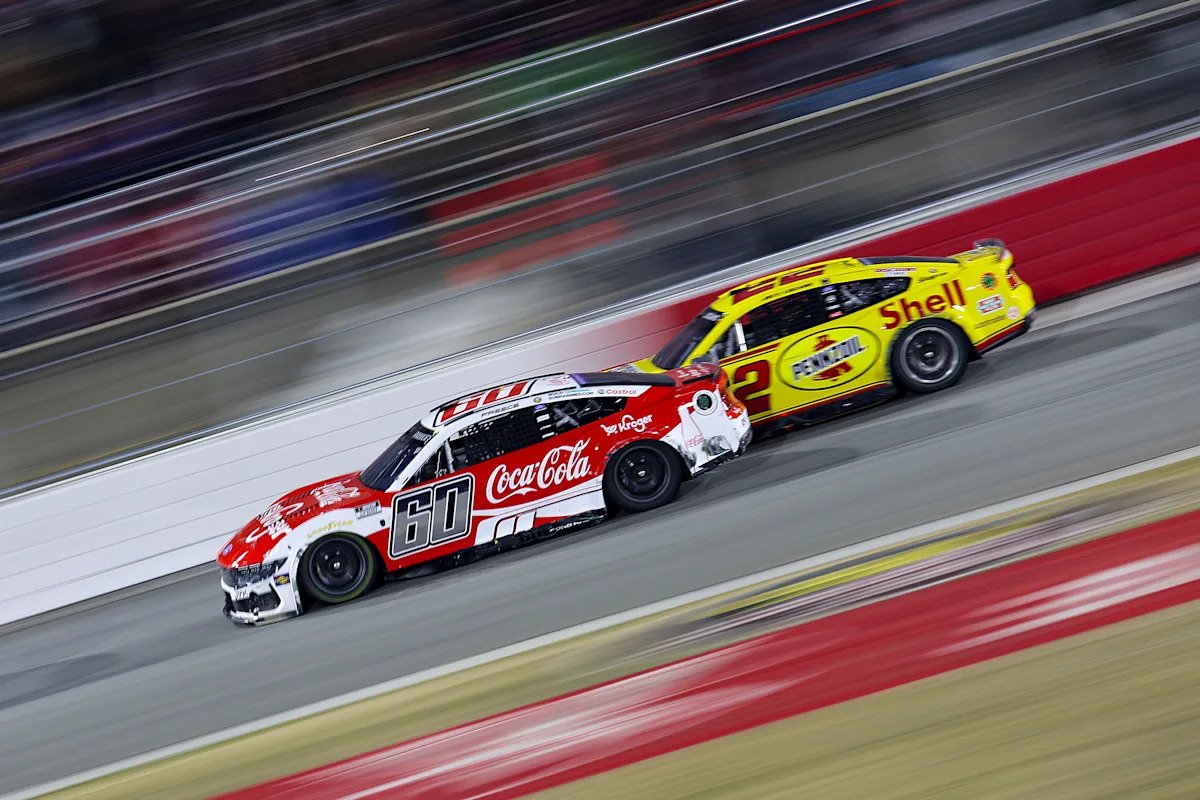
Imagine how boring it would be to drive 20 mph for three hours. Yet you’d have covered more distance than drivers covered under green-flag conditions in that same timeframe during the NASCAR Clash at Bowman Gray Stadium on Wednesday.
The Clash was, simply, a brutal watch. An exhibition race that was supposed to end before its two-hour TV window was over stretched into a fourth hour, as drivers couldn’t stop running into each other and spinning out. The race went so long that Fox kicked the race off its airwaves after three hours in order for “The Masked Singer” to air an hour later than scheduled. As the reality show began, NASCAR was relegated to the little-watched Fox Sports 2, a channel that regularly airs repeats.
Advertisement
It was an ignominious start for NASCAR’s Cup Series ahead of the Daytona 500 on Feb. 15. The Clash was originally scheduled for Sunday, Feb. 1, but the massive snowstorm in North Carolina kicked the race to Monday and eventually to Wednesday. Even so, the three-day delay didn’t save NASCAR from the elements.
With temperatures just a few degrees above freezing, a rain and sleet shower halted the proceedings about halfway through the 200-lap race. Teams were allowed to put rain tires on while NASCAR dried off the track following a short delay.
Chaos ensued. It was impossible for a green-flag run of any magnitude to happen. And that’s where the Clash’s caution-flag rules come into play. The race would’ve mercifully ended an hour earlier if it were like any other race and caution-flag laps counted toward the 200-lap total. But the Clash is unlike any other race. Caution laps don’t count.
That made for an interminable viewing experience.
Advertisement
Wednesday’s race was the second Clash at Bowman Gray Stadium after a few years at a temporary short track at the Los Angeles Coliseum. No, NASCAR can’t control the weather, but the events that took place at the 0.25-mile short track made a great case for why the Clash should either move back to Daytona or cease to exist.
The Clash, which began in 1979, moved from Daytona partially because it was a costly endeavor for teams to start the season. Crashes became the norm in latter years — as NASCAR’s rules put cars closer and closer together at Daytona and Talladega — so what happened at Bowman Gray wasn’t too out of the ordinary, even if the 17 caution flags were a Clash record.
Advertisement
But the race was also a perfect example of the recent NASCAR experience. Races have far too often been a chore to watch. If you stuck out the Clash after it moved from Fox to FS2 and didn’t go do laundry, organize your sock drawer or polish your silverware, you’re a die-hard NASCAR fan.
Yet you still probably didn’t enjoy what took place. It doesn’t help that Fox continues to mail in its NASCAR broadcasts and treat viewers like children. But even an engaging broadcast could’ve done only so much.
At least the Clash didn’t count for anything toward the 2026 title. And we can hope it’s not a harbinger of things to come this season. As NASCAR has — again — revamped its championship format, it’s hoping that disaffected fans will reengage. If you’re one of those who watched on Wednesday, you certainly didn’t find a reason to tune in later this year.
Oh, yeah, Ryan Preece won.

