Tuesday’s 4 p.m. ET deadline for NFL franchise and transition tags has come and gone. All those players who could have been but were not tagged — like Bengals edge rusher Trey Hendrickson and Colts receiver Alec Pierce — will either be re-signed to contract extensions over the next few days or become free agents. If it’s the latter, they will be able to negotiate with other teams once the legal negotiating window opens on March 9.
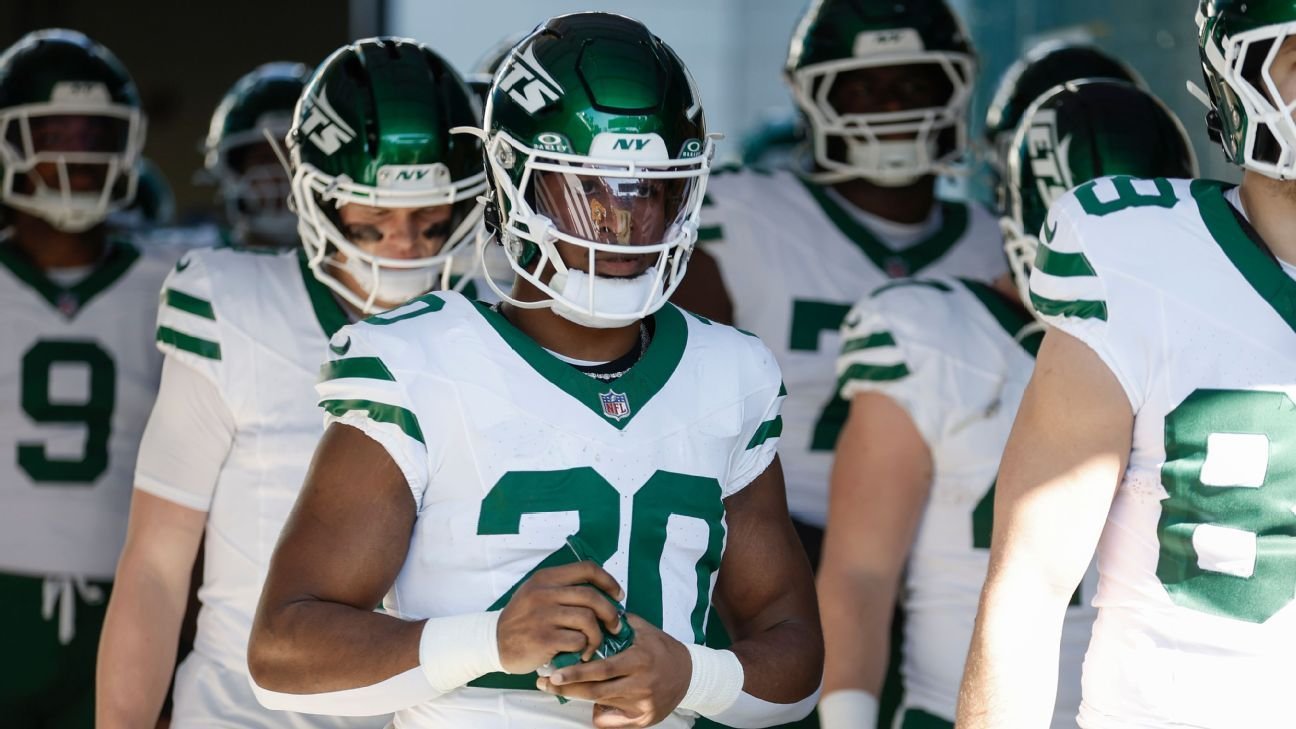
Four tags were placed this year, and one was the transition tag. The Cowboys and Falcons secured receiver George Pickens and tight end Kyle Pitts Sr., respectively, for another season days before the deadline. Jets running back Breece Hall was franchise-tagged Tuesday, and Colts QB Daniel Jones was transition-tagged in the early afternoon before the deadline. All four players will continue negotiating long-term deals with their teams.
The tag is generally good for teams and bad for players. But who specifically came out on top of this year’s tag deadline? Here are my winners and losers of the day.
See more on NFL free agency:
Tracking moves | Grades | Top 100


If you’re ever wondering why team owners cling so desperately to the franchise tag during negotiations with the NFLPA, look no further than this situation. George Pickens was, without question, the best rising free agent of the 2026 offseason. Ludicrously talented, he has both the 6-foot-3 frame and versatility to be a high-volume WR1, and the explosive downfield ability to be a complementary WR2. His lone season in Dallas was his most productive — 93 catches, 1,429 yards, 9 touchdowns — as he finally enjoyed quality quarterback play outside of Pittsburgh. Pickens turns 25 on Wednesday, and he would have easily cleared $30 million per year in average annual value on a new long-term contract in the open market.
Instead, Pickens will play on a one-year, $27.3 million tag. It is the non-exclusive tag, which allows Pickens to talk with other teams once free agency opens next week. Should he sign an offer sheet with another team, the Cowboys would have the right of first refusal — they could sign Pickens to that same deal. If they elected not to sign Pickens, they’d receive two first-round picks from the signing team in recompense for Pickens’ departure.
The Cowboys now have a ton of flexibility in their negotiations with Pickens. The tag serves as a placeholder for free agency. If Pickens doesn’t sign an offer sheet with another team, the Cowboys can still negotiate and sign an extension with Pickens that replaces the tag altogether. The deadline for that deal is July 15 — plenty of time for Cowboys owner and general manager Jerry Jones to own some headlines and make some waves.
If Pickens’ foray into free agency reveals that he has a truly enormous market — perhaps even larger than the $34 million per year that CeeDee Lamb is making in Dallas — then the Cowboys might end up priced out of Pickens’ market. Dallas is currently well over the 2026 salary cap. While there are moves available to create space (such as extending Pickens to lower his 2026 cap hit below the $27.3 million figure of the tag), the Cowboys already have two top-of-market deals at wide receiver (Lamb) and quarterback (Dak Prescott). Do they want to pour a third megadeal into the passing game when their defense is suffering for talent?
It’s unlikely that a team trades the two first-round picks necessary to sign Pickens to an offer sheet — that’s a steep price. Instead, an acquiring team can trade for Pickens while he’s on the tag, extend him before the July 15 deadline and send Dallas draft capital commensurate with Pickens’ value. Pickens was just acquired by Dallas for a third-round pick last offseason. His value has gone up … but not all the way up to two first-rounders. Multiple Day 2 picks might get the deal done, though, and the Cowboys currently have no second- or third-round picks in the 2026 draft.
The tag creates so many avenues for Jones and the Cowboys. Perhaps nothing at all happens, leaving Pickens to play on the tag; it would be an expensive choice, but the Cowboys have been more willing than most teams to leave players tagged. Nothing would surprise me in this saga.

The Cowboys are winners at the deadline, but Pickens didn’t come out on top. The silver lining for him is that the non-exclusive tag allows his representation to drum up a market. Should cap-rich, WR-needy teams like the Titans, Raiders and Patriots express financial enthusiasm for Pickens’ services, there would be pressure on the Cowboys to get a deal — or a trade — done. But that isn’t guaranteed.
Pickens was known for an inconsistent motor during his best days in Pittsburgh. On his worst days, his on-field and locker room antics proved a distraction to the team. Pickens is far from the first star receiver to cause some internal headaches, of course. But his reputation precedes him in league circles, and that could soften his market accordingly.
2:29
Stephen Jones explains why Cowboys franchise-tagged George Pickens
Co-owner Stephen Jones tells Rich Eisen why the Cowboys used the franchise tag on George Pickens.

It got squirrely there for a minute, but Pierce will be able to hit the open market if he so chooses. The Colts went down to the wire on their tag decision, but eventually elected to transition tag QB Daniel Jones and run the risk of losing Pierce in free agency. The Colts know the value of Pierce and will aggressively try to secure him to an extension before the opening bell of the 2026 league year. But with Pickens off the market, Pierce is the biggest free agent name at wide receiver. It will be tough to keep him from testing the open waters.
Pierce has led the league in yards per reception in each of the past two seasons. In 2024, Pierce hauled in 37 of 68 targets (54.4%) for 22.3 yards per reception. In 2025, as the offense grew healthier under Jones, Pierce’s volume increased. He snagged 47 of 84 targets (56.0%) for 21.3 yards per reception. He is the only high-volume receiver over the past two seasons to average more than 18 yards per reception … and he has done it twice.
Pierce is one of the league’s preeminent deep threats, as he has true speed (4.41 in the 40-yard dash) and excellent size (6-foot-3). He excels at ball tracking and winning above the rim in contested situations. He can run away from one DB and box out the next one. He’s the real deal.
But Pierce’s yards per reception is also so high because he was rarely targeted on short-breaking routes. ESPN charted 49.9% of Pierce’s routes as vertical routes in 2024 and 48.5% in 2025; the league average for high-volume wide receivers is 36%. Pierce rarely ran screens, slants, quick outs — anything that would have dragged his air yards per target or yards per reception down. The Colts, who employed Michael Pittman Jr. and Josh Downs, simply did not need Pierce anywhere near the line of scrimmage.
An acquiring team can reasonably pay Pierce as a highly explosive WR2. Some financial comparisons are Jameson Williams ($26.6 million per year) and Tee Higgins ($28.8 million per year). But because Pierce’s role was less about his deficiencies and more about the Colts’ crowded room, enterprising teams can reasonably project Pierce into more of a three-level role — and of a WR1, with an accordingly increased price tag.
Pierce should see a ton of interest, as the list of WR-needy teams nicely coincides with the most cap-rich franchises. The Titans, Raiders and Jets all need receiver help, and the Steelers and Patriots aren’t far behind.
Pierce strikes me as the most Milton Williams-esque free agent in the 2026 class: His contract might come with some sticker shock as fans wonder how he’ll transition from his siloed role into a full-time job. But that surprise will quickly be forgotten once he excels in his new home.
If the Colts do indeed retain Pierce, watch to see if they move on from Pittman. The 29-year-old has one year left on his deal at a $29 million cap hit, of which only $5 million would be dead in the event of a trade or release. Even if Pittman stays in Indy, Pierce would see an increased role on top of a lucrative deal in 2026. Nobody is happier today to have dodged the tag than Pierce.

Jones was so, so close to a massive extension from the Colts. It wouldn’t have been his first big payday — he already got one big deal out of the Giants — but it would have been an enormous win for him after the one-year prove-it deal he signed with Indianapolis in the 2025 offseason. The optimal outcome.
Jones’ Achilles’ injury in Week 14 against the Jaguars was devastating not just to the Colts’ playoff hopes but also to Jones’ earning potential. He likely would have signed a multiyear extension near $40 million per year before going down, but the severity of the injury and the recovery timeline stretching into the 2026 regular season made things shakier.
Still, with Colts general manager Chris Ballard and head coach Shane Steichen both on less-than-solid ground in job security, Jones was certain to return to the Colts — and that gave the QB leverage. The Colts and Jones have been in extension discussions for a long time now, but Indianapolis needs Jones to escape QB purgatory a little more than Jones needs the Colts to keep producing. So his representation held out for a big deal.
In response, the Colts dropped the transition tag on him. Critically, the transition tag is not the franchise tag. It is a challenge from the Colts’ brass to Jones’ representatives: Go see how robust his market really is right now.
The franchise tag has two options. It can be either exclusive (rare, only really used on quarterbacks) or non-exclusive (more common). The exclusive tag prevents the player from negotiating with any other team besides the tagging team. The non-exclusive tag, as mentioned earlier, allows the player to negotiate with other front offices.
The transition tag operates similarly. Jones can now negotiate with all 31 other teams when the legal negotiating window opens on March 9. He can sign the best offer sheet he gets from the Vikings or Cardinals or Steelers or Dolphins. The Colts have the right of first refusal and can sign Jones to that offer sheet instead. But if they let him leave … they get no draft capital back. No two first-rounders, no third-round comp pick. Nothing.
The transition tag isn’t often seen. The last was used on Kyle Dugger (2024), and before that, it had not been used since 2020. The Colts used it on Jones because they believe whatever multiyear extension they’ve offered him to this point is the best possible offer he could get on the open market. And if they’re wrong, and some other team will pay him $3 million more per year than they were offering, they’re comfortable swallowing that extra cash and signing Jones to the offer sheet.
One awkward trick of the offer sheets: Because the Colts might have to let another team do their work for them, they can’t set up the injury guarantees or performance incentives as they might like. Jones is coming off a major Achilles injury, and a shrewd team could ensure Jones’ deal is easily cuttable in future years should he never return to form. Will another team give Jones far more grace on injury guarantees and dare the Colts to take the plunge?
It only takes one, but in general, teams are unlikely to use offer sheets on tagged players to mess with other franchises. There are rules stemming from 2006 shenanigans between the Vikings and Seahawks, when Seattle transition-tagged guard Steve Hutchinson, that prevent teams from putting “poison pills” in their offer sheets to tagged players. This is especially interesting because the Vikings’ cap guru that built the poison-pilled contract in 2006 was vice president of football administration Rob Brzezinski … who is currently the Vikings’ interim general manager. And the Vikings, who signed Jones off the street in 2025 to study under coach Kevin O’Connell, are in need of a quarterback.
It’s nothing more than food for thought. It’s rare to see transition tags actually end in player departure: The most recent was Charles Clay in 2015. It’s doubly tricky when it’s a quarterback, as it’s hard to imagine the Colts ever letting an offer sheet on Jones slide by and getting no return on his departure at all. This tag gives the Colts exactly what they want: a one-year commitment to see Jones post-injury. It might burn them in next year’s negotiations, if he plays well and can demand far more than he would have gotten this season. But for now, they have control.
For Jones, it’s not a terrible outcome. His best football — and accordingly best path to a big contract — is almost certainly with Steichen in Indianapolis. And he still might get that deal done; he can use free agency to get an accurate evaluation on his market, then sign an extension with the Colts before July 15. His play warrants a multiyear deal, and I’d wager he ends this process with one … if just a little bit smaller than he was hoping.

Tagged players are never truly winners at the franchise tag deadline, as it is explicitly a tool that restricts their markets and makes contract negotiations more difficult. But on the relative scale of player outcomes, Pitts is a winner.
Like Pickens and Hall, he is on the non-exclusive franchise tag. But no team would realistically trade two first-round picks for a tight end, so Pitts will almost certainly be a Falcon in 2026. His tag figure comes in at $16.3 million. That’s the fourth-biggest TE cap hit for this season, and the three contracts above him (Dawson Knox, Dallas Goedert and T.J. Hockenson) are all either dead cap hits or release candidates as we approach the new league year.
It’s a solid pay day for Pitts, who is coming off a career season in 2025. Outgoing offensive coordinator Zac Robinson used him more underneath, which allowed Pitts to increase his receiving volume from the field-stretching role he first filled when drafted by Atlanta in 2021. Pitts was second only to Trey McBride in targets (118), receptions (88) and receiving yards (928) last season, in large part due to a career-low in air yards per target at 7.1. Yet Pitts was still well above the league average for tight ends (6.3). He’s rounding into a true three-level threat.
0:35
Should the Falcons be getting more out of Kyle Pitts Sr.?
Tim Hasselbeck details why it makes sense for the Falcons to use the franchise tag on Kyle Pitts Sr.
Only 25 years old, Pitts is due for a top-of-the-market extension. But the Falcons might hold their water and ask him to have another season of high-volume receiving production before they give him the big new contract. It’s a fair hesitation. It took Pitts multiple years to come back from his 2022 knee injury, which clearly sapped his athleticism in 2023 and into 2024. He is also a below-average blocker for the position (though he has improved over recent years), so if he doesn’t fit in the new offense as a pass catcher, he won’t provide much ancillary value.
Good news, though: The new offense is captained by ex-Browns head coach Kevin Stefanski and called by ex-Browns offensive coordinator Tommy Rees, both of whom have been good for tight ends. Rees was Cleveland’s tight ends coach in 2024 before stepping into the OC role in 2025; Stefanski was the tight ends coach in Minnesota from 2014 to 2015 as he worked his way up the coaching ranks. Browns third-round rookie tight end Harold Fannin Jr. shined last season with 72 catches for 731 yards despite poor quarterback play and no star receivers dragging coverage away from him. And David Njoku, a developmental draft pick who was struggling before Stefanski took the Browns job, blossomed in the years spent under that staff’s tutelage.
If Pitts plays on the tag, it’s fair to expect another solid season of production. He’s too much of a unique talent to fully vanish from the offense, even if the new staff doesn’t prioritize getting him the ball. Far more likely is a long-term extension signed over the next few months. The tight end market will shake up near the top when players like Hockenson are released, and after that dust settles, I imagine the Falcons will ink Pitts to a multiyear deal that doesn’t exceed the $19 million per year made by McBride and George Kittle but comes in just below.

Hall doesn’t seem particularly enthusiastic about being a Jet. The running back was tweeting through it during the trade deadline when teammates Sauce Gardner and Quinnen Williams were shipped away for massive returns. The Jets took calls on Hall, but no deal worth his value materialized, and Hall stayed in New York for the rest of the season.
Now, Hall is watching another escape hatch shut, as the Jets have tagged him after failing to secure him to a long-term extension before the deadline. The Jets and Hall can continue to negotiate up until the July 15 deadline on an extension that would replace the tag, which comes in at $14.3 million. But one thing’s for certain: Hall is not hitting free agency in 2026.
This is bad news for Hall. Still super young (24, turning 25 in May) and far removed from a major knee injury in his rookie season, Hall hit 1,000 rushing yards for the first time in his career in 2025. His film is far better than his numbers on a bad Jets offense would indicate. He has big-play ability as a runner, and in a healthier offensive ecosystem, he’d see far more space. He is also one of the more dynamic receiving backs in the league. Over the past three seasons, only Bijan Robinson, Christian McCaffrey and Jahmyr Gibbs have more receiving yards.
The 2026 free agent running back class is talented. Had Hall hit the open market, he would have joined Kenneth Walker III, Travis Etienne Jr., Rico Dowdle, Tyler Allgeier and Kenneth Gainwell. But he would have been the crowning jewel of that group, and with the recent success of sizable free agent RB contracts (Saquon Barkley, Josh Jacobs and Derrick Henry), Hall would have pushed for a deal near the top of the position.
Hall can still sign that $14 million-plus extension with the Jets if the ice thaws between him and the organization. If it doesn’t, he can refuse to sign the tag and hold out of mandatory minicamp and training camp. Hall would not be fined for missing these otherwise mandatory events, because he is not a signed player with the team. This absence could extend even into the regular season, at which point Hall would start forfeiting game checks.
The far more likely outcome: Hall would use the pressure of his absence to force the Jets into signing him to a bigger long-term extension or adjusted one-year deal that guarantees he hits free agency in 2027.

Walker has had a tremendous 2026. He was already hitting a hot streak as the Seahawks entered the playoffs, and once running mate Zach Charbonnet got hurt, he took to the full-time job with aplomb. Look at Walker’s production splits from the first 10 weeks of the Seahawks’ Super Bowl season to the final 10 weeks.
Walker hits free agency with the league’s most recent memory of him as an MVP in the Super Bowl, and now his primary contender in free agency — Hall — is tagged and off the market. While Etienne is also a three-down back with leaguewide interest, Walker is now the top running back in the free agent class. And the 2026 draft class at the position is extremely thin after projected top-10 pick Jeremiyah Love.
There’s demand at running back — the Saints, Chiefs, Broncos, Cardinals and Steelers all need help there. And the supply just got thinner with Hall tagged. That will only drive Walker’s value further up. And ESPN’s Adam Schefter reported that Seattle had no intentions of tagging Walker at that $14.3 million figure.
I’d be surprised if Walker ends the cycle with less than Alvin Kamara‘s $12.25 million-per-year deal, which is the fifth-biggest active running back contract by yearly cap hit. A deserved payday awaits him next week.

