We love to bust open the keyboards and speak our minds when we get pissed off. It’s human nature, and increasingly it’s the fuel that powers internet discourse. In gravel racing, the debate around Life Time’s recent ban on dropbars in key events shows just how quickly controversy overtakes conversation. Opinions scatter in every direction, but friction and conflict are usually what get the most attention.
Most of the time, we cover the good stuff through straight reporting. Those stories don’t carry a heavy editorial point of view. Instead, they’re built from quotes, context and letting the facts speak for themselves. That approach works for both good news and bad. Opinion pieces are different, though, and they’re far too often resistant to giving credit where it’s due, even when people clearly deserve their flowers.
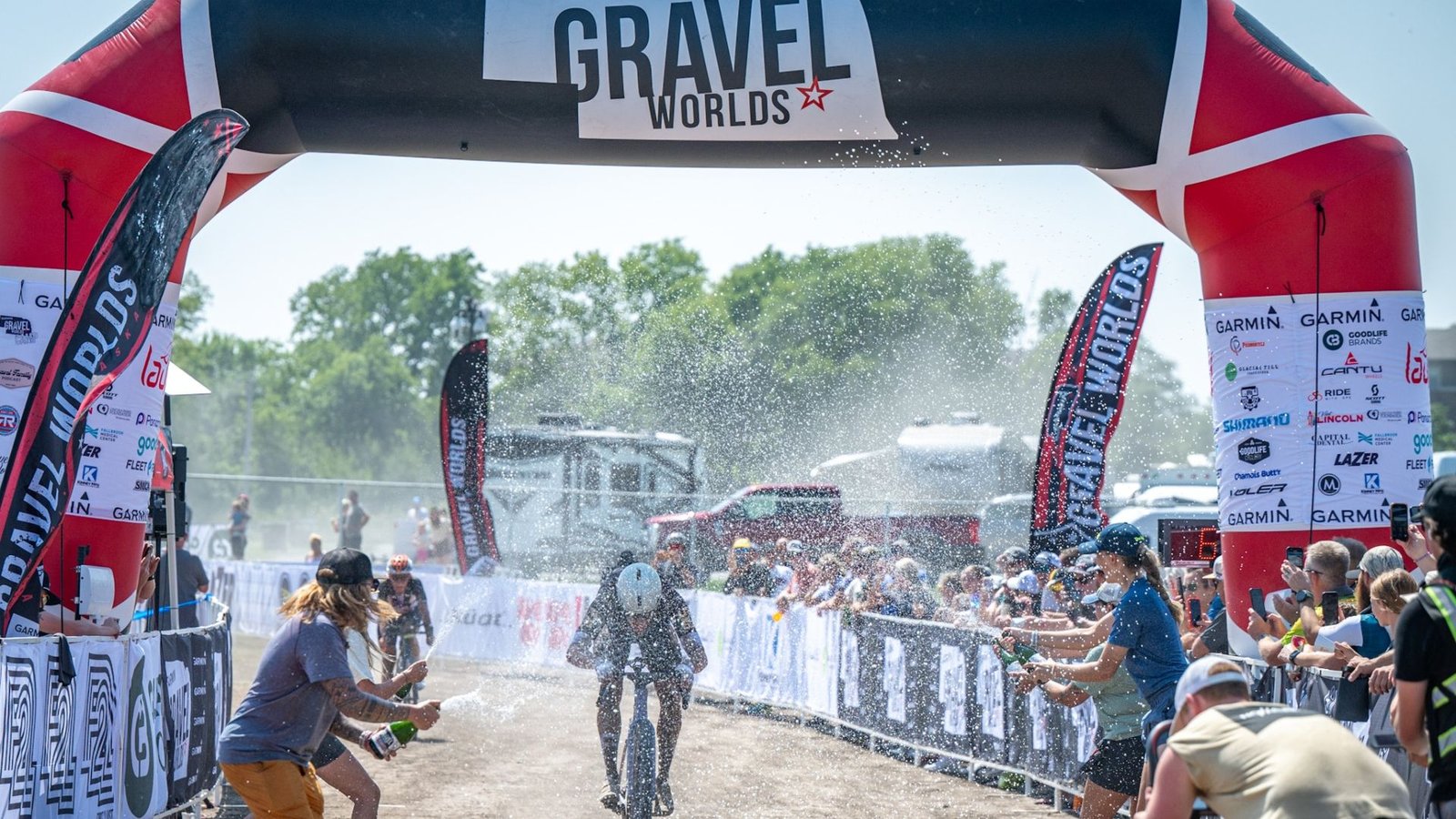
Gravel Worlds makes massive changes to safety while boosting prize money, again
(Image credit: Logan Jones-Wilkins)
Every year, the original Gravel Worlds in Lincoln, Nebraska, adds another ring to its trunk. A race older than the vast majority of gravel events would be forgiven for standing still now and then. But Gravel Worlds doesn’t do that. It keeps growing and increasingly sets the tone for the rest of the calendar.
In 2024, that meant audacious, wall-to-wall livestream coverage complete with announcers, drones and motos on course. In 2025, the prize money arrived in a big way, with the largest single-day purse in gravel racing. Now, for 2026, the focus shifts to safety, with a major overhaul of on-course protocols, along with even more money flowing into the prize pool.
The live coverage and cash alone would be enough to warrant a tip of the cap. Fundraising at that level and taking those kinds of risks is no small feat. But in terms of progress for the gravel discipline, perhaps the most meaningful change is the decision to guarantee corner marshals at every stop sign on the course. In road racing, that’s considered the bare minimum. In gravel, many major events still haven’t committed this level of emphasis and resources to safety outside large paved intersections.
Mid South sets a tone that could unlock aspects of racing we haven’t seen yet

(Image credit: Alex Barratt)
The key frustration with Life Time’s decision to eliminate drop-bar mountain bikes wasn’t simply the rule change itself, it was the choice to make that change instead of addressing the root safety issue at Leadville: two-way traffic created by mixing professional and amateur fields. That criticism feels especially fair because Mid South has now shown there’s a workable alternative.
Mid South, the traditional season opener for gravel racing, is one of the largest independent events on the U.S. gravel calendar, alongside races like Gravel Worlds, SBT GRVL and Barry Roubaix. It’s a favourite among elite riders, but just as importantly, it’s a foundational event for recreational participants. For many riders, Mid South is a once-a-year pilgrimage, and one of the only races they’ll pin on a number for all season.
That broad appeal, however, has created real safety challenges on race day. The wide range of abilities in a single field led to bottlenecks and risk at the start, the finish and key points on the course. To preserve the event’s balance, and avoid a serious incident, the race needed a structural solution.
Mid South found one by moving the professional race to Friday afternoon, centering its finish around the pre-race party ahead of Saturday’s amateur event. The change gives the pro race a primetime feel while eliminating congestion in critical sectors, reducing two-way traffic, and freeing up police resources for more effective road closures.
From our perspective, it’s an honest and effective step forward, and a clear example of how gravel racing might solve safety concerns without sacrificing inclusivity or its spirit.
Rule of Three doesn’t care what the going rate is for gravel race entries are

(Image credit: Getty Images)
When Rule of Three came onto the scene in 2021, it was already a counterpoint to much of the gravel racing landscape. The website featured a poem, a mission statement, and a striking image of a drop-bar cyclist pointed down a trail that perhaps warranted a very different bike. The idea was simple: three types of surfaces in one 115-mile race. What was even more unqiue was the fact that the race entry fee was less than $100.
Five years later, almost nothing has changed beyond the specifics of the course. That consistency itself is what makes it progressive. From the onset, it has centred around community, embraced affordability and delivered a one-of-one experience, unconcerned with the ebbs and flows of the greater cycling calendar.
In an era of almost universal registration price increases, an increased emphasis on the professional side of gravel, and the general big-ness of races, Rule of Three’s resilience against those changes exemplifies a race doing things right.
This is not an exhaustive list, and my apologies to the races I wanted to include but couldn’t. Races like Foco Fondo, the Appalachian Journey, Vermont Overland, and Barry Roubaix are each doing great work in their communities to move the sport forward.
Races like Unbound, Leadville, The Traka, and UCI gravel events will always command the biggest headlines. But it’s often these smaller, independent events that do the real work: testing ideas, prioritising riders and quietly shaping what gravel racing becomes next. So here’s to you.
Explore More

