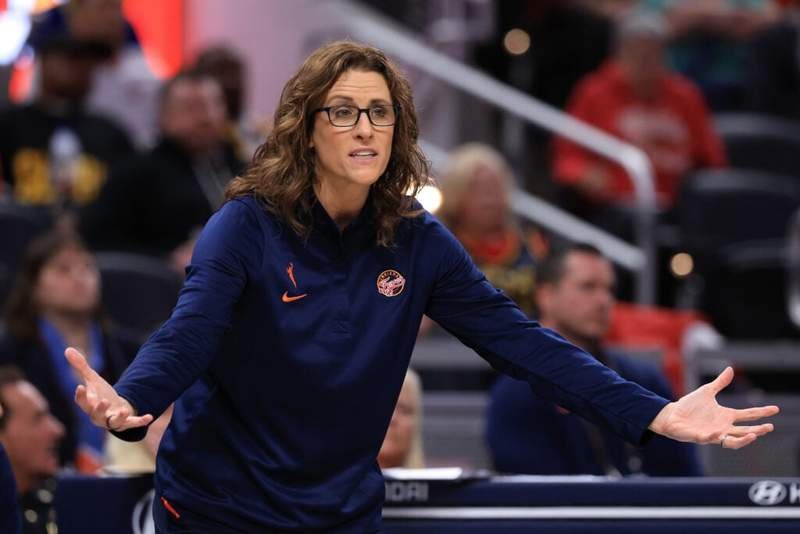
Stephanie White made her stance clear after the Indiana Fever were warned by the WNBA over how they handled Caitlin Clark’s injury report before the Portland Fire game.
Asked about the warning on Friday, May 22, the Fever coach kept it brief: “My reaction is: for what?”
Advertisement
And it was a fair question. While the league had rulebook grounds to issue the warning, the public explanation still left plenty of room for confusion.
Stephanie White clearly did not agree with WNBA over Fever warning
Photo by Bobby Goddin/Getty Images
White did not hold back when asked about the decision. She reportedly felt the team had done things the right way, a point that matters because Indiana’s argument was not that injury reports are unimportant.
Their point was that Clark was expected to play. That made this more complicated than simply hiding an injury.
White’s response worked because it shifted some responsibility back onto the league. If the WNBA is going to warn a team publicly, it needs to make the standard clear enough for everyone to understand.
Advertisement
WNBA had a rulebook reason but still created a clarity problem
The WNBA had a rule to point to. Teams are required to file availability reports by 5 p.m. local time the day before a game.
The league treated Clark’s missed practice for back treatment as something that should have been reported before Indiana later ruled her out against Portland.
That gives the league a clear process to defend. It also explains why the WNBA warned the Fever over their handling of Caitlin Clark’s injury report.
But that still did not fully address White’s pushback. If Indiana genuinely believed Clark would play, the league needed to be clearer about why missed practice and treatment alone required an update.
Advertisement
Fever response makes this more than a paperwork issue
This is where White’s stance starts to make sense. Injury reporting is important, but teams deal with evolving medical information every day.
A player can miss practice, get treatment and still be expected to play. That is the distinction White wanted recognised.
Clark then returned against Golden State and put up 22 points and nine assists. That does not erase the reporting issue, but it does show this was not a long-term absence being kept quiet.
There was no fine attached to the warning, either. That is another sign the league saw this more as a process reminder than a serious disciplinary matter.
Advertisement
That is why White’s response landed. She was not dismissing the importance of injury reporting. She was challenging the league to explain the rules more clearly, and that is a conversation the WNBA needs to have.
Read more:

