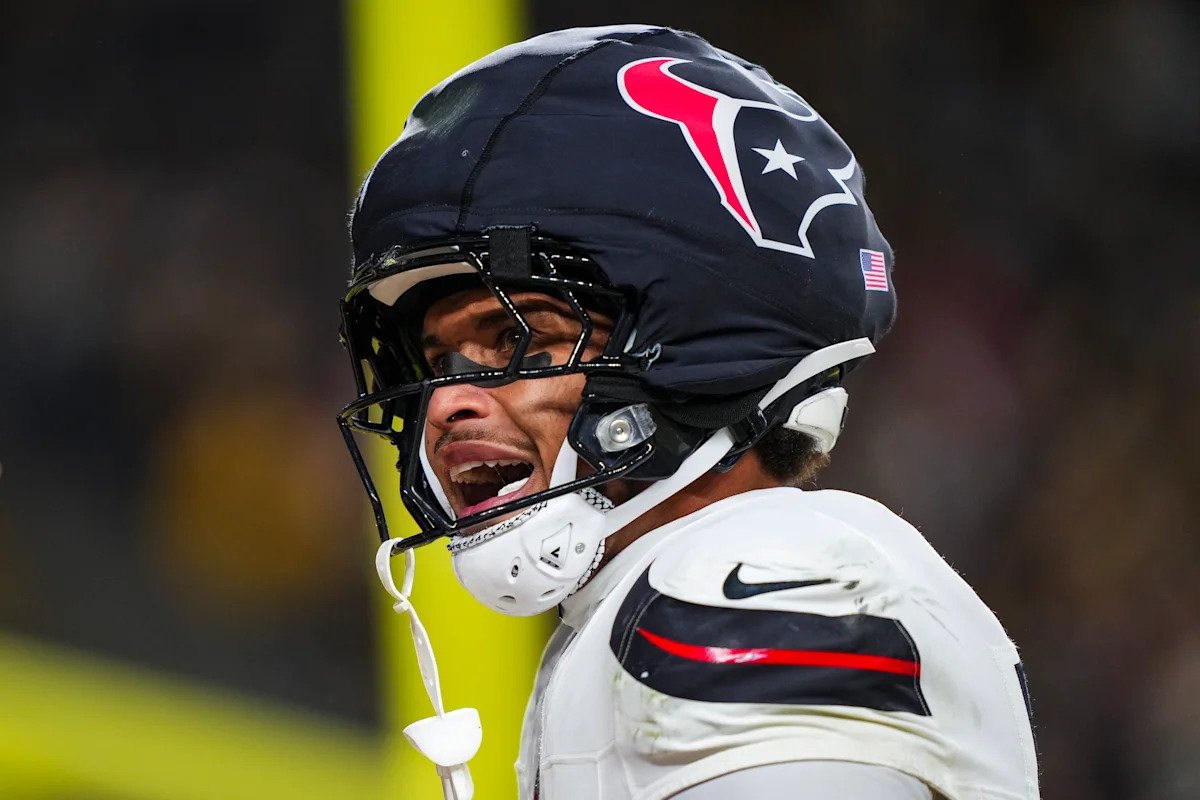
Houston Texans safety Jalen Pitre is signing with the sports equipment company behind Guardian Caps as their first “signature athlete,” the company announced Monday.
Pitre is one of a handful of NFL players who wears the caps in games. Last year, the 27-year-old safety missed three games with a concussion; after returning, Pitre wore a guardian cap in every game the rest of the season.
Advertisement
“I wanted to make sure I did everything I could to protect myself,” Pitre said in a press release from Guardian Sports, the company behind the caps. “This is about continuing to push the game forward. Think about your safety now because that’s what you’ll have when you leave the game.”
As part of the partnership, Pitre will work with Guardian Sports as “an advocate for player protection and proactive safety measures in football,” per the release.
Guardian caps, a soft-shelled liner that goes on the outside of football helmets, are designed to absorb impact in order to prevent future head injuries. Starting in 2022, the NFL mandated that guardian caps be worn by some positions during in practices, with the list of positions expanding over the past few seasons.
Play Yahoo’s new College Fantasy Football game: Create or join a league now!
Advertisement
The league allowed players to voluntarily wear the caps in games in 2024, with Pittsburgh Steelers lineman James Daniels becoming the first to do so. Since then, 20 or so players per season have opted to wear the caps during regular-season matchups, with customized team-branded covers over the top.
The NFL’s embrace of guardian caps comes as research into chronic traumatic encephalopathy (CTE) continues to find correlations between football and head trauma. Research has also connected CTE prevalence with other sports, such as hockey.
Just in the past few months, a number of former NFL players have been diagnosed with CTE after their death, including Chicago Bears Hall of Famer Steve McMichael and college football Hall of Famer Billy Ray Smith Jr. Former Dallas Cowboys defensive end Marshawn Kneeland, who was only 24 when he died this fall, was diagnosed with stage 1 CTE after his death.

