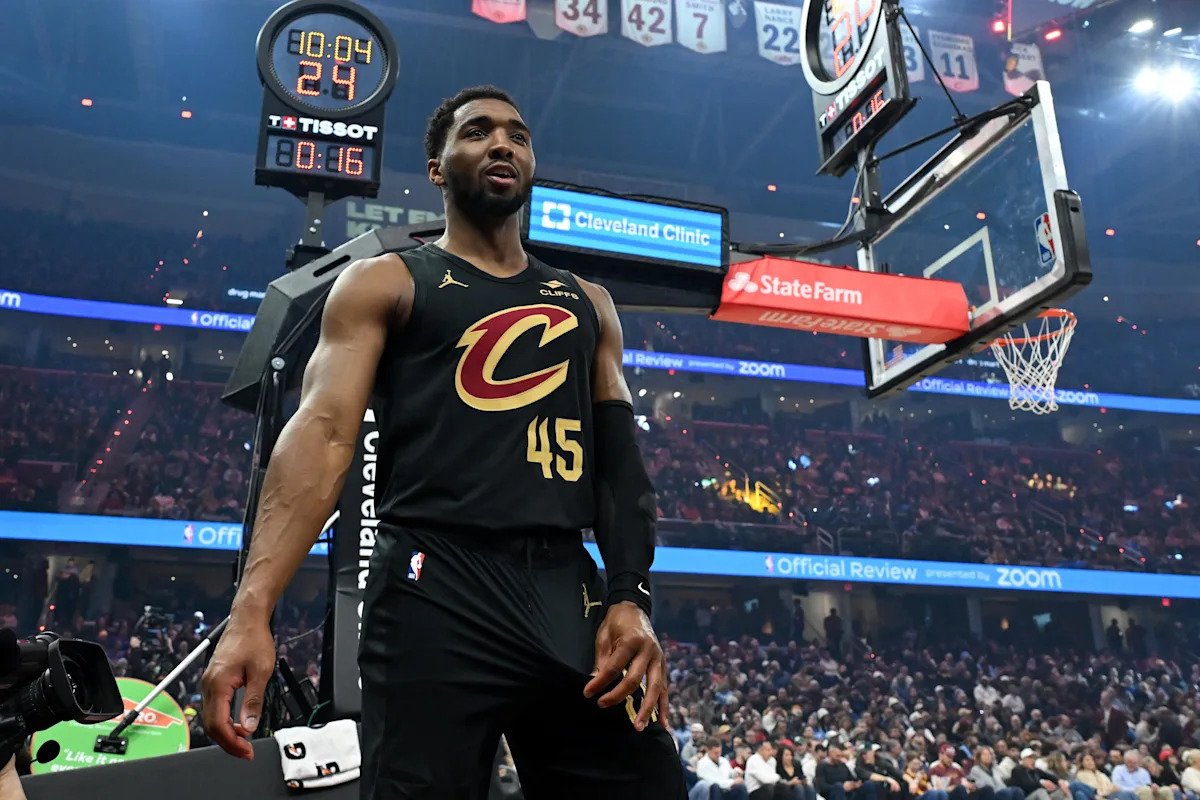
The two most important things in NBA team building are stability and flexibility. The Cleveland Cavaliers strengthened their position in both when they agreed to a four-year extension with seven-time All-Star Donovan Mitchell on Tuesday morning — the first day Mitchell was eligible to sign it.
On first blush, the deal looks like an overpayment. The contract runs through 2029-30 and has a player option for a final season in ‘30-31. The total money on the deal could be up to $273 million.
Advertisement
This is how the money shakes out on a per-year basis:
-
2030-31 (player option): $75.5 million
At the start of this deal, Mitchell will be making 35% of the entire salary cap. By the end, that balloons to 37.5%. That is a large financial commitment for a then-34-year-old undersized guard to be making in a league where every dollar spent either takes you closer or further from contention.
It’s easy — and maybe even understandable — to look at this as an overpay. Team building is incredibly difficult when you have that high a percentage of the cap designated to one player, especially one who is closer to being the 15th-best player in the league than the fifth.
What that line of thinking overlooks is the importance of stability and flexibility. If you have both, there’s always a path to pivot out of something that isn’t working.
Advertisement
Depth is incredibly important in today’s league. That’s been the one commonality among recent champions. So is having a superstar getting paid max money.
Dedicating more than a third of the salary cap to one player isn’t a detriment to depth. Adding multiple players on max contracts can be an issue.
The Jaylen Brown situation with the Boston Celtics is an interesting case study in this.
From afar, my reading of the situation isn’t that Brown was moved because he made too high a percentage of the cap for the player that he is. Instead, it was the fit between him and Jayson Tatum that was the issue. Boston couldn’t justify spending 70% of the cap on two players who had overlapping skills on both ends and needed the ball in their hands to be productive.
Advertisement
Brad Stevens, Celtics president of basketball operations, more or less outlined this in his recent press conference discussing the trade. Stevens said:
“The path looked a little bit more challenging with 70% of our cap and such a high percent of our usage tied into two players. And the reality in this era and in this day and age at the NBA, you could see it obviously, with the last couple of champions…you have to do a great job and you have to have the optionality to do a great job of building out depth that can hopefully replace the irreplaceable individual. And that’s not an easy thing to do, right? And we get that. And that’s absolutely nothing against Jaylen. If you have Jaylen Brown on your team, you should feature him. You should use all those possessions, and you should approach things that way. But I think the importance of depth, and then obviously we have to continue to work on ways to diversify our attack overall.”
This is where things get dicey for the Cavs.
The salary cap is expected to be slightly over $174 million for the 2027-28 season, which is when Mitchell’s salary kicks in.
At that point, he and Evan Mobley will be making a combined $114.7 million. That alone accounts for two-thirds of the salary cap.
That high a percentage for two players is a red flag. If you don’t have a pool of contributing role players on team-friendly deals or homegrown talent stepping up, your team simply won’t have the depth needed to win at the highest level.
Advertisement
The solution to this issue isn’t to try to pinch every penny out of your star players who have earned those contracts. It’s to trade out these contracts and retool if the situation calls for it.
It’s easy to look at the Brown trade to the Philadelphia 76ers as a disaster. They didn’t get the splashy return that you’d hope to get for a player of that caliber.
But they did get pieces that help them retool while still being a contender this upcoming season, and have more flexibility to improve in the future with a more manageable cap sheet. That wouldn’t have been possible if Brown were entering the last year of his deal or on a contract that wasn’t market value.
A contract is only bad if you wouldn’t be able to trade it for positive value. Even though the current CBA has made the super team, three max-contract player model less viable, there are teams that would be willing to trade for either Mitchell or Mobley with their current contracts.
Advertisement
We’ll start with Mobley on this.
There were rumors in the past year that the Milwaukee Bucks, Oklahoma City Thunder, and the Celtics all had interest in Mobley. Two of those organizations are considered to be among the smartest in the league. If they’re willing to trade for Mobley, you can be assured that there’s a market for him and his current contract.
Trade rumors for Mitchell have died down in recent years because of his contract situation. Still, I’d have a hard time believing there wouldn’t be multiple teams that would part with valuable assets for Mitchell — especially with the amount of time remaining on his deal once he were to become trade-eligible.
A team with that much of the cap committed to Mitchell and Mobley may not be viable years down the road. At that point, Cleveland would need to move one of them for potentially more depth or a star pairing that works better together.
Advertisement
However, that wouldn’t be an option in the future if the Cavs hadn’t gotten this long-term commitment from Mitchell. The decision would have been made for them.
There’s an alternate reality where the Cavs decided to play hardball with Mitchell. They don’t give him the full extent of the max contract, and both sides don’t come to an agreement this summer. If that happened, they could choose to play out this season and hope to come to a better agreement next offseason. The lack of extension would likely loom over the season and influence any trade they could otherwise make because you wouldn’t have the certainty of Mitchell being on your team long-term.
That scenario would get worse if you were forced to trade Mitchell with just one guaranteed year left on his deal. Teams would know that he had to be moved, and the price for his services would be greatly diminished.
The Cavs avoided both of those options.
Advertisement
Instead, everything is on the table now. If they want to move off either Mitchell or Mobley in the future, they should be able to do so while getting fair market value back in return. They bought time and future opportunities they wouldn’t otherwise have without this extension.
Long-term success comes from having options and being able to pivot when needed. The Cavs can do so with their top-two players guaranteed under contract through the 2029-30 season. That alone makes the Mitchell contract a great deal.

