It’s still early enough that looking at numbers probably falls outside the zone of fan interest. Even that pesky win-loss record isn’t supposed to matter as we wade into the season’s waters. But there are some areas of performance that are still worth keeping an eye on, if only to assuage or confirm our fears. Let’s take a look at three San Francisco Giants stats from their first 13 games that could prove prophetic as the season continues.
Heliot Ramos’s bat speed
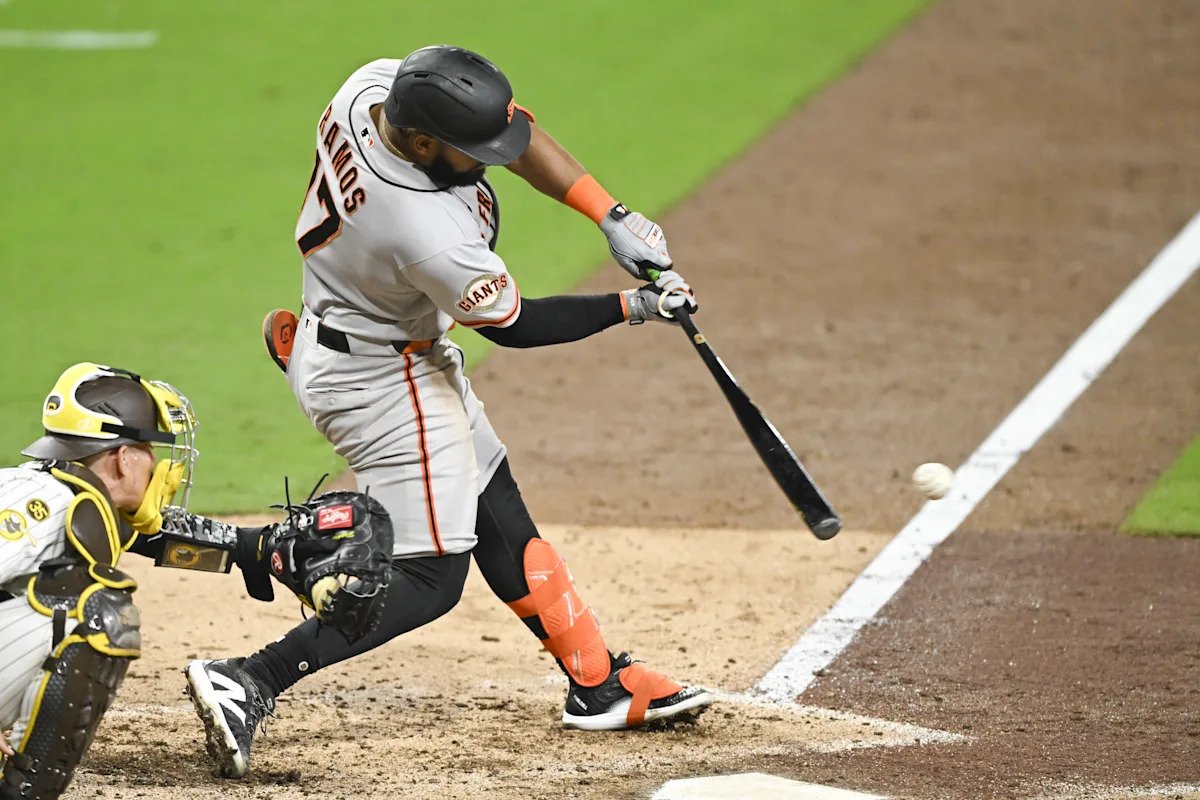
You’ve probably seen it posted elsewhere on social media, but the former All-Star is having a rough start to the season when it comes to a really important part of his hitting game: bat speed. In 2025, he averaged 74 mph swinging the bat, good enough for 77th percentile in baseball. Through his first 49 plate appearances, gathered from 12 of the Giants’ first 13 games, he’s swinging it at 70 mph on average, which is 29th percentile.
Advertisement
That’s bad.
It’s a huge dropoff and could indicate an injury. That might be preferrable to the alternative: a decline. Last season, I spotlighted LaMonte Wade Jr.’s decline in this same category through just the first five games of the season because he looked so very bad. That focus was due in part to the general, steep decline of Wade’s profile. Ramos wasn’t terrible last season (106 wRC+), but it’s worth noting that his bat speed was down when compared to his All-Star 2024 season (75.2 mph).
But Bryan, you brainless moron, there’s got to be some other explanation for this and it’s simply the case that you’re too stupid to see it!
Great point, random internet troll persona that I’ve conjured in my mind as I write this! Right now, Ramos is swinging at pitches outside the zone about 5% more than he has for his career (~35% in 2026 vs. 30% career) and he’s seeing fewer pitches in the zone to boot (~47% compared to 49% career). In a 49 PA sample, those percentages fluctuate substantially. His 40.8% strikeout rate could similarly be the result of the small sample size… or his bat has slowed… because he’s hurt… or in physical decline.
Advertisement
On the other hand, his average exit velocity when he does make contact (91.2 mph) is right in line with his career (91.6 mph) and currently rates 73rd percentile. So, we could be a couple of weeks away from some healing or swing adjustment being enough to get Ramos back on track. Maybe not to the All-Star level he achieved in 2024, but somewhere above league average as he was last season.
He’s an important bat and the Giants need him to come around.
The lineup’s walk rate
I’ve listened to enough KNBR in my life and observed the reaction to the Luis Arraez signing to know that most San Francisco Giants fans hate the walk and love batting average. So, I understand that this point might not be much of a concern to anyone reading this and, therefore, I’ll make this quick.
Advertisement
The Giants have the worst walk rate in MLB (6.3%), a full percentage point behind the next-worst teams (Colorado and Texas). From 2022-2025, the league walk rate was 8.35%. Over that same span, the Giants averaged 8.9% (with a 23.8% strikeout rate). Through their first 13 games of last season, they had a team walk rate of 9.2% and 24% strikeout rate — their 2026 strikeout rate of 22.6% is basically middle of the pack.
But Bryan, you useless dweeb, you empty hack, you absolute ghoul, what if walks are overrated?
I might agree for the sake of argument if the Giants were doing other things well. Instead, they have not (28th in OBP, 27th in slug — but 14th in batting average!). Walk rates are indicative of a team’s ability to avoid making outs. Avoiding outs for as long as possible is how runs are created. Runs lead to wins. The Giants might disagree with this scientifically validated notion, but that won’t improve their odds of winning on a given night. For the sake of argument, though:
-
With the ABS Challenge system in place, walk rates are expected to increase in the near-term as they did in the minor leagues. This makes a lot of sense as the strike zone is now defined consistently. Indeed, the league walk rate is 9.9% as of this writing, 1.5% above where it’s been since 2022.
-
Adding Luis Arraez to the mix (career 5.1% walk rate) is sure to drive down a team’s average.
Still, it’s a little alarming that the Giants have dipped so far below not only that but their own lineup average since 2022 but the league average over that span and what’s going on with the ABS Challenge system. Still not convinced walk rates matter? Some additional information: During the championship era, the 2010, 2012, and 2014 teams posted walk rates of 7.9%, 7.8%, and 7%.
Advertisement
Guys still shaking off the weather change from Arizona to San Francisco? A change in approach as dictated by the front office and the new coaching staff? We’ll find out soon enough.
The pitching staff’s average fastball velocity
Joel Peguero’s return will certainly help with this, but losing Camilo Doval and Randy Rodriguez still hurts in this very specific way: there’s not a lot of velocity on the Giants’ staff. Velocity is usually the easiest way to get swing and miss and swing and miss is the best way to prevent runs.
Last season, the Giants were 10th in MLB with an average four-seam velocity of 94.7 mph. The current staff is averaging 94 mph. Hardly surprising given how sinker-laden it is, but still, something to watch. According to Statcast, here’s the sport’s batting averages against all pitch types from 2022 to 2025:
Advertisement
All fastballs = .263
95+ mph = .240
Breaking = .220
Offspeed = .227
I put this one third of three items because it’s the one I’m not totally concerned about here in April. Yes, it will probably come back to harm the team around July, but that’s what the trade deadline is for. Teams are currently hitting .241 against the Giants overall here in 2026 (19th in MLB), but last year it was .245 (21st) and the year before that it was .243 (22nd) with strikeout rates in the 22-23% range (where it is this year). So, at the end of the day, this is what the team is. Let’s see if the slightly slower fastball velocity winds up hurting them later on.
I could’ve just said these are the things I’ll be watching, but if you’re a Giants fan, how could you not be invested in Heliot Ramos’s trajectory? Don’t you want to see the Giants get on base more to create either more action (stolen bases, extra bases) or score more runs? And as thrilling as Logan Webb can be and as potentially great as the rotation has flashed the potential to be even through these first couple of turns through it, they’re a pitch to contact bunch of starters and so wouldn’t it be great if the team switched up the look to opposing lineups later in the game by being able to flash strikeout stuff?
It’s a loooong season, but if any one of these three situations goes poorly, there might not be much the Giants can do this summer to turn things around down the stretch.

