Sometimes as a writer of columns I find I’m writing a column that’s a sort of “Part 2” to a piece I did a few weeks earlier. Perhaps I didn’t quite finish the thought first time, or I came up with a decent joke after I’d filed the copy, or I changed my mind and wanted to pretend I hadn’t been stupid enough to write the first one.
And sometimes I realise I’m writing a whole series of themed columns that you could collate into one long whinge. To wit, I’ve noticed that a recurrent motif of recent years has been, “Gosh, hasn’t cycling got expensive?”
In general I’ve been against this trend. But, last weekend, as I tried to find something in my overly-cluttered bike store I found myself thinking differently: “If everything had been as expensive ten years ago as it is now I’d have a lot more space in here.”

In fact a bit of quick maths suggests that the increased cost of bikes and the consequent reduction in my ability to buy them would save enough storage space that I could get off with a smaller house. Financially I’d actually come out in front.
The advantage is actually two-fold. First, as mentioned, you can afford less. Second, to upgrade you have absolutely no choice but to sell something you already own. This saves even more space. You can’t conceivably afford to keep anything you don’t use.

National champion against the clock at all distances, Dr Hutch is also a best selling author, an aerodynamic consultant and TV commentator. He writes a column for Cycling Weekly every week
I’ve only preserved one bike from my racing career as a memento – it’s a TT bike that I won quite a lot on, and which was perhaps the prettiest of my race bikes. Its aesthetic qualities are, however, hard to appreciate because it’s surrounded in its storage unit by a mighty collection of some of the best wheels, bars, saddles, and random bits given to me by sponsors down the years that I hadn’t intended to keep, but somehow did.
I’m not a hoarder. But if the Hoarder Police raided my unit, they would have questions I’d struggle to answer.
Why do I still have all these things? The problem is that when things were cheaper, their second-hand value declined to nothing even more quickly than modern equipment. If you were a sponsored rider looking to squeeze a bit more out of the deal by selling your team equipment, you had to do it very fast.
“My friend still looks back fondly on the year he broke his collarbone in mid-September and got to sell everything his team had given him a month earlier than usual.”
Dr Hutch
I’ve got one friend who used to do well on Ebay, but insisted that speed was key. If the prize haul at a race included something like a pair of sunglasses, he normally had them listed for sale before he even got home. (“Exclusive pro-only promotional colourway” was, he told me, the secret to turning ugly Italian sunnies with over-sized logos into a new video game.)
He still looks back fondly on the year he broke his collarbone in mid-September and got to sell everything his team had given him a month earlier than usual.
For those of us a bit slower out of the blocks, the cash value of most things dropped below the it-might-come-in-useful-one-day value in a matter of months.
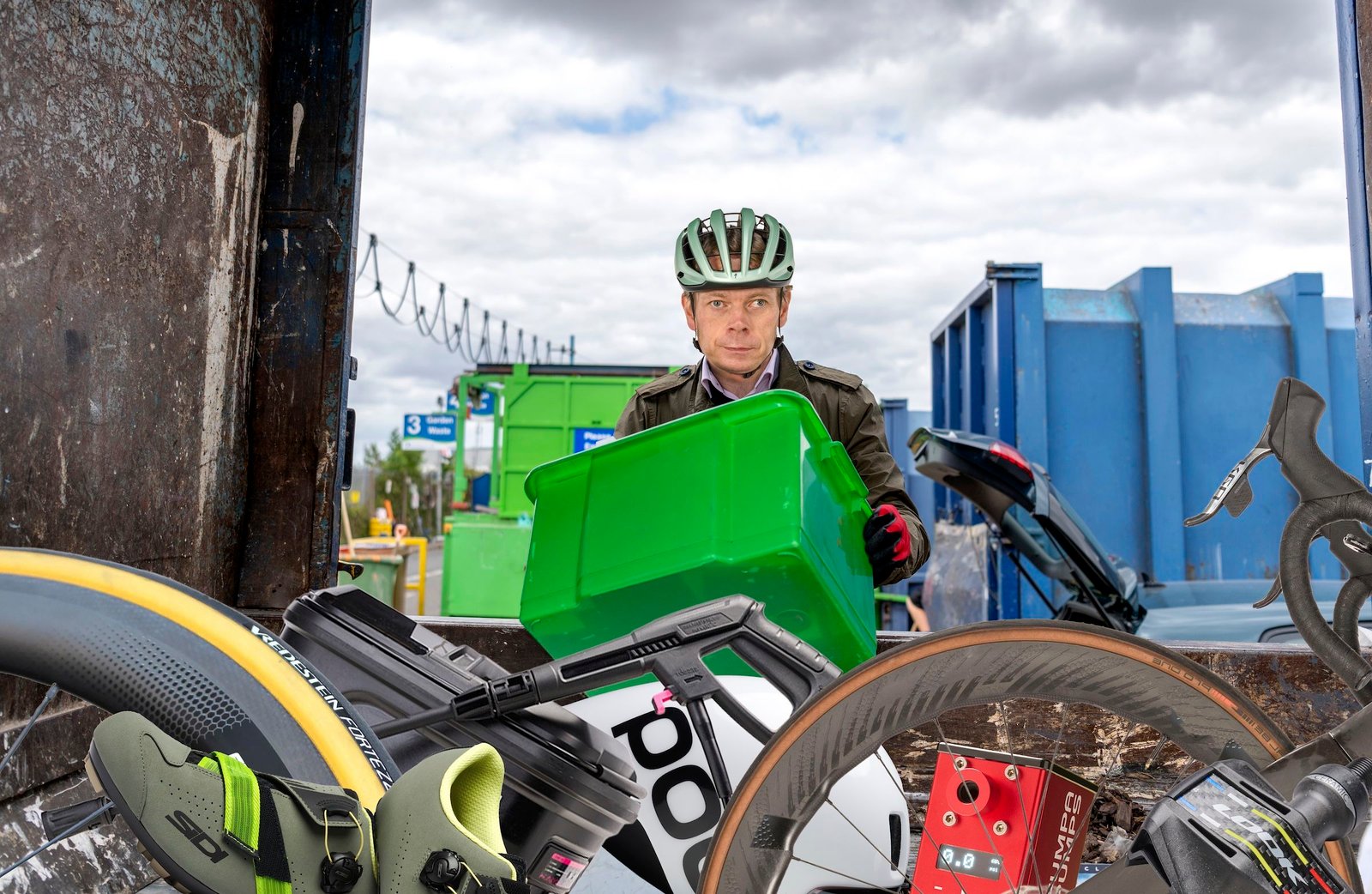
Leave it sitting for a year or two beyond that point, and you had things that no one would take even if you gave them away, like rim-brake tubular-tyre wheels. You find yourself at the local recycling centre asking a dude in a high-viz jacket what skip you should put carbon fibre in. That’s pretty heartbreaking.
Which naturally means that I don’t even do that with it – I just keep it. I tell myself that one day the value will go up again. Like an exquisite, chromed Cinelli frame from the 1950s, perhaps people will one day pay big money for old rim-brake aero wheels. And if they do, I’m going to be so rich I’ll be able to afford a modern bike.
How To… Be a Good Winner
Everyone knows the importance of grace in defeat, even if they prefer not to actually demonstrate it. Similarly, it is important to know how to win while maintaining a spirit of generosity towards your vanquished opponents or, as we winners think of them, the losers.
For example, you can help them improve their own performance for next time. Pinpoint for them any mistakes they might have made: “Mate, I just couldn’t believe my luck when you launched that incredibly stupid attack over the top of the last climb. Wow, you really handed it to me there.”
You might like to suggest that your performance was really just down to luck: “Mate, I’m just lucky. I have a lot of innate genetic talent, but as well as that I’m lucky enough to be the sort of person with a real work ethic and a will to just find ways to keep improving. Next time that could just as easily be you.”
Recognise that your opponents might not have had all of your advantages: “Mate, I think you did pretty well to be that close to me. I mean, you’ve got a lot of limitations as an athlete.”
Make sure you show them you understand the pain of defeat: “Mate, I know how hard you work. I know that you’re out training every day, sacrificing time with your family. It must really hurt to do all that and still come up short. I mean, I’d be bloody raging if something like that had happened to me.”
Acts of Cycling Stupidity
A long time ago, there was a fad for L-shaped cranks – cranks with a 90-degree bend in them. Supposedly they made it easier to pedal over top-dead-centre. Of course they did no such thing. There was maybe a visual illusion, but nothing more.
I was surprised to find an old photo of a friend of mine using them. I messaged him, mocking his credulity.
“Not a bit,” he replied. “I knew they didn’t work. But I’d also overheard one of my main rivals telling someone that he was desperate to get a pair because he was convinced they were brilliant. So I borrowed a pair and rode up and down in front of him with them at the race HQ before that year’s national championships. I’d killed him before he even got on his bike.”

