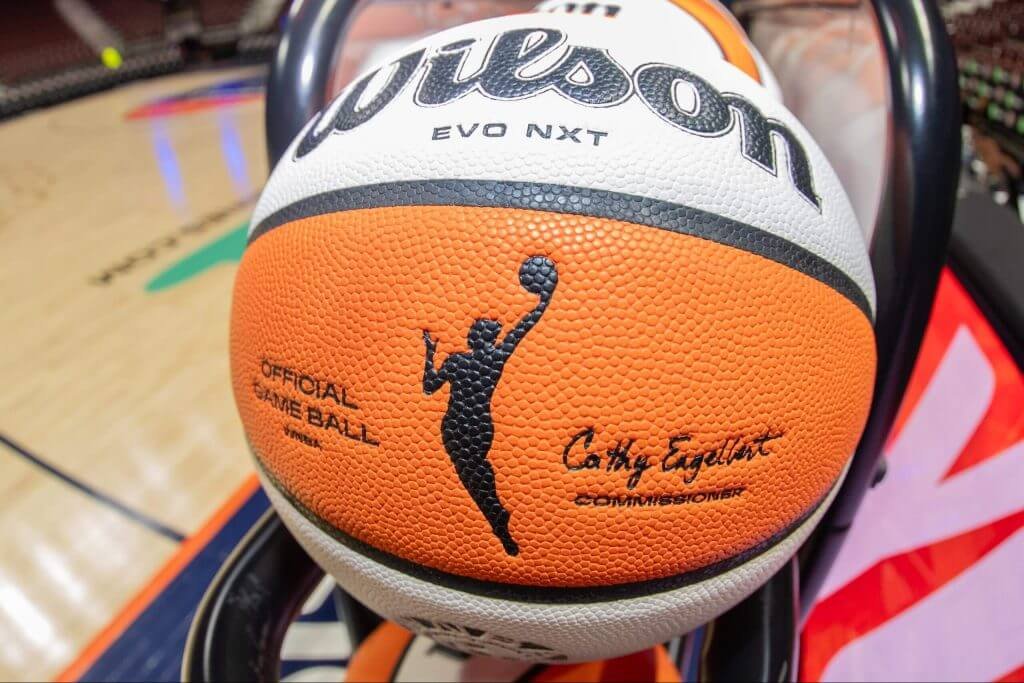
The WNBA finally has a collective bargaining agreement, and with that, the most anticipated offseason in league history can get underway.
After months of contentious negotiations and a week-plus of overnight marathon meetings, the Women’s National Basketball Players Association and the league hammered out a new collective bargaining agreement early Wednesday morning. Players will be paid more than ever and receive a larger chunk of revenue as part of the deal, which likely will be considered a pivotal moment in women’s sports labor history.
Advertisement
Though the financials are settled (for now) after a drawn-out CBA process, the league and its players must now face the reality of calendar logistics. They’re facing the most truncated offseason in league history. Other offseasons have been conducted in shorter time periods — in 2003, for example, a CBA was agreed upon on April 18 and the first game was played on May 22 — but no other offseasons have had this much business to accomplish before the season tips off on May 8.
The risk of a work stoppage during labor negotiations presented concerns about undoing all of the momentum the league has gained in the last few seasons with increased notoriety, fandom and investments. Now that the season is on the way, there is a lot the league still has to get right to ensure the upward trajectory of the WNBA with a smooth season.
Ratify the agreement
Firstly, attorneys for both the league and the players’ association will get to work on the legalese of the CBA. A complete document has to be drafted and ratified by both parties before anything else can proceed. The league originally allotted about three weeks for this process but will likely push to have it finished by April 1 to keep the trains moving.
Advertisement
Expansion draft
Then, we get to the fun stuff, starting with the expansion draft. It is somewhat stunning that the two expansion teams (the Portland Fire and Toronto Tempo) will be one month away from their inaugural seasons without a single player on either roster. The league will likely hold the expansion draft on April 6, using similar rules as last season when the WNBA welcomed the Golden State Valkyries.
Each of the 13 previously existing WNBA teams will submit a list of protected players to the Tempo and Fire. Teams are expected to be allowed to protect five players. Toronto and Portland can then draft one player from each team — whether this is conducted as a snake draft or a simple back-and-forth is unknown — until they get to 12.
Just as Golden State did last offseason, the Tempo and Fire can pass on picking from any of the 13 available rosters. Given that Toronto and Portland should be able to select only one unrestricted free agent each, and the majority of the WNBA is entering unrestricted free agency, there might not be enough realistic options to draft from each team.
Advertisement
The condensed timeline is such that the Tempo and the Fire will be making their expansion draft decisions during the Final Four, creating double-duty for their scouting departments. Expect USA Basketball to hold another training camp for the FIBA World Cup during that weekend, which will stretch front offices even further. That’s the theme of April: Everyone in the WNBA will have to be everywhere, all at once.
Free agency
Once the expansion draft has completed, free agency begins, and it kicks off at the same time as college free agency (a.k.a. the transfer portal). College players with an extra season of eligibility can simultaneously navigate the portal while communicating with WNBA teams about their professional prospects. There are fewer of these players now that the pandemic year is behind us, but plenty of rising seniors will be draft-eligible if they turn 22 during the 2026 calendar year, assuming the CBA doesn’t change this rule.
Players have been preparing for this free agency period for years, so much so that the union’s leadership advised them to sign shorter-term contracts to make them free agents during the 2026 offseason and capitalize on the massive salary increases afforded by the new CBA. The average salary will be more than $500,000, according to WNBPA president Nneka Ogwumike. Although rookie contracts will be right-sized in the new cap environment (i.e. leveled with the 2026 draft class), plenty of cap room will be there for players to sign life-changing contracts. Even if players don’t plan to change teams, some friction may linger over negotiating a new deal when so much more money is at play and contract length is once again a point of discussion.
Advertisement
Front offices will have a matter of days to decide which restricted free agents to extend an offer sheet to and which to core, as well as meet with every possible player they hope to sign starting April 12. The process could lend itself to stasis, with players sticking around with teams they know, but when long-term contracts totaling seven figures are available, free agents might not be so picky about joining a team they aren’t familiar with.
College draft
The college draft has been scheduled for April 13 since the draft lottery in November. Keeping that date is the fairest option for rookies who need some lead time before joining a training camp. The draft is in the middle of free agency, so team personnel may not be flocking to New York in droves — or maybe it’s a centralized location to meet with as many players as possible. Regardless, this is sure to be a draft like any other, with free-agent signings being reported in between picks.
Training camp
The conclusion of the draft and free agency allows training camp to begin on April 19. Two and a half weeks isn’t much, especially not with the amount of roster turnover that could take place, but maximizing this time is important for players’ health and the quality of play to start the season. Preseason games don’t begin until April 25, and the league has yet to announce the broadcast schedule for those games or the regular season. If the preseason can proceed as planned, a marquee game on April 30 between the Dallas Wings and Indiana Fever, featuring the last four No. 1 draft selections, including Paige Bueckers and Caitlin Clark, seems like a prime candidate for a national television slot.
Advertisement
Starting the regular season on time is also of importance because of how many big games the league has slotted into the first weekend, namely the defending champion Las Vegas Aces’ home opener and the debuts of the Tempo and the Fire.
The CBA news cycle has been filled with stops and starts during the bargaining process. There will be no stops for the remainder of the offseason; only go, go, go to prepare for the 2026 campaign.
This article originally appeared in The Athletic.
Minnesota Lynx, New York Liberty, Seattle Storm, Los Angeles Sparks, Washington Mystics, Atlanta Dream, Chicago Sky, Connecticut Sun, Indiana Fever, Dallas Wings, Las Vegas Aces, Phoenix Mercury, Golden State Valkyries, Portland Fire, Toronto Tempo, WNBA, Sports Business
2026 The Athletic Media Company

