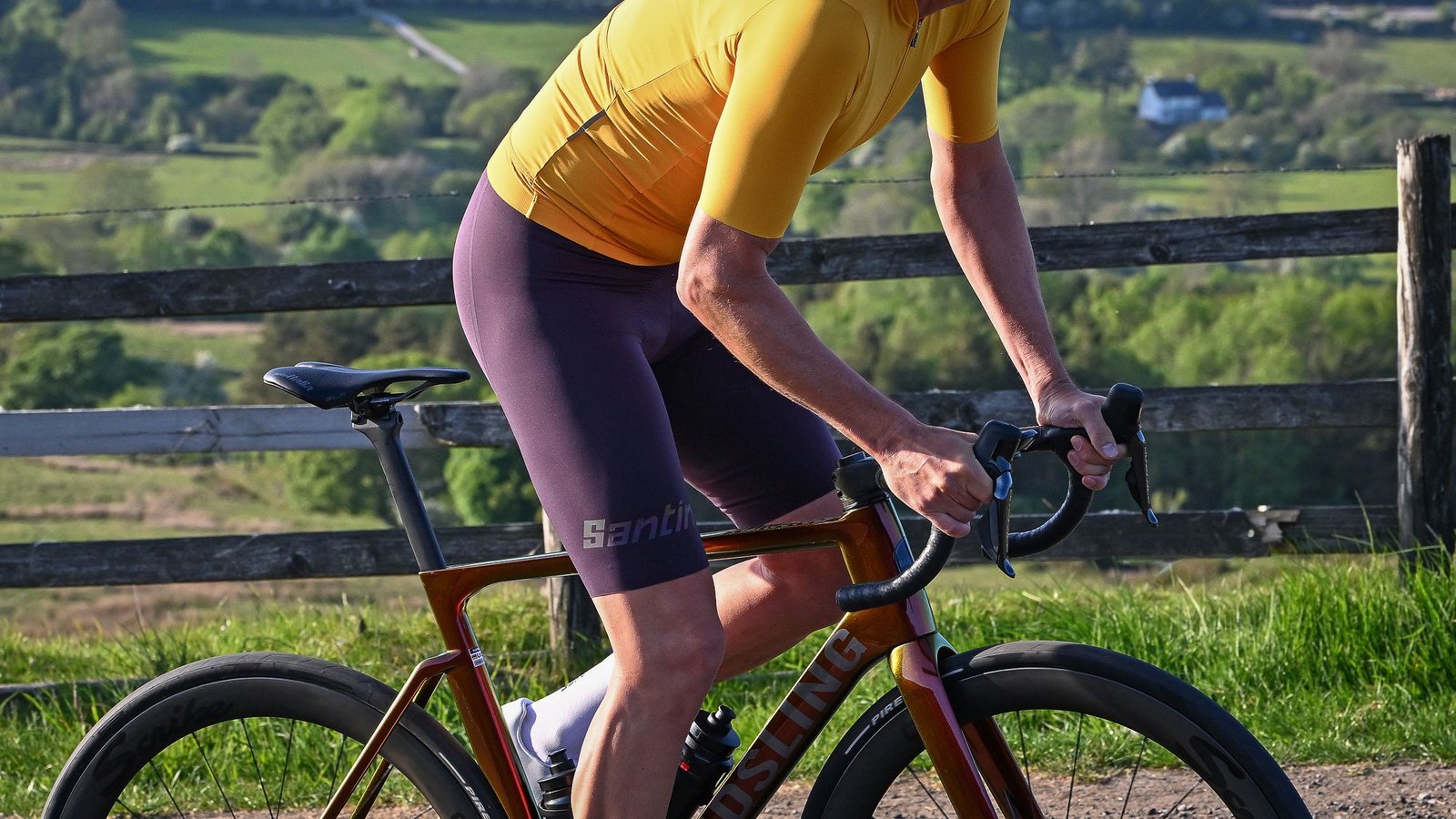
When To Replace It is a feature series in which we explore when one should replace common cycling products like helmets, apparel and various moving parts on your bike. Curious about a particular product? Shoot us an email at anne.rook@futurenet.com
Have you ever been in a group ride, sitting behind that one cyclist who’s showing a bit too much skin through threadbare shorts? What about those compressive bibs that now wrap—instead of compress—your legs, mostly held in place by loosely fitting straps? Do you have cycling shorts that used to feel so amazing, with a chamois that was like no other, but now you feel like you cannot get them into position for most of a ride?
When asked about cycling shorts’ lifespan, Castelli’s Steve Chapin offered a circumspect and environmentally conscious perspective: “If you’re still comfortable in the shorts, even with the less cushioned seat pad, then definitely keep riding it. No reason to fill up the landfills prematurely,” said Chapin.

But, shorts won’t last forever. “The Lycra can break down due to high heat, exposure to chlorine as well as sunlight. Ultraviolet radiation causes the molecular chains of the polyurethane segments in Lycra to degrade, much like old rubber bands becoming brittle,” Chapin said.
“This leads to a loss of elasticity, fabric thinning, and permanent stretching out. The first place this usually happens is on the back of the short and when the Lycra degrades then you’ll get some transparency back there.”
What are the timeframes?
If you want to put a number on it, Scott Sports Marketing Director Chris MacKay pegs shorts’ lifespan about the same as bike helmets.
“For most bib shorts made from polyamide/elastane blends, you can expect about three to four years of consistent performance with regular use. Higher compression fabrics can sometimes extend that lifespan slightly,” said MacKay. “Longevity really comes down to two key factors: construction and care.”
And Gianluca Caliari, president of Nalini’s U.S.A. importer Albabici, agreed with MacKay’s suggestion regarding chamois lifespan of about three years. “Cycling shorts generally need to be replaced after 10,000 to 15,000 Km (or after two to three years of regular use), as indicated by signs of wear and tear,” said Caliari.
The signs to look for

Fabric will eventually show signs of pilling, or bobbling
(Image credit: Nalini)
Timeframes, of course, will vary by rider depending upon mileage and care. So what other signs can we look for? “The fabric may begin to look thin or slightly see-through, though that typically means they’re already well past their prime. On the chamois side, watch for pilling on the surface, which can increase friction and lead to discomfort on longer rides,” MacKay said.
“A good pair of bib shorts will gradually tell you when they’re reaching the end of their life,” MAAP representative Tom Copeland told us. “The biggest indicator is usually chamois fatigue. If the insert feels softer than it once did, or you’re starting to feel your sit bones through the pad on rides that were previously comfortable, it’s probably time for a replacement,” said Copeland.

A worn chamois will show signs of degradation
(Image credit: Nalini)
Rapha Media Manager Sophie Poston offered a few clear indicators. “If the chamois stops cushioning, the fabric goes thin or sheer, or the fit goes baggy, it’s probably time to replace,” said Poston.
“If you’re getting saddle soreness you didn’t used to get and you haven’t changed your saddle, bike fit or shoes, trust that feeling over how the shorts look, that’s your cue,” Poston offered. “Pinch the chamois between your fingers. If it feels thin, flattened, or doesn’t spring back, the cushioning is gone.”
One of the most obvious and prone-to-wear parts of cycling shorts are the panels above the chamois in the rear. “Bib shorts should ideally be replaced well before the seat panel starts going sheer. When the rear panel starts offering more ventilation than compression, it’s probably time to upgrade,” suggested Copeland.
Rapha’s Poston added: “Fabrics in the seat panel are particularly important as they have to be more resistant to abrasion from the saddle. If you notice there is pilling (or bobbling) it’s a sign that the bibs are wearing.
“If you notice fabric is riding up or sagging or the bibs don’t fit like they used to, the fabric may have worn out. This might be particularly noticeable if the bibs change a lot during the ride and feel like a different product by the time you get home.”
“Fraying threads or separating seams” are also a sign to look out for. “If seams have failed it could mean a moving chamois, which can lead to saddle sores and discomfort,” Poston cautioned.
Another indicator it’s time to retire your favourite kit is if, after washing, they still smell stale at best. “If you find there’s a smell that survives a proper wash – or it starts to smell not long after you’ve set off – the bibs may be past their best,” cautioned Poston.
How to Prolong the life of cycling shorts

Don’t tumble dry your shorts and wash them inside out to prolong their life
(Image credit: Andy Jones)
It bears repeating: don’t tumble dry your shorts the same way you’d care for a terry cloth towel.
“Always wash in cool temperatures and avoid heat. Heat is the fastest way to break down both the compression and the knit structure of the fabric, significantly shortening the life of the shorts,” advises Scott’s MacKay.
Castelli’s Chapin concurs, and reminds cyclists to wash shorts in warm water, and skip the dryer. Chapin said, “One of the main culprits is washing at too high of temperature and high-temperature drying, so please make sure to wash your shorts in warm water and then air drying.”
DO
- Wash in delicate/gentle cycle
- Use gentle detergent safe for delicate synthetic materials
- Wash inside out after each and every use
- Replace when chamois is pilling, is compressed, or panels are sheer
DON’T
- Expose to spray-on sunblock
- Use fabric softener or scented detergents
- Tumble dry
- Hang-dry from straps
- Wear more than once between washing

