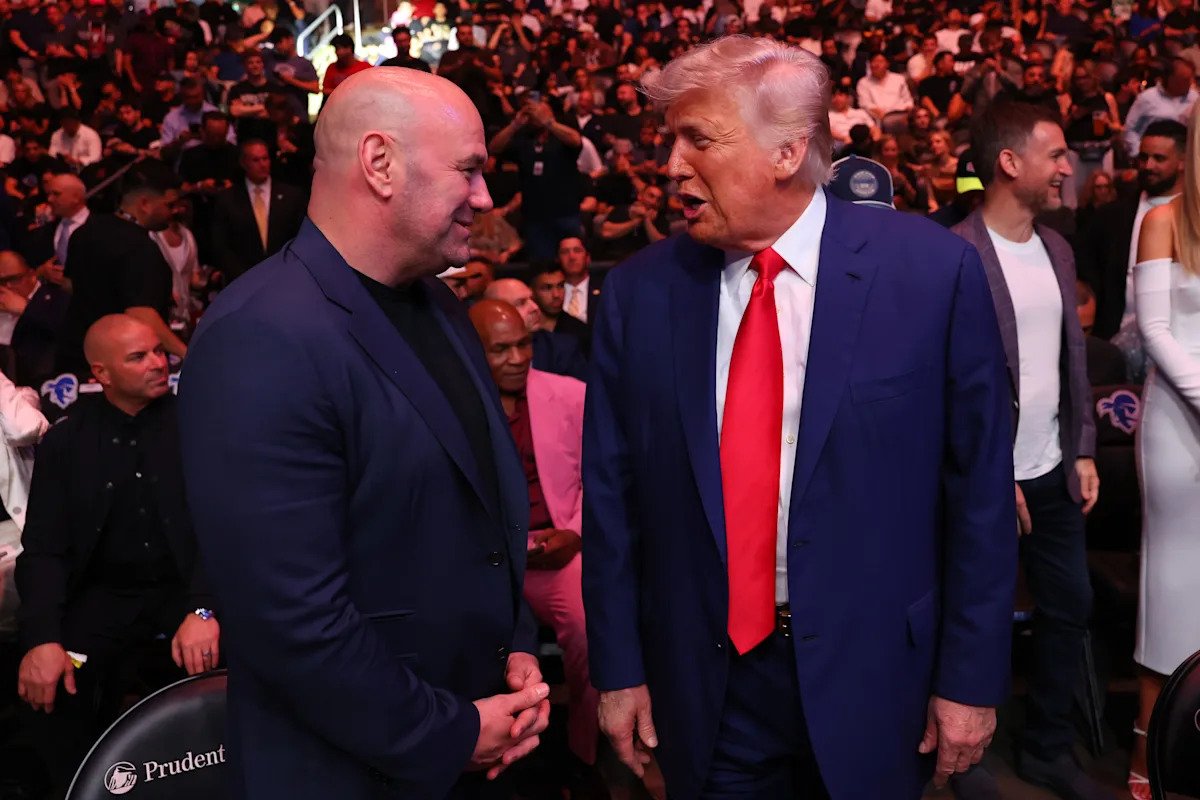
The UFC finally announced the full six-fight lineup for the upcoming card at the White House on June 14, but the reactions have been mixed at best.
The past few months have been littered with talks about how the UFC White House card could potentially be the greatest of all-time with promises that there could be numerous title fights — more than two or three — possibly taking place with a “spectacle on steroids” that would rival the UFC’s card at the Sphere in Las Vegas from 2025. The final lineup featured two title fights with Ilia Topuria vs. Justin Gaethje in the main event and Alex Pereira moving up to heavyweight for an interim title fight against Ciryl Gane.
Advertisement
UFC legend Matt Brown admits the initial announcement about the UFC White House card just felt underwhelming, but that’s not about the quality of the fights as much as the promotion touting this as a once-in-a-lifetime event that might never be topped.
“Initially when I first looked through the card, I was not impressed at all,” Brown said on the latest episode of The Fighter vs. The Writer. “It’s a good card. It truly is. My kind issue with the card, if my problems with this card mean anything, is they set the expectations high.
“On top of that, the bigger thing that kind of bothered me, this is a once in a lifetime event that every UFC fighter on the roster wanted to fight at. I don’t think there’s a single person who’s like ‘I don’t want to fight at the White House, on this historic event.’ They’ve got guys I’ve never even heard of. I remember who they are when I kind of thought about it for a minute.”
The lack of name value started with bantamweight contender Aiemann Zahabi scoring a fight against former champion Sean O’Malley.
Advertisement
With one-time title challenger Cory Sandhagen out there specifically asking for O’Malley, Brown wondered why that’s not the fight happening instead.
“Like [Aiemann] Zahabi, I’m like who the hell is that guy?” Brown said. “And then it was oh yeah he’s Firas [Zahabi’s] brother or cousin or whatever he is. Kyle Daukaus? I actually don’t know who Kyle Daukaus is as a matter of fact. What did these guys do to earn the right to get on this card when every single person [wanted on this card].
“Like if they called me and asked me to be on the card, I’d have a hard time saying no. If they called Dustin Poirier, he’d probably be like ‘you know what? It’s the f*cking White House, let’s go.’ But they got these guys it just doesn’t add up to me why they did that. Even [Mauricio] Ruffy, I think he’s a great fighter and they’re all great fights from top to bottom, I think. Who knows how it’s going to play out. But what’s the point of these guys fighting on this card?”
Ruffy faces Michael Chandler at the White House after Chandler spent months calling for a fight against Conor McGregor. Chandler was supposed to clash with McGregor back in 2024 before the fight was cancelled in the weeks leading up to the event.
Advertisement
But Brown argues it’s not even so much about the fighters the UFC ultimately selected for the event, it’s how the promotion sold the event. By that standard alone, Brown says the UFC was setting itself up for failure because there was just no way to live up to that level of hype.
“I think we took this as it’s going to be a special card, a once in a lifetime thing,” Brown said. “This is going to be special, every fight’s going to have some meaning. They were the ones saying six or seven title fights, it’s going to be the greatest card ever and all this.
“If they would have brought in Brock Lesnar and CM Punk, I would have been less surprised. I would have been like that’s what they do! They’re going to put on something crazy that everyone wants to watch. But Diego Lopes and Steve Garcia? What does that even mean? What does that have to do with anything?”
Brown previously argued that he expected a letdown when it came to the White House card simply because the UFC doesn’t have as many superstars on the roster these days to make a big, marquee event of this magnitude.
Advertisement
The final lineup didn’t match the level of hype built around the card but really Brown says that’s a clear sign of how the UFC is doing business these days no matter the event.
“I think it’s indicative of where the UFC is these days and the way that they’re doing fights,” Brown explained. “They just promote and market fights assuming everybody is going to watch and it’s going to do gigantic numbers. I mean I think they’re right, also. Every corporation or business changes when they go public and they got bought by TKO and they’re beholden to their investors now and they have to put on these fights and they have to do it in the right way.
“So they save Conor [McGregor], if he ever comes back, which I still don’t think he will, save him for something big. Like Jon Jones, if he ever does fight again, which he may or may not, but they want to save him for something big. I think gone are the days of the megacards.”
In reality, Brown feels like the UFC White House card was going to get a remarkable amount of attention no matter who is fighting there, and the event itself was the selling point, not so much the matchups taking place there.
Advertisement
“I think they just know we’re all going to watch it,” Brown said. “Everyone watched last weekend, every UFC fan. I mean there was really one meaningful fight. Not that the other fights were bad or anything. I thought there were some really good fights over the weekend, but the [Max] Holloway-[Charles] Oliveira was really the only one that was selling the card. No one was watching for the other fights.
“I think that’s just indicative of where the UFC’s at these days, and that’s the new norm that we’re going to have to get used to.”

