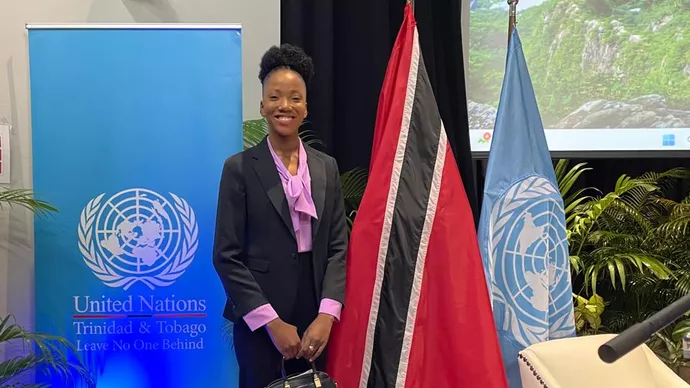
Connecting with children, Lewis said, comes naturally. Fruits For Tomorrow has grown well beyond that first overgrown garden, reaching classrooms, community groups and churches, where she distributes seedlings of sapodilla, soursop, pomerac, breadfruit, custard apple, shaddock and primrose, encouraging children to plant them themselves.
She regularly visits schools to hand out native fruit trees. Lewis recalled one in particular where an abandoned garden – part of an old agricultural programme the school had let lapse years earlier – had become overgrown.
When she returned two months later, the garden had been cleared, the trees were thriving and the pupils were proudly tending to the plants.
She wants other young people to have the same opportunity to make a difference that she has had.
“Why not now? Why not me? Those are questions I ask myself all the time. Why wait for it to be someone else 10 or 15 years down the line when climate change is already affecting us? So why should I wait?”
Rather than waiting for someone else to act years down the line, Lewis believes young people should take the initiative now, particularly as climate change is already affecting communities around the world.
In July, Lewis heads to UN headquarters for a week of meetings, including one focused on sport and mental health. She hopes to find an opportunity to talk about archery specifically and bring some attention back to the sport that started it.
“There’s a saying: if you always wait until you’re ready, it will never get done,” she said.
“I try to do whatever I can right now, because you don’t know what’s promised. I use every day to make some type of impact on this world.
“I think even one drip in the bucket can make an impact if everyone around the world continues to add their own drips, because together they can fill the bucket.”

