Illinois-Chicago men’s basketball coach Rob Ehsan thinks the NCAA Tournament is one of the greatest sporting events in the United States, if not the world.
He is “100% supportive” of the NCAA giving more athletes a chance to experience it by expanding the Division I men’s and women’s tournaments from 68 to 76 teams.
Advertisement
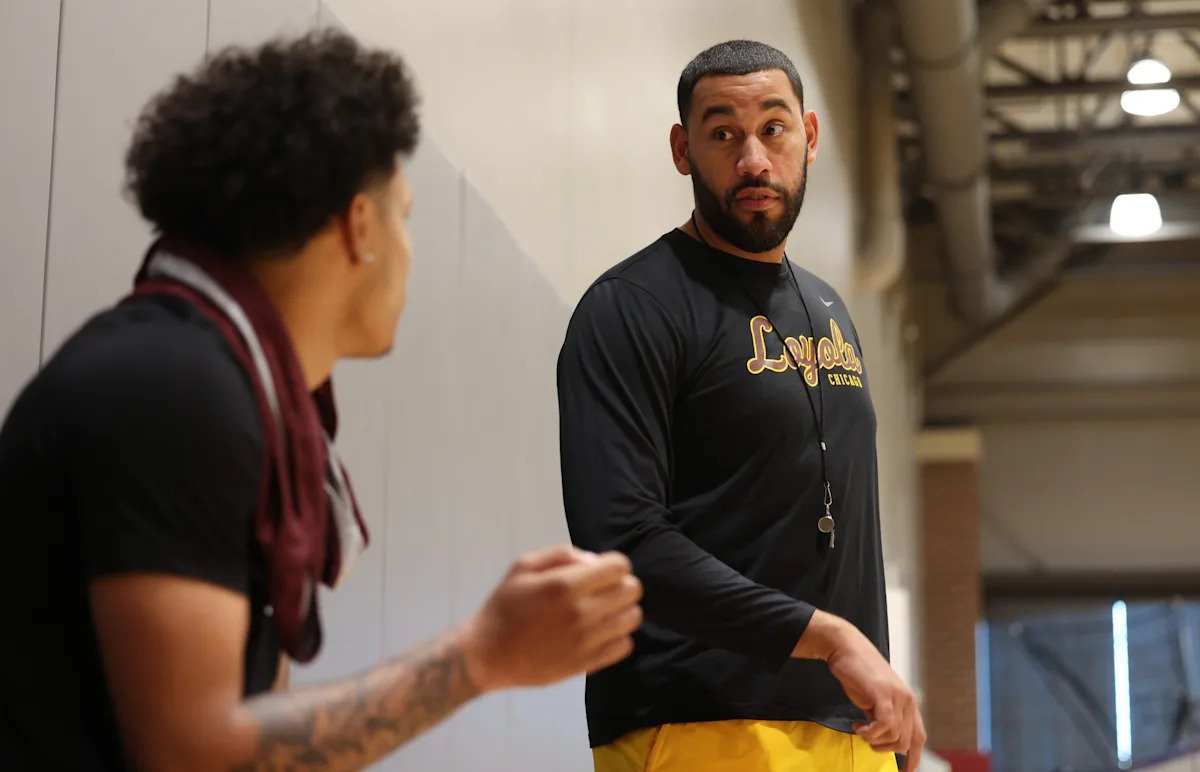
Loyola coach Drew Valentine is equally in favor of the expansion.
Amid all of the laments on social media about the NCAA messing with an already perfect event — and opinions so split among coaches that the National Association of Basketball Coaches declined to issue a position — Valentine is staying level-headed. Only eight teams are being added. He doesn’t think that will affect the integrity and quality of the tournament.
“The exclusivity and how hard it is to make it and how gratifying it is to hear your name called in the bracket and see your name come across — adding eight teams isn’t taking away from that,” Valentine said. “Even if it got to 96, where it’s like a fourth or a third of the teams in, I still think that’s exclusive. It’s not like they’re just letting everybody in.”
What will the new 76-team NCAA Tournaments look like? Here are the details.
Advertisement
However, a big question being asked in the wake of the NCAA’s May 7 announcement of the expansion, which will include a 12-game opening round, is what types of teams will benefit.
Will teams such as Loyola and UIC — or others in mid-major conferences such as the Atlantic 10 and Missouri Valley — receive more spots? Or will the expansion pave the way for more programs in the bottom half of the Power Five conferences (the Big Ten, SEC, Big 12, ACC and Big East)? That is, after all, why the power conferences pushed for the expansion.
Valparaiso coach Roger Powell Jr. played for Illinois in the national championship game 21 years ago, but he believes the beauty of the NCAA Tournament also lies in giving teams like his Beacons the chance to make a run.
“If we see expansion helping more programs like the mid-majors, it makes the NCAA Tournament still relevant and beautiful and exciting,” he said.
Advertisement
Ehsan, whose team competes with Powell’s in the MVC, hopes the NCAA takes that into consideration.
“If the NCAA could come up with a way with the expansion to add a few of those teams to be not Power Five teams, it would add an incredible amount of positive excitement to the NCAA Tournament,” Ehsan said. “The fans love the Cinderella story. It’s why it’s called March Madness. I think it’s an absolute no-brainer if they could figure out a way to include some of those good, mid-major-type teams into the field with expansion.”
Mid-major beneficiaries?
When the NCAA announced the news, it heavily promoted the idea that more athletes will have a chance to participate in the tournaments and that it will distribute more than $131 million in new revenue to schools over the final six years of its broadcast rights agreements.
Advertisement
The organization noted that the 24 teams in the opening round, which will include the 12 lowest-seeded automatic qualifiers and 12 lowest-seeded at-large invitees, will have a chance to earn at least two basketball fund units if they win their first game.
Valentine said that financial opportunity is real.
“That does mean a lot of good for a lot of different programs,” he said. “And especially when we are in this rev-share era where we’re paying our players, the opportunity to gain more revenue is really, really important for all programs, not just the nonpowers.”
The extra opening-round games, however, mean that more lower-seeded teams will have to win a game just to make the 64-team bracket, as opposed to just four teams during the First Four era.
Advertisement
Valentine noted the winners of those games will face challenges from a travel standpoint: having to get from Dayton, Ohio, and the other play-in site to the first-round sites and play games a couple of days later.
But he doesn’t think it takes away from the prestige of making the NCAA Tournament. He’d love to be in the 64-team bracket but he would gladly take the play-in opportunities too. He has seen what the NCAA Tournament does for programs as an assistant on Porter Moser’s Final Four and Sweet 16 teams at Loyola and as head coach of the Ramblers team that made the first round in 2022.
Who’s gone? Who’s back? Who’s new? Resetting men’s basketball rosters for Illinois, DePaul and more.
Powell, entering his fourth season at Valpo, agreed playing in the opening round wouldn’t take away from the accomplishment of making the tournament.
Advertisement
“It doesn’t matter. It’s the dance, man,” Powell said. “I would not complain about being in an opening-round game. I would love it.”
So where do mid-majors fit in this new world?
The NCAA said that since it went to a 68-team field in 2011, the publicly announced “first four out” to miss the men’s tournament has consisted of 38 power-conference schools (including the Big East and the old Pac-12) and 22 schools from other conferences. On the women’s side, since going to 68 teams in 2022, 14 of 20 “first four out” schools have been from power conferences.
If the Big Ten and SEC earn nine or 10 bids like they did this year, that means any additional teams from those conferences would come from the bottom half. Among the announced first four out of the men’s tournament in March, Oklahoma, Indiana and Auburn all had conference records below .500, with the Sooners’ and Tigers’ marks the worst at 7-11. San Diego State was the only team from outside a power conference among the first four out.
Advertisement
Ehsan wondered how extreme it could get if the selection committee doesn’t emphasize bids for schools outside of the Power Five. Could a team with just five conference wins make it? Could the entire 16-team SEC make it while the Missouri Valley still sends only one?
He appreciated the comments Arkansas coach John Calipari made to ESPN about the situation, arguing that half of the additional bids should go to non-Power Five conferences.
“You have to help the mid-majors,” Calipari said.
“That’s amazing that somebody in his position, at a Power Five, would say something to the degree of we should allow more mid-majors,” Ehsan said. “I 100% agree. I think it will get a lot of negative attention potentially and it could be not great if this just adds seven or eight more Power Five teams that are all under .500 in their conference.”
Advertisement
How the NCAA could go about helping the mid-majors is up for debate. One coach noted that the National Invitation Tournament awards a bid to each of the top 12 conferences in the KenPom ratings. What if a factor in an expanded NCAA Tournament is making sure a handful of the highest-rated conferences outside of the Power Five — such as the Nos. 6-12 conferences — have at least two bids each?
Besides the Power Five, only the West Coast, Atlantic 10 and Mid-American conferences received more than one bid in the 2026 men’s tournament. The MVC was the next-ranked conference after those eight based on NET rankings, and Powell believes other teams besides MVC Tournament champion Northern Iowa could have been successful in the NCAA Tournament.
“There are definitely teams in our conference that could have been competitive, without a doubt,” he said. “It’s deserving to get more teams like that in.”
One factor that will continue to play into it all is scheduling.
Advertisement
Resumé building
Nonconference scheduling was a big part of the NCAA Tournament dialogue in March because Miami (Ohio) went 31-0 in the regular season with a schedule that ranked No. 339 in the country, according to KenPom.
Miami coach Travis Steele, whose team received an at-large bid in the First Four after losing its MAC Tournament opener, said scheduling for the season had been hard and argued that adjustments need to be made to the metrics to help mid-major programs build resumés to make the tournament.
Some coaches of good mid-major teams say they have trouble getting power-conference teams to schedule them because the NET rankings don’t encourage it in the four-quadrant system. The best teams often play Quad 1 opponents, which boosts their rankings a lot if they win and doesn’t hurt as much if they lose. Or they schedule teams they expect to be in Quad 4, which they hope are basically guaranteed blowout wins. Risking a loss — or even a close win — against a good Quad 2 team doesn’t make a lot of sense.
Advertisement
That means a team like Illinois, which made the Final Four in 2026, schedules some great nonconference games — against Alabama, Texas Tech, Tennessee and Connecticut last season and against Duke, UConn and Texas Tech next season — but also a lot of blowouts. Brad Underwood’s philosophy is to “schedule the world” because he knows what those Quad 1 games do for the Illini’s metrics.
Miami didn’t play a single Quad 1 game in the regular season, then went 1-1 in those games in the NCAA Tournament.
Ehsan guided UIC to a 19-16 record, a spot in the MVC title game and an NIT bid in his second season at the helm in 2025-26. He said the scheduling difficulty is real.
The Flames went through a six-game losing streak in December, but Ehsan thought his team still would be pretty good. So during the rough patch he directed his staff: “Reach out to everyone you know because this is our only chance that someone would consider playing us.”
Advertisement
UIC ended up having a strong season, and the opportunities dried up, Ehsan said. In some ways he takes pride in it, considering it a measuring stick of how his program is growing. But he also said trying to put together a schedule has been “absolutely brutal.”
Powell, whose Valpo team posted its first winning record in nine years in the MVC and finished 18-15 last season, said scheduling also has been more difficult for him this offseason, though he said some high majors still are willing to play the Beacons.
“The better you are, the less people that answer your phone calls,” he said.
Ehsan wondered if the nonconference scheduling difficulties for mid-major programs would increase if the tournament expansion benefits the Power Five conferences more.
Advertisement
“I get it,” he said. “For the bigger schools, it just doesn’t make sense for them to play us. There’s no reward in it, given the way the system is set up and the metrics and how much you move up when you beat a team by a significant amount versus losing to somebody.”
Valentine tries to be realistic about scheduling too. Of course he would like to play power-conference teams, but the Ramblers try to go after nonconference matchups against some of the better programs in other conferences.
He pointed to Loyola’s games against a trio of teams that finished in the top 100 in the NET rankings — No. 42 Santa Clara, No. 70 Wichita State and No. 88 Colorado State — along with No. 121 San Francisco in the 2025-26 season. The Ramblers went 1-3 in those games and finished the season 9-24.
Loyola’s strength of schedule was ranked No. 105 by KenPom a year after the Ramblers went 25-12 and made the NIT semifinals with the No. 296 nonconference strength of schedule.
Advertisement
Valentine said those types of games — what he called mid-major-plus — are out there, and schools in positions like Loyola need to schedule them to build their tournament resumés.
“I’d love to play Northwestern or Illinois or DePaul in a regular-season game,” Valentine said. “Those people just won’t play us. If you’re trying to put yourself in position to make the tournament and you can’t get those games against the Power Four conferences and the Big East, if they won’t play you, the next-best thing is to get games against the new Pac-12, the WCC, the American Conference.”
After the tournament expands, Ehsan suggested there might be a trend in which the mid-major-plus teams invest more financially in scheduling — being willing to buy games against other good mid-major teams — in order to boost their chances.
The challenges for mid-major teams and conferences in this college sports era are numerous, beyond the scheduling difficulties. Trying to compete with massive roster budgets in the power conferences. Trying to retain the talent they acquired and developed in the face of those financial inequities and rampant transferring. And for all teams, trying to keep up with the constant changes.
Advertisement
For those teams that manage to succeed against all of those obstacles, the hope is the NCAA Tournament is within reach.
“Hopefully expanding the tournament opens that door,” Powell said. “I’m all for it if that’s what it does.”

