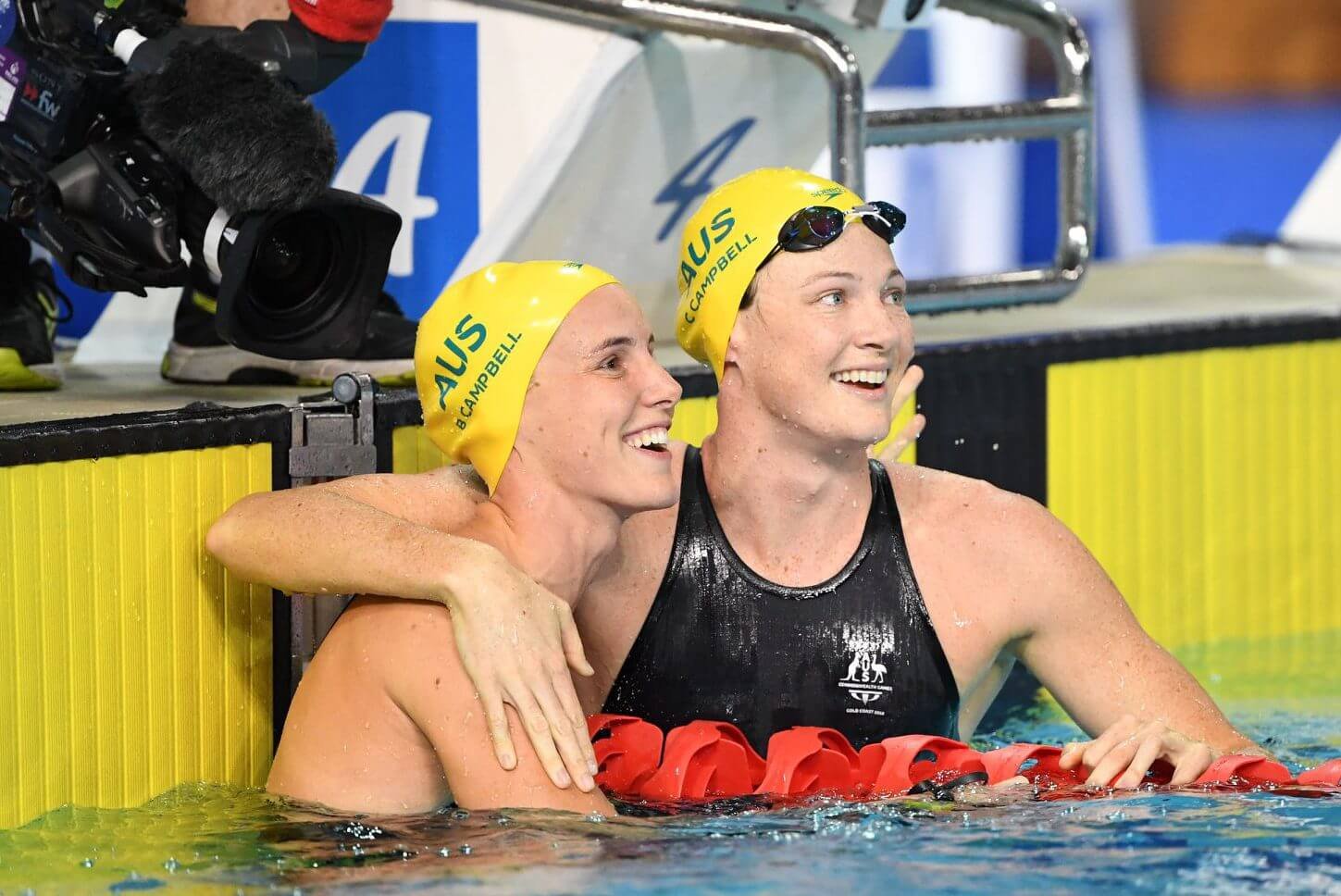
With Bronte Campbell Now Retired, Looking Back on Two Decades of Campbell Sisters Dominating Sprint Freestyle
The chapter of the Campbell sisters reigning in the sprint freestyle events has officially closed. Bronte Campbell announced her retirement from swimming just before the start of this year’s Australian Trials after previously leaving the door open for another Olympic run in 2028. Bronte qualified for four Olympic teams, just like her older sister Cate Campbell, and they formed the center of an Australian 400 free relay team that has dominated the sport for almost two decades.
Yes, decades. That’s how long the Campbell sisters were forces in the sport. Cate made her international debut all the way back in 2007 at age 14, and a year later, she won Olympic bronze in the 50 free in Beijing. After that race, Cate shared an Olympic podium with Dara Torres, then 41 years old in her fifth Olympics after debuting at the 1984 Games.
An up-and-down four years followed, but Cate was back in top form by the time she reached the London Olympics. The Aussie streak in the 400 free relay began there as Cate supplied a 53.19 split on the second leg to bring her team to the precipice of the lead. Combining with Alicia Coutts, Brittany Elmslie and Melanie Schlanger, Australia held off Dutch anchor Ranomi Kromowidjojo by six tenths to secure the gold medal in Olympic-record time.
Kromowidjojo would go on to dominate the individual sprint events at those Games, with wins in the 50 and 100-meter finals. That 50 free marked Bronte’s Olympic debut at age 18, where she tied for 10th in the semifinals (with Cate 13th). This would be the first of many occasions the two sisters represented Australia together in an individual event.
A year later at the Barcelona World Championships, the two sisters swam together in a 400 free relay final for the first time, with Australia finishing just 0.12 behind the United States for silver. That would mark the only time any Australian relay featuring both Campbells did not win gold. Later in that same meet, Cate won her first world title in the 100 free and took silver in the 50 while Bronte reached the 50 free final, placing fifth, as well as the semifinals of the 100.
Cate Campbell — Photo Courtesy: Delly Carr
In regional competition in 2014, Cate dominated with Bronte right behind. At the Pan Pacific Championships, the sisters placed 1-2 in the 50 and 100 free; same result in the Commonwealth Games 100, and they went 2-3 in the 50 as Fran Halsall claimed gold. The tables turned at the 2015 World Championships as Bronte experienced her most successful meet, earning two individual gold medals in upset fashion while Cate won 100 free bronze and placed fourth in the 50. That meet would turn out to be Bronte’s peak as injuries began to take a toll, but she remained a consistent relay force for Australia each year.
Entering the 2016 Olympics, Cate had regained favored status in both sprint freestyle races. One month out from the Games, she broke the world record in the 100 freestyle, and the Olympics opened with another Australian showcase in the 400 free relay. Bronte split 52.15 on the third leg to put Australia in front, and Cate finished in 51.97 to secure gold in world-record time.
However, the wheels would fall off in the individual events. Cate led throughout the 100 free final before suddenly fading in the final meters and ending up sixth. Bronte missed the podium in that race by five hundredths. The sisters both struggled in the 50, Cate finishing fifth and Bronte seventh.
But for both sisters, their legacy was always about longevity and perseverance, not winning every single time. 2017 marked the first time one of the sisters took a break from international competition for a year, with Cate sitting out the Budapest World Championships. That decision paid off beautifully as 2018 was arguably the best year of her career, particularly at the Pan Pacific Championships. Cate swept five gold medals at that meet with her fastest times ever: 23.81 in the 50 free, 52.03 in the 100 and unfathomable relay splits of 50.93, 51.19 and 51.36.
Bronte was forced to miss Pan Pacs, but she shined earlier that year at the Commonwealth Games, taking down her sister to win gold in the 100 free while also scoring 50 free silver behind Cate and two relay golds. That same meet brought Cate’s lone international success outside of freestyle, with gold in the 50 butterfly.
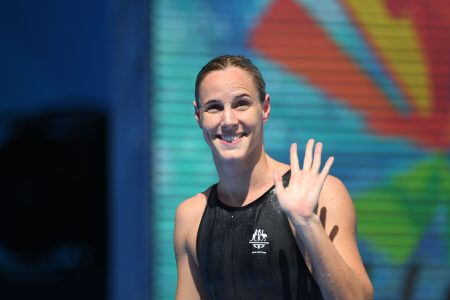
Bronte Campbell — Photo Courtesy: Delly Carr
The Campbell dynasty produced more wins in the 400 free relay at the 2019 World Championships and Tokyo Olympics while Cate continued to experience some success in individual events, winning 100 free silver and 50 free bronze in 2019. By the Tokyo Games, Emma McKeon had emerged as Australia’s new sprint star, capturing seven total medals at that meet, while Cate exorcised her Olympic demons from Rio with a bronze-medal swim in the 100 free. Cate also showed off her typical relay grit as she overtook American anchor Abbey Weitzeil for an upset victory in the 400 medley relay.
That would mark the last time Cate represented her country at an international competition. Following Tokyo, both sisters took long layoffs from swimming before ramping up again in advance of the Paris. Cate was unable to break through for a fifth Games, missing the 100 free final at Australian Trials before taking seventh in the 50, but Bronte would come through for a spot on the Aussie 400 free relay team, placing fourth in the 100 free final. That matched her sister with a fourth ticket to the Games. Bronte served as a team captain at that meet, and she won another gold in the 400 free relay after handling a leg in prelims. She later earned bronze after racing in prelims in the mixed 400 medley relay.
While Cate retired after missing Paris, Bronte waited for almost two years to make her final decision. Thus, Paris marked the end of an incredible run for two sisters swimming the same events and providing Australia with dozens of glorious moments. Between the Olympics, World Championships, Commonwealth Games and Pan Pacs, Cate finished with 37 international medals, 23 of them gold, while Bronte ended with 28, including 14 gold. All those results forever secured their places as Australian Olympic heroes and one of the best sibling duos in swimming history.

