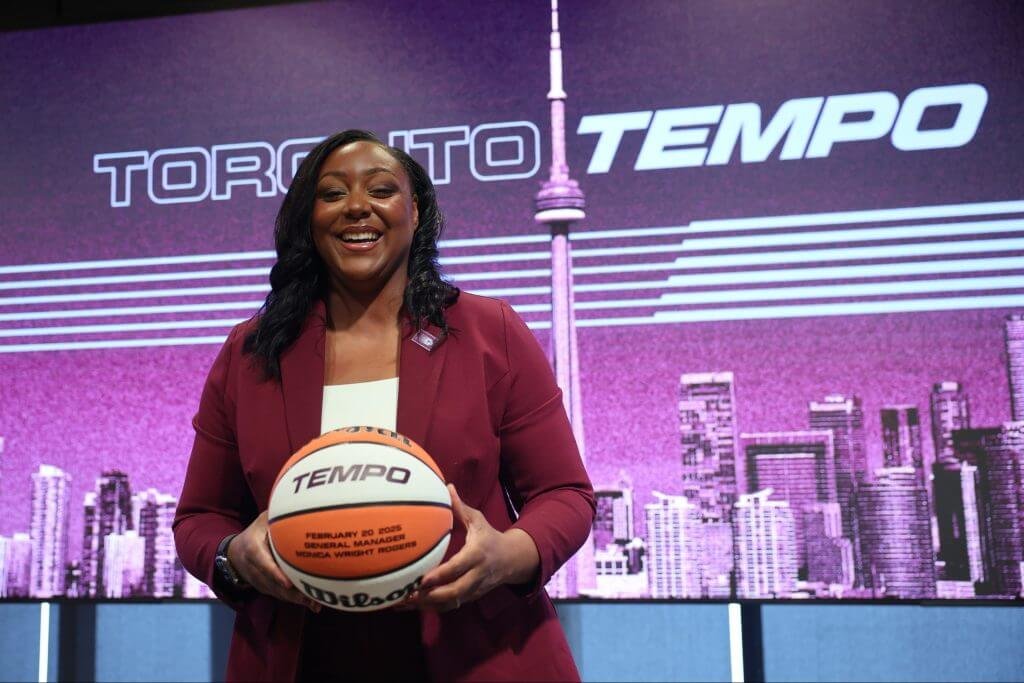
The 2026 WNBA offseason is finally underway, and the first step was completed Friday with the expansion draft for the Portland Fire and Toronto Tempo. Both teams selected 11 players as they begin to build out their rosters for the upcoming season.
The college draft remains and free agency after that, so much work remains to be done before the Fire and Tempo open training camp. The rosters could look very different in two weeks’ time, but it’s likely that Friday’s selections will form the bulk of the two rosters. Seven of the nine players who suited up for Golden State on its opening night came from the expansion draft.
Advertisement
We’re limited in our ability to fully understand the decisions of the Fire and Tempo (and the other 13 teams) because we don’t have access to the lists of protected players. There were also several international players selected who haven’t yet debuted in the WNBA or who choose not play in the WNBA every season, and we don’t yet know which of them will come over in 2026. However, based on the information that is available, here is an early look at the winners and losers of Friday’s draft.
Winners
Portland’s depth
The Fire didn’t take a lot of big swings, not unlike the Golden State Valkyries a year ago when Vanja Černivec was part of that front office. But they did end up with several players who have proven that they belong in the WNBA. Bridget Carleton and Sug Sutton were solid starters in 2025, and Maya Caldwell has been a capable role player for multiple seasons. Carla Leite, Luisa Geiselsöder and Chloe Bibby have less tape, but they all had decent rookie seasons. Emily Engstler and Haley Jones have also shown flashes even if their careers have been inconsistent. That is the outline of a quality rotation if the Fire can bring in some top-end talent in free agency, like the Valkyries did with Tiffany Hayes.
Advertisement
Any scorer who signs in Toronto
Julie Allemand is an elite passer and playmaker who hardly ever hunts her own shot. A point guard with her experience in the WNBA and internationally (she is a two-time EuroBasket champion for Belgium) will make the game easier for everyone around her. Allemand’s table-setting will also allow the Tempo to better evaluate the players around her. Competent point guard play is critical to any success in the WNBA, and Toronto has that with Allemand and Lexi Held off the bench. Tempo assistant general manager Eli Horowitz was in the same role in Los Angeles when the Sparks acquired Allemand and understands the 29-year-old’s value to a team.
Nyara Sabally
Sabally was riding high after the 2024 WNBA Finals, when her inclusion in a three-big lineup alongside Breanna Stewart and Jonquel Jones helped turn the tide of Game 5 and win the Liberty their first title in franchise history. That game forced New York to protect her in the Golden State expansion draft. But 2025 was a new story, as injuries limited her to 17 games out of 44. The Liberty, who expect to continue to contend for titles, couldn’t afford to keep her around with her inconsistent availability.
Advertisement
Now, Sabally gets to go to a situation with much less pressure and a chance to develop and get healthy on a longer timeline. She also stays with the coach, Sandy Brondello, who believed in her enough to contribute in the finals. Sabally was the fifth pick in the 2022 draft ahead of players like Veronica Burton, Lexie Hull and Naz Hillmon. She had a lot of potential, and she and the Tempo now have another chance of realizing it.
Phoenix’s 2025 European shopping spree
The Mercury had to scour international leagues to fill out their roster in 2025, ending up with four rookies who served as rotation players throughout the season. It worked so well that Toronto plucked two of them away in the expansion draft: Held and Kitija Laksa. Neither saw the floor much during the WNBA playoffs (a total of 21 minutes), but the Tempo won’t have veterans blocking Held and Laksa’s path to minutes. Meanwhile, Phoenix still has Monique Akoa Makani and Kathryn Westbeld, and gets to prove its scouting mettle in the 2026 offseason to once again build out the back end of its roster.
Losers
Minnesota Lynx
The Lynx were in a difficult situation with all five starters from last year’s dominant regular-season squad entering unrestricted free agency. If Minnesota protected the full starting lineup, there was no certainty that all would re-sign with Lynx. Furthermore, losing their cost-controlled younger players would make managing the cap more difficult.
Advertisement
Minnesota appears to have protected some of its starters but not all of them, and it lost two rotation players in the draft. No other team lost as much 2025 production as the Lynx between Bridget Carleton and Maria Kliundikova. It’s understandable to have wanted to keep Dorka Juhász at a lower salary than risk losing Carleton in unrestricted free agency regardless, but it still leaves Minnesota at a talent deficit relative to this time last week. The Lynx struggled to replace Cecilia Zandalasini’s contributions in 2025 after losing her to the Valkyries (both Karlie Samuelson and DiJonai Carrington ended the season injured), and filling in for Carleton will be another big challenge.
Las Vegas Aces
At some point, I will stop giving the Aces grief for not caring about young players. They valued unrestricted free agents in 2024 and lost Kate Martin to Golden State in the expansion draft, and then some of those free agents left anyway. They traded away an unprotected 2027 first-rounder — in what could be a generational draft — to acquire an inconsistent NaLyssa Smith midseason. Their most recent top-15 pick (the current length of the first round) who is still on the team is Kierstan Bell from 2022, who is no longer on a rookie contract. They don’t have a first-rounder this season or next season, and they just lost Aaliyah Nye, presumably because Las Vegas once again prioritized unrestricted free agents who could still find new homes.
At some point, the Aces will get old, and they will get expensive, and it will matter. It hasn’t mattered yet. But just because A’ja Wilson papers over any other lapses on the roster, it doesn’t mean the process couldn’t be better.
Advertisement
Marina Mabrey
Mabrey has had quite the odyssey through her seven WNBA seasons. She was traded after her rookie year. The first chance she had to pick a destination, she signed in Chicago but lost the head coach who vouched for her midway through that season. The Sky traded her to a winning situation in Connecticut, but that fell apart within a couple of months, and she was left with a developing Sun team even after asking for a trade.
Now, as an unrestricted free agent for the first time, Mabrey’s rights belong to an entirely new team — this after she eventually started to enjoy playing in Connecticut. The likelihood is that the Tempo core her and she once again cannot pick where to play. The new CBA and the one before it has given players much more agency in where they want to sign, but much power still lies with teams. As a good player who isn’t quite an All-Star, let alone a superstar, Mabrey keeps finding herself beholden to the whims of others.
This article originally appeared in The Athletic.
Portland Fire, Toronto Tempo, WNBA
2026 The Athletic Media Company

