After WNBA leadership and players stood side by side around 2 a.m. Wednesday at a New York hotel to announce a landmark seven-year collective bargaining agreement, they toasted with Moët champagne in water glasses.
Celebratory but practical. The memorable image marked the end of a tense year and a half and an exhausting eight days of bargaining that ultimately provided an immediate pop and fizzle to the league.
Advertisement
The pop: In 2026, the WNBA’s salary cap will nearly quintuple to $7 million, with the highest salaries topping $1.4 million for the first time in league history. Additionally, players will receive a significant 20 percent of gross revenue — a central part of their demands. The lowest-paid player in 2026 will earn more than the highest-paid players in 2025.
The fizzle: If the league continues its upward trajectory with increased popularity and investment, these massive gains may seem paltry in the not-so-distant future.
The league and players both characterized the deal as critical for their own causes: The former is building a model that allows continued growth and sustainability in a way that could still reward ownership. The latter is getting what they believe is their rightful piece of the pie.
The league has celebrated its CBA deals before. For years, the WNBA dealt with the blows of embarrassingly low salaries, but with middling attendance figures and stagnant WNBA Finals viewership, there wasn’t a strong argument for concessions from the league. The 2020 CBA negotiations became a pivotal opportunity for players to demand more. The maximum salary nearly doubled, to close to $250,000, and players received maternity benefits.
Advertisement
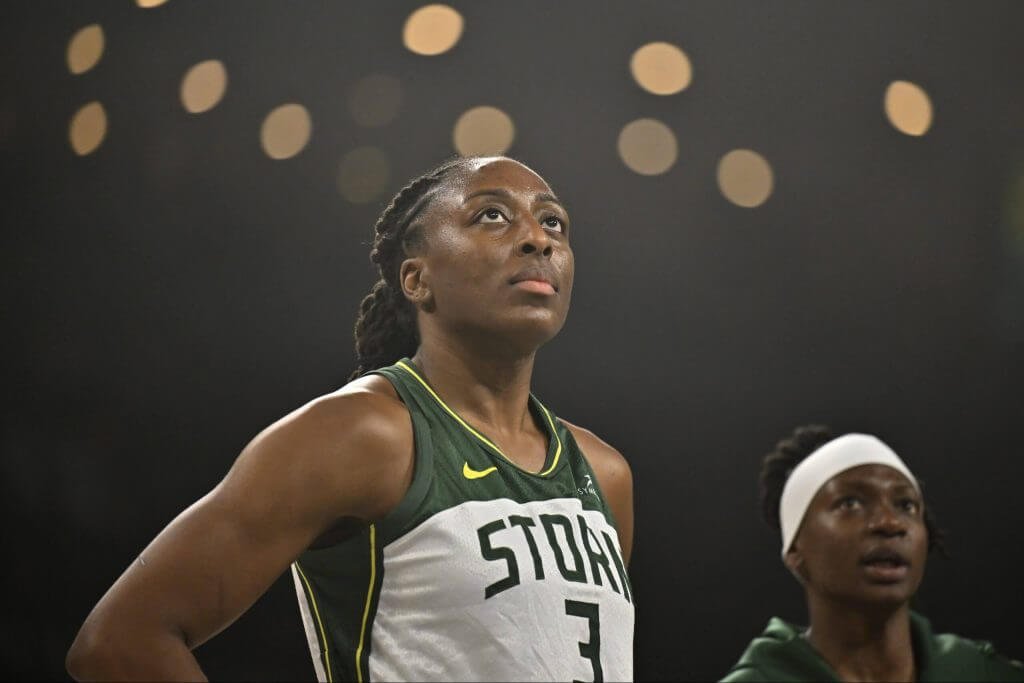
Players also no longer had to share hotel rooms on road trips and could spring for economy-plus seats on commercial flights to games. WNBPA president Nneka Ogwumike, who maintains the union role, called it a “momentous day” — even as many of these achievements would be considered standard or subpar in other pro sports leagues.
The 2020 CBA was a genuine win.
Until it wasn’t.
“We’re providing a new starting line for those who come after us,” Ogwumike said in 2020.
That new starting line Ogwumike described? It’s now so far in the review mirror that even if you squint, it is barely visible.
No one could have foreseen the astronomical growth the league was about to undergo during the final years of that 2020 agreement.
Advertisement
The WNBPA’s rallying cry during those negotiations became “Bet On Women,” but it takes more than a gamble for a league to explode. It takes investment and transformational stars. Sometimes that can be a chicken-or-egg conundrum, but in the case of the W, it was the latter.
The league had undergone a massive $75 million capital raise in 2022, but the 2024 draft class elevated the WNBA to unprecedented levels.
With college sports bolstered by NIL legislation and an influx of millions of dollars, Caitlin Clark and Angel Reese burst onto the scene, transcending into popular mainstream sports stars like the sport had never seen before. Attendance and viewership records were set in 2024 and 2025.
The 2024 WNBA Finals became the most-watched in 25 years, averaging 1.6 million viewers, and the 2025 finals received nearly as many eyes — even though neither series included the young draft stars.
Advertisement
This all, of course, translated into dollar signs.
Between 2023 and 2025, the league announced six new teams, with the expansion fee increasing five times from its original $50 million. Last season, the league set a new attendance record. By 2025, the league was hitting benchmarks that triggered revenue-sharing with players (a negotiation made during the 2020 CBA) for the first time. Suddenly, celebrating non-shared hotel rooms and minimum salaries of $66,000 looked downright archaic.
Still, that was the goal and the vision, right? This is where many inside the league — even when the investment, audience and attendance were minimal — believed the WNBA could get. All involved recognize this deal is just one rung on a very tall ladder.
They got here. And right now, that feels like a win. And it will be … until it’s not.
Advertisement
Because the hope is that in the not-too-distant future, many will look back at the first million-dollar WNBA salaries and scoff as we do now about economy-plus airline seating and individual hotel rooms being considered hallmark wins.
What will remain the most important and long-lasting win is that when the next CBA rolls around, its players are more prepared than ever.
Concessions, in this deal, were made on both sides and months from now, we might not remember how contentious these weeks were or how close a delay to the 2026 season came. It might be easy to forget that when the WNBA must now conduct an entire offseason — including the CBA ratification, a two-team expansion draft, a college draft and free agency with 100-plus players — in a dizzying six-week span.
Advertisement
However, both sides also got major pieces of what they wanted. The players got significant, life-changing boosts to their salaries and a team cap that will allow for greater wealth from the top to the bottom of the roster. Revenue sharing is a model that rewards both management and players and the 20 percent agreement seems like the common ground from where they both started. Management got a long-term deal that allows them to open the books for greater, longer-term investments and the stability the league so desperately wanted.
The bet is that this CBA — as transformational as it seems today — becomes less of a win the larger and more successful the WNBA becomes.
Today’s major wins become tomorrow’s motivation to keep raising the bar — ultimately, that’s a thought to which players and the league can toast.
And maybe next time, they’ll even spring for champagne flutes.
Advertisement
This article originally appeared in The Athletic.
Minnesota Lynx, New York Liberty, Seattle Storm, Los Angeles Sparks, Washington Mystics, Atlanta Dream, Chicago Sky, Connecticut Sun, Indiana Fever, Dallas Wings, Las Vegas Aces, Phoenix Mercury, Golden State Valkyries, Portland Fire, Toronto Tempo, WNBA, Sports Business, Opinion
2026 The Athletic Media Company

