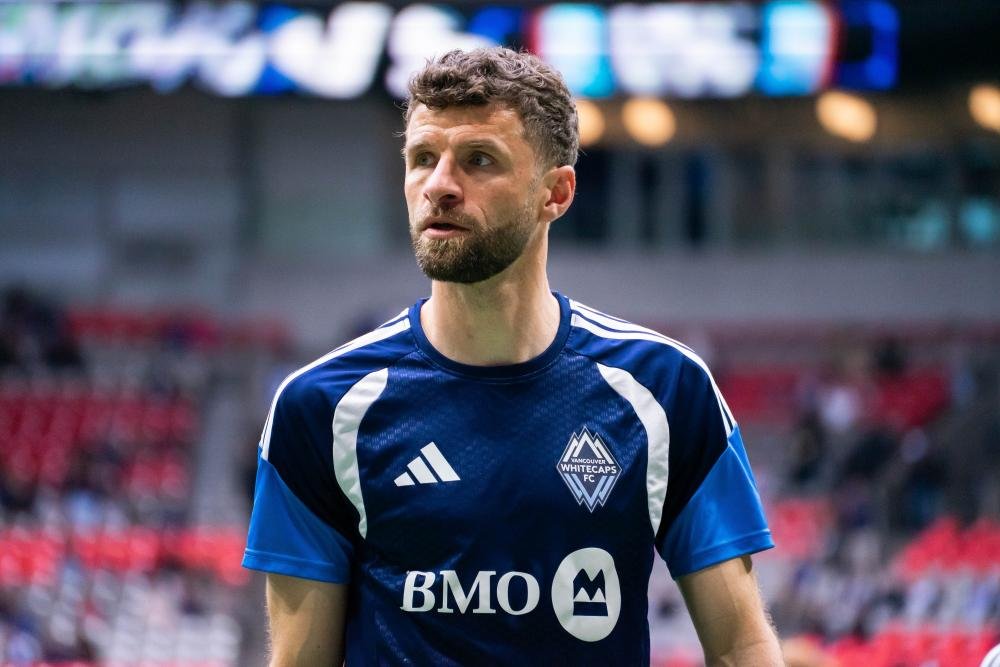
When the Vancouver Whitecaps went up for sale, the club was already bruised and bloodied. It was December 2024, and Vancouver had just limped to an eighth-place finish in the MLS Western Conference, which cost beloved coach Vanni Sartini his job. Facing the uncertainty of new ownership, the last rites were performed, the death knell was sounded and the club’s obituary was prepared.
Axel Schuster, the club’s CEO and sporting director, put on a brave face when speaking to reporters during a sombre press conference. The Whitecaps were coachless and rudderless, and there were questions about a problematic BC Place stadium deal, surely offputting to any potential bidder. There were questions about potential relocation. But Schuster focused on the opportunities that would come with new investment and his wider belief in the talent of the squad.
Advertisement
Related: Diego Luna is making his strongest case for a US World Cup roster spot
“There is a better place for us,” he said. “We shouldn’t give up on ambition.”
That ambition led them to dizzying heights in short order. First came a run to the Concacaf Champions Cup final and then a spectacular domestic campaign that culminated in the club’s first MLS Cup appearance. The embattled Caps had risen from the dead. End-of-year league accolades were rightly claimed by the unassuming Danish coach Jesper Sørensen and defender Tristan Blackmon, while Schuster was named the MLS sporting executive of the year. The success was supposed to lead to an outpouring of opportunities, with the Whitecaps taking their pick of potential suitors.
Instead, the problems have intensified.
Advertisement
At the end of January, Schuster went public and revealed the extent of the issues: despite finishing as the second-best MLS team in 2025, the club made the least amount of money. When compared to some mid-table sides, they were $40m behind in revenue. The club’s stadium arrangement, with the province of British Columbia as owners and operators, remains a largely immovable impediment. There’s meagre matchday revenue and scheduling conflicts. In 2024, the team was forced to play their home playoff clash against Portland at the Timbers’ Providence Park because BC Place was hosting a supercross event.
An improved stadium deal was signed ahead of the current season, and though Schuster is grateful for it, he says it will barely move the dial when it comes to income.
“We appreciate the deal very much but it’s not a deal that will solve our problems,” he says. “I take every dollar that can better our situation but it’s not the gamechanger for us.”
In 2026, additional renovations are needed at BC Place in advance of hosting seven World Cup fixtures. With their home field unavailable from early May, the Whitecaps will play eight successive league games on the road and also need to find an alternate home venue for a Canadian Championship clash against either Pacific FC or Cavalry FC.
Advertisement
The harsh reality is that the exhaustive growth of MLS is leaving the Vancouver Whitecaps behind. Everywhere, that is, except in the league table.
Related: Michael Bradley’s Red Bulls are impressing in MLS – what could come next?
With six wins from their first seven games, the Whitecaps have been the best team in the league so far in 2026. They’ve put three past Toronto FC, four past Portland and six past Minnesota. Last weekend’s 3-0 win over Sporting Kansas City was their fifth straight clean sheet, extending the side’s best ever start to an MLS campaign. Perhaps most importantly, for the third straight game, more than 20,000 fans came to watch.
Schuster has been pleasantly surprised.
Advertisement
“My concern was that after the high of last year, we would maybe have a little bit of a slower start, that it would be hard to get back that same hunger and greediness we had before,” he says. “But, there was an energy from the players, like they were saying, ‘This was no one-hit wonder and we want to go again’. Nobody was thinking, ‘I have to get out of this now or my market value will drop’. There was a strong belief. And that was a very important piece. Because imagine we go through all of this without success? Then one thing falls after another.”
Those signals included handing Sørensen a contract extension until the end of 2028 and retaining the services of the influential Blackmon, despite a bid from Inter Miami. Midfielder Sebastian Berhalter, voted as the club’s player of the year in 2025 and who joined Blackmon in the MLS Best XI, has stuck around too. He’s been superb so far, scoring three times including a last-gasp winner against the Timbers.
“We believe in each other, we believe in the staff,” he said after that memorable 3-2 comeback victory. “It’s a testament to the culture, a testament to the guys that everyone still believes and no one panics.”
But, with so much stacked against the organization, is it simply one last hurrah?
Advertisement
“We’re not sitting here waiting,” Schuster says. “We believe in finding solutions. We’ll go through the alphabet: solutions A, B, C … all the way through. But one day – and it might not be this year or next year – we might be done with the alphabet. And then maybe we’ll have to look at other options. We focus on the season, we go all in. But what happens after the season, that’s actually something nobody really knows. But it doesn’t feel good.”
Related: As Bologna thrive, sister club CF Montreal have been left in the dust
Late last year, the Whitecaps signed a memorandum of understanding with the city of Vancouver to explore a downtown stadium project at the Pacific National Exhibition (PNE) Grounds in Hastings Park. Under the terms, the club would finance the construction of the venue and then offset the costs by developing around it. The city would demand a ‘fair market price’ for the lease of the land, bearing in mind that Vancouver was described in a research paper by Chapman University last year as ‘impossibly unaffordable’. The entire concept seems fanciful, especially with a mayoral election coming later this year. One candidate has already expressed significant doubts about the proposed stadium site.
“PNE is a challenging piece of land,” Schuster admits. “To make the dream come true it needs way more than the Vancouver Whitecaps alone trying to figure it out.”
Advertisement
And then, with all of its foibles, there’s still BC Place. On that, there has been at least one positive development; with MLS flipping its calendar in 2027, the Whitecaps should have a lot more flexibility with scheduling.
“Would I prefer to have a beautiful little stadium like St Louis or Austin or LFC? Yeah, but I’ve never excluded the option or possibility that BC Place will be the solution and the long-term home,” Schuster says. “A lot of things would have to change. And that’s no one’s fault, maybe. It’s just what it is. The new calendar structure might change something. Suddenly, you’re playing in different months. So there are many layers. It’s a complex discussion.”
In spite of the wins, the trophies and the masterstroke signing of a genuine name in Thomas Müller, it seems the Whitecaps are on life support again. Schuster, the staff and the players have done everything asked of them. The options are running out. Yet there has been progress.
“When I arrived, the club was really at the bottom,” Schuster says. “We were last in the Western Conference. People were walking out of the stadium. The club was going through a few scandals. Season ticket numbers had dropped significantly. People said that if we had an exciting product on the pitch then things would be different. Another perception was that we didn’t really spend, that we’d never tried to bring in a superstar.
Advertisement
“So, what else can we do to improve our situation? You can’t have a more exciting product on the pitch. [Müller] is loved by everyone. If that still leaves us at the bottom of everything in every revenue category, then there is a bigger underlying problem that we can’t solve ourselves anymore. We need to find solutions. Otherwise I think everyone should be concerned about the long-term option of the Whitecaps in Vancouver.”

