CHICAGO — The 2026 NFL draft wrapped up on Saturday after three days in Pittsburgh.
With their first pick, the Chicago Bears selected safety Dillon Thieneman No. 25 overall.
Here’s a look at the Bears’ selections and what you need to know about them:

Round 1, No. 25 overall: Dillon Thieneman, S, Oregon
My take: Safety was a big priority for the Bears after the departures of Kevin Byard and Jaquan Brisker. The Bears drafted a safety with a first-round pick for the first time since taking Mark Carrier in 1990 because Thieneman checks all the boxes for Chicago. Explosive? Check. Plays fast? Check. Obsessed with football and high character? Check and check.
Will he start as a rookie: Yes. Though the Bears are setting up to have a competition at safety in training camp, the team used its first-round pick on Thieneman so he can make an early impact as a rookie. Thieneman is a two-time AP All-American and logged eight interceptions over three years between Purdue and Oregon. His ability to close on the football, against the run and pass, “takes the air out of the offense,” according to Bears GM Ryan Poles. That’s what the Bears’ defense needs in the secondary, and the fact that the team views Thieneman’s and Coby Bryant‘s skill sets as interchangeable foreshadows how frequently Thieneman will be on the field in 2026.
Key stat: Thieneman ran a 4.35-second 40-yard dash, which was tied for the 11th-fastest time among all players at the combine. The Bears prioritized adding speed to their defense to close faster on the football, and they believe his speed and ability to quickly diagnose plays make him a valuable addition. Thieneman said he went to the combine aiming to run a 4.3 and was surprised by how fast he was clocked. “I feel like speed is very interesting because there’s normal speed and then there’s game-plan speed,” Thieneman said. “So, the more you can process and recognize, the faster you can play in-game closer to your speed.”
0:44
What Dillon Thieneman brings to the Bears
What Dillon Thieneman brings to the Bears
Round 2, No. 57: Logan Jones, C, Iowa
My take: The Bears acted quickly after Drew Dalman’s surprise retirement by securing their center for this season in Garrett Bradbury and their center of the future in Jones with their first of two second-round picks. Chicago once again showed its commitment to the offensive line by nabbing the winner of the 2025 Rimington Award, which goes to the nation’s best center, and a unanimous All-American selection from Iowa. Jones did not allow a pressure or sack in 2025 and brings ample experience to Chicago, with 51 starts over four seasons with the Hawkeyes.
When will he be expected to get regular playing time? The Bears traded for Bradbury with one year remaining on his contract, so there’s no need to rush Jones into the starting lineup. An ideal scenario would be for Jones to serve as Bradbury’s understudy for a year before taking over in 2027, when he’ll be 25 years old. Despite being on the older end for a rookie, Jones’ age doesn’t concern the Bears.
“I think that’s going to become more of the norm, right?” Bears assistant general manager Jeff King said. “With NIL, 5-for-5 probably coming and all the ways guys are going back to school, we’re going to probably have to think about that more and more. I think the last three years, it’s gone up like every year, of guys coming in the league at 24, 25.”
Round 3, No. 69: Sam Roush, TE, Stanford
My take: With the amount of 12 (two tight ends) and 13 personnel (three tight ends) utilized in the Bears’ offense, the 69th pick has Ben Johnson’s fingerprints all over. Roush led all ACC tight ends with 545 receiving yards last season, with most of his production coming after the catch (5.7 air yards per target but led ACC tight ends with 324 yards after the catch). His strengths are as a blocker, and that will benefit the No. 3 rushing offense in the NFL while he likely gets most of his playing time on special teams as a rookie (529 career snaps at Stanford).
Will he start as a rookie?: Roush comes in as TE3 behind Colston Loveland and Cole Kmet, and Roush fulfills the role that Durham Smythe had in 2025. Because Roush plays in-line and off the ball, the Bears are excited about how they can utilize his versatility, with multiple tight ends on the field at the same time, particularly in the run game. Kmet just earned a $1 million roster bonus and is under contract for another two years, so it’s possible Roush can develop into a No. 2 tight end and become Kmet’s replacement.
My take: The Bears finished Day 2 of the draft with another offensive addition. That’s somewhat surprising given the needs along the defensive line, but Chicago opted for a big-play threat in Thomas over a pass rusher with its final pick in the third round. In a wide receiver room headlined by Rome Odunze and Luther Burden III, Thomas will have a chance to compete for the No. 3 receiver job along with Kalif Raymond and Jahdae Walker. Thomas’ quickest path to playing time is likely as a returner.
Key stat: Thomas ran a 4.28-second 40-yard dash at the NFL combine, which is one of the fastest times on record. His speed was a major draw and should pay dividends on special teams after he led the SEC with 633 kick return yards in 2024. The best-case scenario is that’s where he makes his biggest impact as a rookie. The worst-case scenario is this mirrors Velus Jones Jr., another speedy wideout the Bears drafted in the third round who did not pan out.
Round 4, No. 124: Malik Muhammad, CB, Texas
My take: The Bears traded up four spots to draft Muhammad, who was listed as the fifth-best prospect available on Day 3 according to ESPN’s Mel Kiper Jr. The Texas standout has the speed (4.42 second 40-yard dash) and man coverage skills that Dennis Allen desires in his defensive backs and gives Chicago immediate depth at cornerback.
With Tyrique Stevenson entering a contract year, Muhammad is in a position where he could work his way from backup to starter given his inside and outside versatility. Muhammad finished his career with only three touchdowns allowed as a primary defender (one each season) and 18 pass breakups since 2023.
Round 5, No. 166: Keyshaun Elliott, LB, Arizona State
My take: Over three seasons between New Mexico State and two years as a starter at Arizona State, Elliott racked up 278 tackles, which was tied for the sixth-most in the FBS during that span and notched a career-high seven sacks and 14 tackles for loss in 2025.
Elliott is a big (6-2, 235), physical linebacker but lacks the type of speed (he ran a sub-4.6 second 40-yard dash at his pro day) that the Bears have continually prioritized on defense this offseason. His earliest path to the field will be via special teams, an area that might be newer to him as a four-phase player.
“He has some experience doing it,” West Coast area scout Reese Hicks said. “A little bit of projection just because he has been so important for them on defense. But I guess the play style and just the passion for the game and just everything he provides, the size, the speed translates really well. He was one of our special teams coaches’ top guys on their stack.”
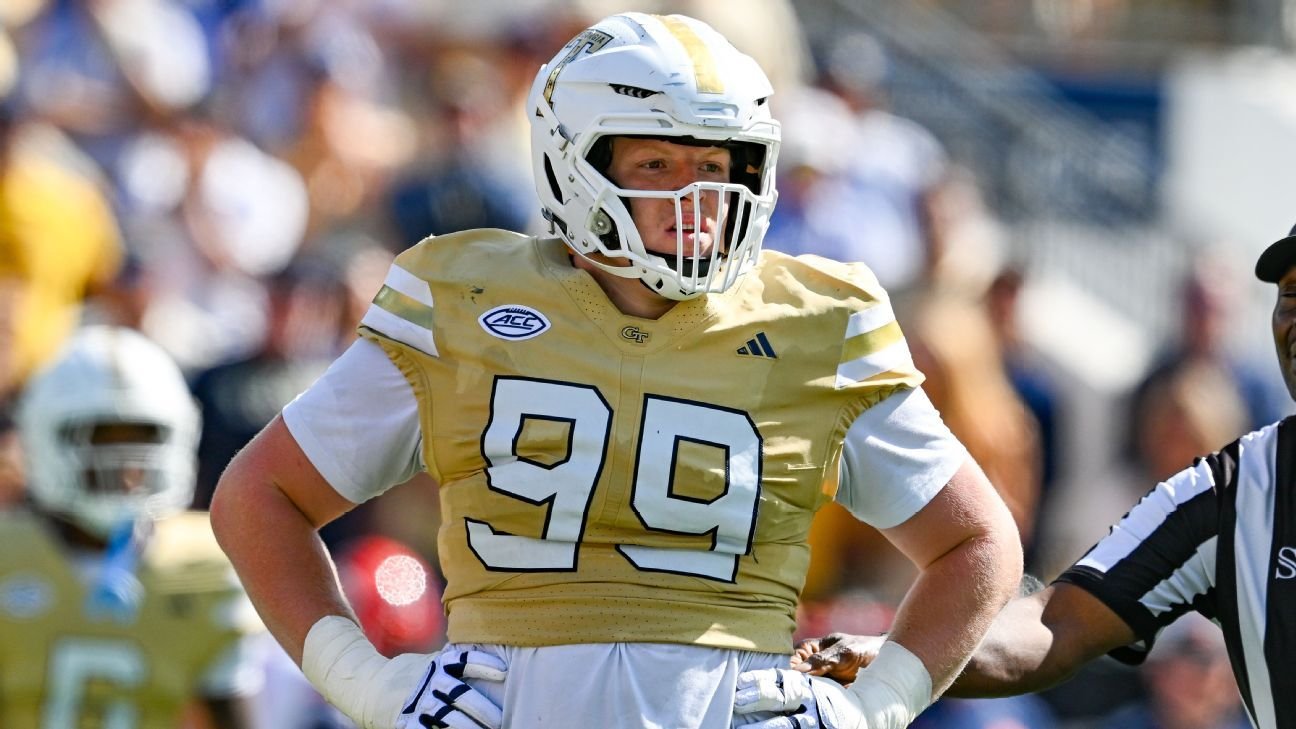
My take: The Bears packaged Nos. 239 and 241 to move into the sixth round and land an explosive player at defensive tackle.
Van den Berg was a first-team All-ACC selection in 2025 after recording 10 tackles for loss. The Bears weren’t enamored with this year’s crop of defensive linemen and chose to prioritize other positions instead of adding impact players to their pass rush. Van den Berg will have an opportunity to crack the rotation at DT in training camp and be a depth piece or practice squad member in 2026.

