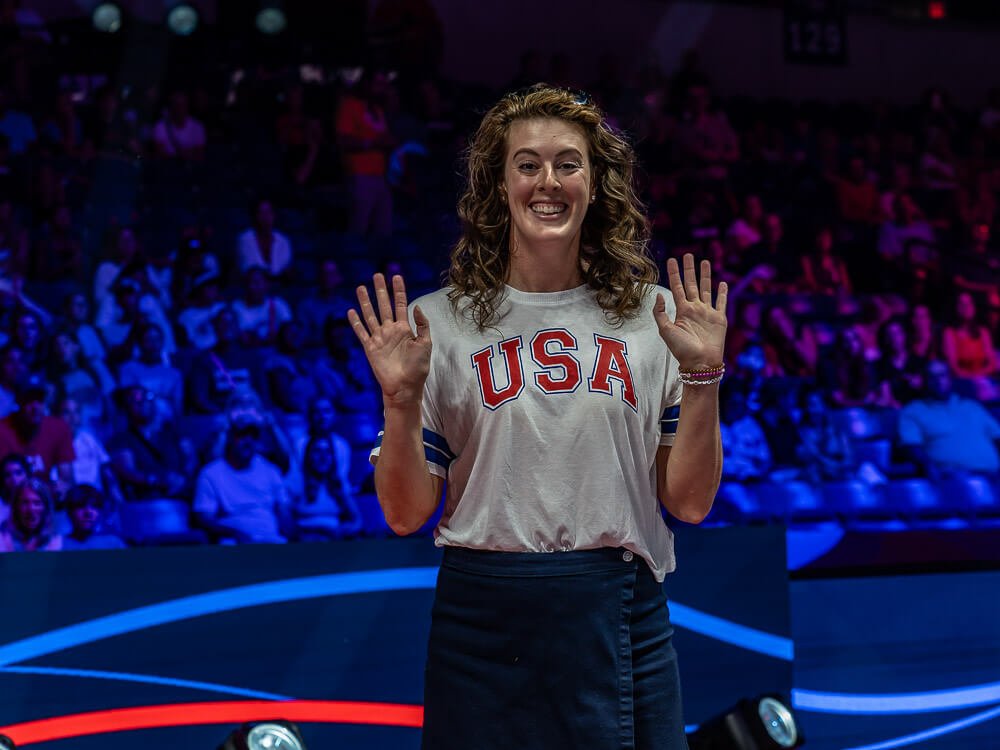
Allison Schmitt on Gaining Body Awareness: ‘We Need to Use Hormones as our Superpower’
Body image and awareness has been a major issue in the sport of swimming for decades, but as athletes are staying in the sport longer, there is another layer – especially for female swimmers.
With professionals swimming into their 30s and even 40s now, swimmers are forced to look differently at their own bodies than they did when they were 20.
It is something four-time Olympian Allison Schmitt has noticed and has tried to discuss with swimmers. Already an advocate for mental health issues, Schmitt’s voice is a big one in the sport.
The message is as simple as “knowing your body,” but that message is not as simple as it sounds.
“It is really about not knowing what my body is going through because I wasn’t educated on that,” Schmitt told Swimming World. “Especially in our sport, to be able to use your voice and share it with your coach, helps work things out in the most successful way.”
That means having the awkward conversations, especially between female athletes with male coaches.
“It starts with communicating. It is an awkward thing to talk as a teenager about your period. Every female body goes through that. Females in athletics and with male coaches, we just get quiet and don’t speak up,” Schmitt said.
Schmitt works with an app called fitrwoman, a free app and website that helps educate about what bodies need.
“We need to normalize that conversation. Sharing individual stories is so important. Everyone looks different. Everyone has different parts of their body. Some people say Katie Ledecky and I don’t look like people who would be fast swimmers. You can’t categorize people like that – and social media doesn’t help,” Schmitt said.
What does help? Personal stories.
Schmitt has opened up about all kinds of things during her career, but now it is as simple as saying the word “period.”
“I was anemic at 20 years old because my period was so heavy,” Schmitt said. “I had my parents call Bob (Bowman) about that. And Bob had that conversation with me. We had to find ways to get iron into my diet.
“That was the start of my journey. I trained mostly in a guy environment and we are taught to be able to get through anything. Now we need to use those hormones as our superpower. Let’s work with them instead of against them. In 2010, the solution was to get on birth control so I don’t bleed as much and have as bad of cramps, but that was a band-aid fix.”
Now there are better solutions because there is better education.
“It is just understanding the resources that are out there. I work with Fitter Woman and work with them post-swimming. There are resources out there,” Schmitt said. “We need to find the science behind this. The research wasn’t there 20 years ago. That education is going to help us prolong our careers even longer. I swam until I was 32. Hopefully we get more moms come back and swim because we have that information and research out there.”
But nothing will get easier or worked out without having the right communication.
“The responsibility is on us to speak up,” Schmitt said. “Then it is the coach’s responsibility to take that sensitive information and put it to use.”

