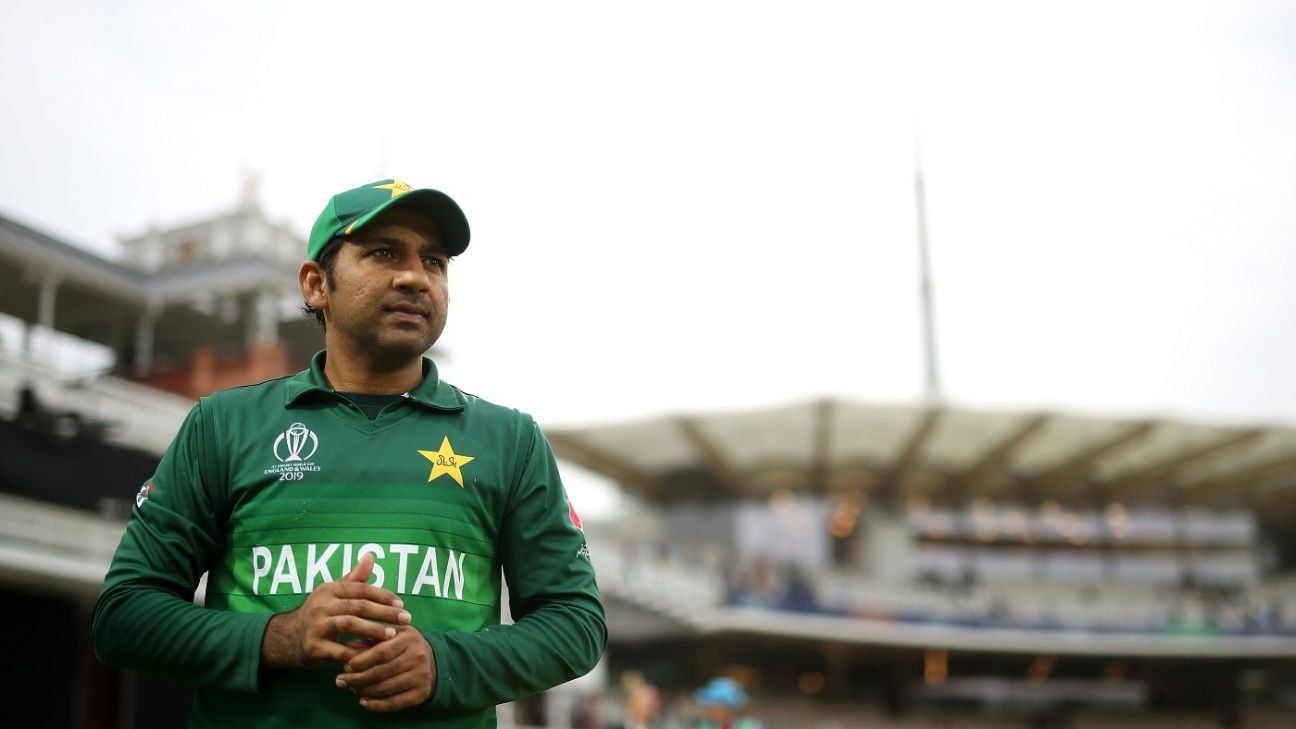
Less than two months ago, Sarfaraz Ahmed retired from international cricket. The writing had been on the wall for some time, despite playing for Pakistan as recently as late 2023. He did so under the leadership of Pakistan’s current captain, Shan Masood. A few weeks before the announcement, he was in Zimbabwe with Pakistan’s Under-19 team. Officially, he went there as a mentor. At least partially, he was there as a coach, in that familiar blurry role Pakistan’s backroom staff often fits into.
Sarfaraz’s experience with the U-19 team was perhaps not the kind of high-performance CV to land the full-time job as a Test head coach. Especially as the one to succeed Jason Gillespie, whose past elite coaching experience, upon appointment, was cited by PCB chairman Mohsin Naqvi. But an interim stint in the role by Aqib Javed has since suggested elite experience is much more of a negotiable than it seemed to be two years ago.
Seven years ago, Misbah-ul-Haq – Sarfaraz’s predecessor as Test captain – also landed the same coaching job, with the titles of chief selector and batting coach thrown in to boot. He, in turn, was replacing the head coach he had played under: Mickey Arthur. In a signature Pakistan cricket twist, Misbah was among those who sat on a committee deciding whether Arthur would continue as coach. No one at the time ever tried too hard to deny that obvious conflict of interest, or even pretend that this might not be the most bulletproof way of making managerial decisions.
As such, Sarfaraz’s ascendance, fresh out of cricket, is not so much a leap into the dark as a specific moment in time. A moment in the peaks and troughs that Pakistan’s views about coaching experience oscillate between. And so it’s probably unfair to play the man and not the ball. There is no visible future in which Pakistan’s coaching decisions happen in a way that satisfies everyone. That, in itself, does not make Sarfaraz an unworthy coach, or preface a failed stint.
Sarfaraz is recalled best not for his batting or keeping, but his captaincy and management of team-mates. While he had a growing cadre of critics as the end drew near, his canny street-smarts as captain ultimately ended up giving him more rope than a pure keeper-batter might have enjoyed. That reputation of Sarfaraz in the popular imagination has survived in the near-decade since, particularly his stewardship of the T20 team.
In 2016, he took over as captain from Shahid Afridi, who his own coach Waqar Younis criticised as so tactically inept that Waqar doubted Afridi’s ability to set a field. It was that very side Sarfaraz would whip up and turn around into the unstoppable behemoth that would rise to No. 1 in the T20 rankings, and win a record 11 consecutive series. He picked up a Champions Trophy along the way – still the only Pakistan captain, bar Imran Khan, to win a 50-over ICC event. And though his stint as Test captain, following Misbah’s retirement, was less happy, the musical chairs Pakistan were forced to play with the captaincy over the next 12 months demonstrated how denuded Pakistan were of potential men to hitch the armband to.
In that sense, coaching is the best use case for Sarfaraz – someone whose performance on the field deserted him long before his ability to think about the game did. While the top job has come his way long before a more conventional, linear career path would indicate, it might be unfair to say Sarfaraz would not have put in the harder yards.
In the right environment, few question Sarfaraz’s generosity of spirit, or his sense of stewardship towards people he has bonded with or feels responsible for. Before joining the U-19 boys’ side last year, he threw himself with great enthusiasm into a brief mentorship of Pakistan’s U-19 girls’ team. He would get involved with throwdowns and regular on-field drills, more befitting a coach than a mentor, and later take them out for fast food and ice cream.
Now in the top job, Sarfaraz gives Masood – who has not enjoyed the happiest stint as captain as far as results go – a familiar figure to lean on. The pair have always been on great terms with each other. Sarfaraz’s presence might help shake off memories of Masood’s nadir with the armband when, against the very opposition Pakistan take on over the next fortnight, they lost a home series 2-0 for the very first time. Sarfaraz’s presence offers a reminder that this is a different era, and in some ways, a throwback to one when that sort of thing didn’t happen.
Some relationships, of course, will need mending. The jostle for the gloves – and ultimately a spot in the side – between Mohammad Rizwan and Sarfaraz has not exactly left behind the warmest of relationships. Meanwhile, it is no secret Babar Azam succeeded Sarfaraz as captain, and then presided over a sustained period of the latter’s exclusion from the side. This has seen bonds between the two fray.
However, times change. With Babar and Rizwan less-assured starters in the Pakistan sides, perhaps past tensions will all be water under the bridge. Sarfaraz, finally, appears to have been handed the role that gives him the greatest satisfaction of all. And a happy Sarfaraz was rarely a mean-spirited one. If he can help Pakistan turn a corner in a format the team’s best version undoubtedly still offers potential, it might just give Sarfaraz greater satisfaction than the enjoyment of his ability to merely exercise his power. Because Pakistan cricket, as Sarfaraz will know better than most, can strip away power just as quickly as it has been handed over.

