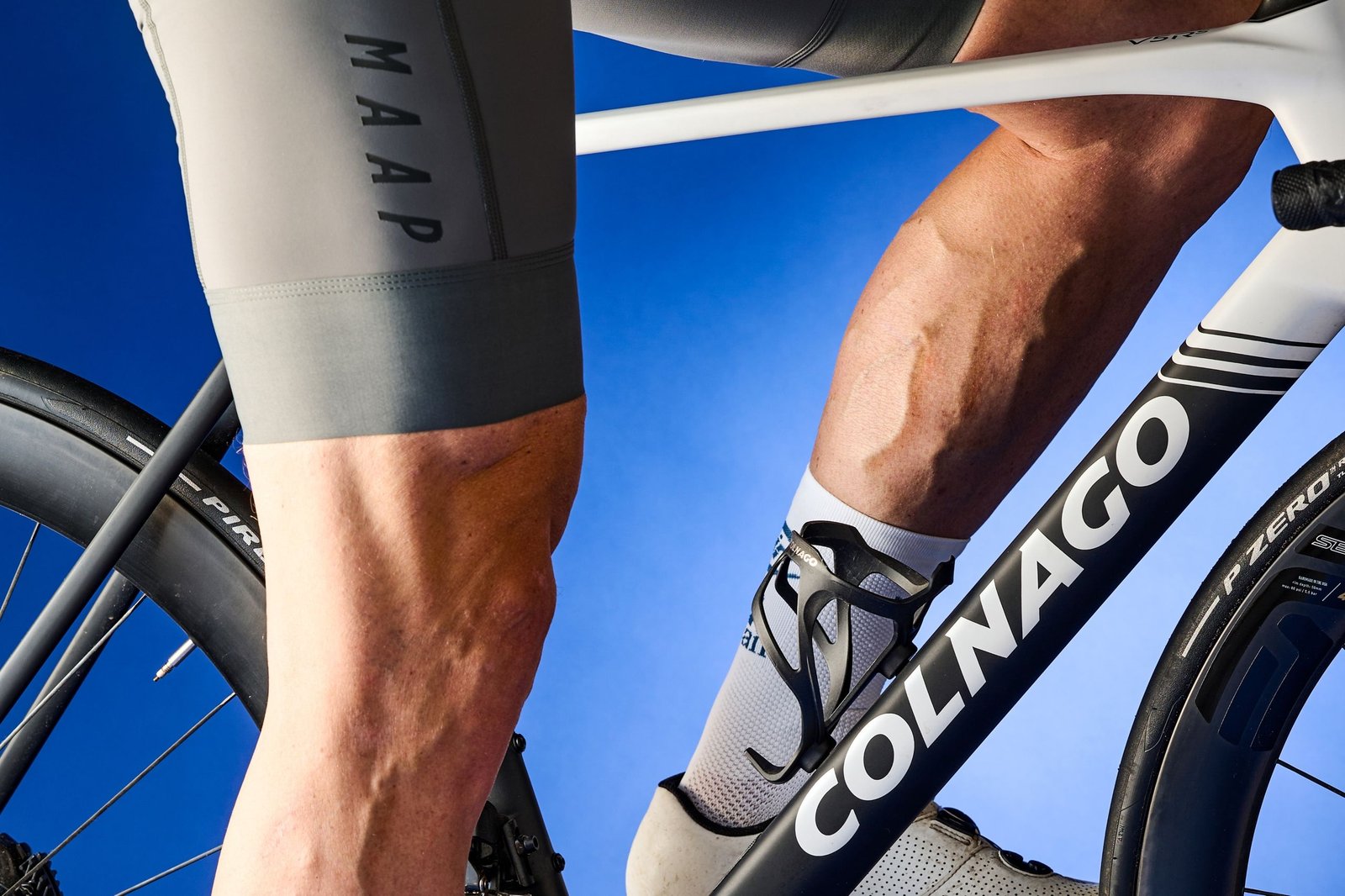
Veins are a vital part of the circulatory system, returning deoxygenated blood to the heart. Cyclists often have prominent leg veins due to low body fat, intense blood flow, greater blood volume – as much as three litres more than a sedentary person – and repetitive muscular contraction. While they can look dramatic, visible veins are usually a sign of efficient circulation rather than disease. “The prominent veins we see in athletes, particularly cyclists, are usually healthy,” explains Dr Peter Finigan. “They reflect vascular adaptation, low body fat and well-developed leg musculature rather than disease.”
Varicose veins – enlarged, swollen and sometimes painful veins – develop when valves inside the vein weaken and allow blood to pool. Understanding the difference, recognising symptoms and knowing when to seek advice can help cyclists protect both performance and long-term vascular health.
Dr Peter Finigan is group medical director and co-founder of UK Vein Clinic, a national network specialising in varicose veins and chronic venous disease. He treats private and NHS patients, delivering minimally invasive vein care across the UK: ukveinclinic.com

Prof Neil Smart is a professor in exercise and sports science and clinical exercise physiology at the University of New England, USA. An ESSA-accredited exercise physiologist and ESSA Fellow, he teaches and researches in exercise science, supporting student development and clinical practice.
What are veins?
Veins carry blood back to the heart, and feature one-way valves to prevent blood from flowing backwards, especially in the legs. When those valves weaken, blood can pool, stretching the vein walls. Varicose veins may appear twisted or rope like and can cause aching, heaviness, swelling or skin changes. While varicose veins themselves rarely cause deep vein thrombosis (DVT), prolonged immobility, dehydration or long-haul travel increase clot risk.

Why does it matter to cyclists?
Cycling is generally beneficial for vein health. “The repeated contraction of the calf and thigh muscles acts as a ‘muscular pump’, helping push blood back toward the heart and reducing stagnation,” says Professor Neil Smart. That’s one reason endurance riders often display prominent veins – blood flow is strong and the surrounding muscles are well developed.
“Cyclists often develop ropey or bulging veins on their thighs or calves due to enhanced circulation and muscle training,” says Finigan. “These are healthy veins, not varicose veins, and usually regress if training intensity drops.” However, high training loads and sustained climbing can temporarily increase venous pressure in the legs, making veins appear more pronounced.
What does the research say?
Research consistently shows that regular aerobic exercise improves venous return by enhancing the muscular pump mechanism. A 2019 study published in Frontiers in Physiology found that eight weeks of structured cycling significantly improved venous return, even in older adults. Smart explains: “When leg muscles contract rhythmically, as they do in cycling, they actively assist venous return. Over time this improves vascular efficiency and supports overall circulatory health.” That said, genetics still play a major role. Some individuals are predisposed to valve weakness, and studies suggest elite endurance athletes may show a slightly higher incidence of varicose veins than the general population.
What can go wrong?
While prominent veins are typically harmless, cyclists should watch for warning signs: persistent swelling, throbbing pain, heaviness that doesn’t resolve with rest, skin discolouration or itching around the ankle. Tender, reddened veins may indicate superficial thrombophlebitis – usually self-limiting but worth medical review.
Varicose veins often remain visible even when legs are elevated and may worsen over time. Dehydration, prolonged travel to events and extended periods of sitting can also impair circulation. Anyone experiencing sudden calf pain, warmth or swelling should seek urgent assessment to rule out deep vein thrombosis.
Treatment and prevention
Prevention centres on maintaining healthy circulation. Regular riding, walking and strength work that targets the calf muscles all support venous return. Staying hydrated and avoiding prolonged immobility – especially during travel – are simple but effective measures. If symptoms develop, Doppler duplex ultrasound is the gold standard diagnostic tool.
Modern treatments are minimally invasive and highly effective. Options include endovenous laser ablation, radiofrequency ablation and foam sclerotherapy, all performed under local anaesthetic. “Patients treated with contemporary techniques often resume light training within a week,” says Finigan. Early assessment ensures minor problems don’t progress into more significant vascular disease.
Vein friendly habits for cyclists
- Warm-up and stretch pre-ride: calf raises, ankle circles, seated leg extensions.
- On-bike adjustments: saddle height, handlebar reach, cleat position not only aid comfort but can support circulation.
- Daily movement: elevate legs, don’t stay seated for too long, walk a few minutes every hour.
- Compression garments: medical-grade compression can reduce swelling and discomfort, particularly during long travel, though performance benefits remain debated.
- Take action: if you have veins that are persistently painful, with swelling, or skin changes, seek medical attention.
The bottom line…

(Image credit: Andy Jones for Future)
For most cyclists, visible veins are a badge of training, not trouble. Regular riding supports vascular health, but genetics and age still matter. Recognising persistent symptoms and seeking timely advice ensures problems are treated early. With modern therapies available, treating troublesome veins is straightforward and rarely performance-limiting. Staying well hydrated, avoiding long periods without movement, and giving your legs adequate recovery can also support healthy blood flow and reduce unnecessary strain on the veins.

