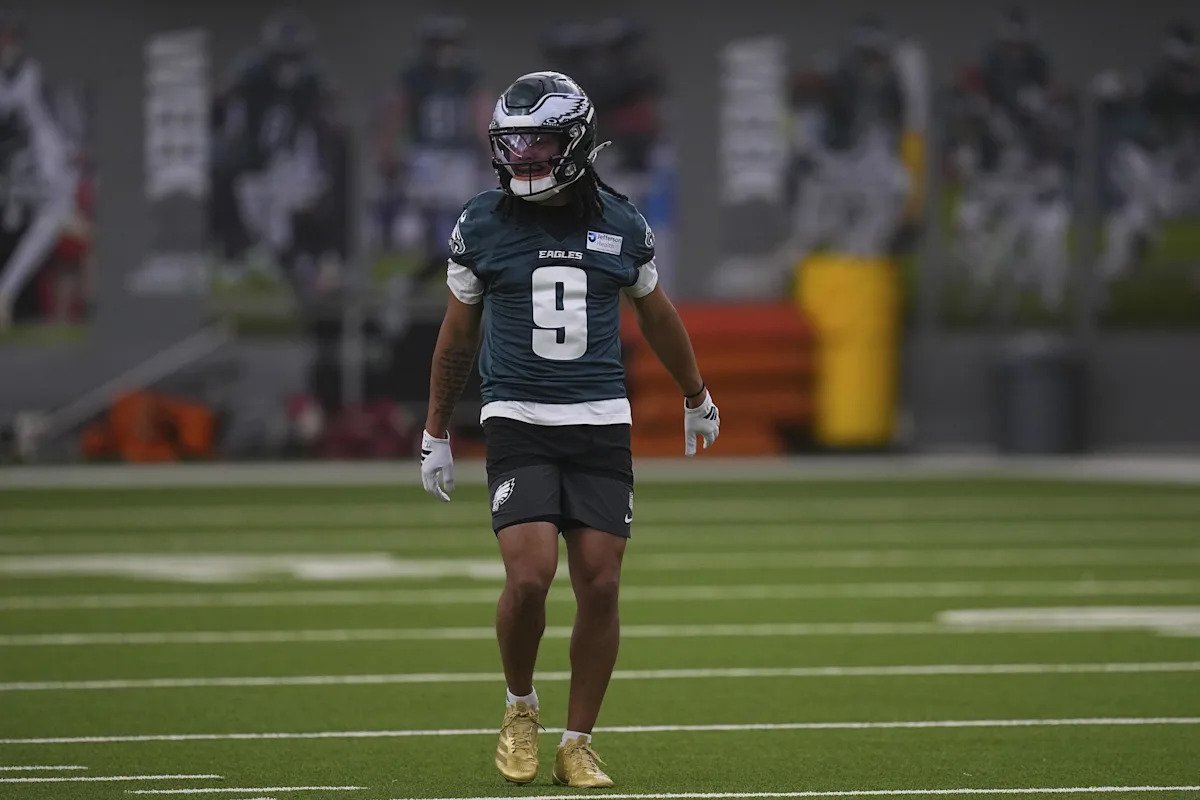
After completing my evaluations of the Eagles’ 2026 draft class, one thing that stood out about players such as Micah Morris and Eli Stowers is that a single trait can often make or break a prospect. Sometimes it’s an elite skill that creates a clear pathway to NFL success. Other times, it’s a weakness that threatens to prevent a player from ever reaching their potential.
Of course, every prospect is more complicated than one strength or one flaw. Scouting is rarely that simple. But in many cases, there is one defining factor that will determine whether a player sticks on a roster, develops into a star, or ultimately falls short. So rather than revisiting the full scouting reports, this article focuses on the one trait that could make each player’s NFL future, and the one thing that could break it. Think of it as the simplest way to understand what the Eagles are betting on with each prospect, and what could ultimately prevent that bet from paying off.
Advertisement
These are the traits I’ll be watching most closely throughout training camp, the preseason, and hopefully for years to come!
Makai Lemon
Make:
Makai Lemon already runs routes with the kind of polish you rarely see from young receivers entering the league. His ability to snap off breaks, create separation at the top of routes, and stay controlled through transitions looks very reliable. There is very little wasted movement in his game, and I expect Hurts to trust him quickly because he consistently puts himself in the right window. That route-running precision gives him an immediate pathway onto the field, especially in an offense I expect will value timing and spacing heavily.
Break:
I’m cheating slightly here and giving Lemon two potential “breaks.” The first isn’t really about him at all. His best work comes attacking the middle of the field, but that area has not been a major focal point of the Eagles’ passing game in recent years. To get the most out of Lemon, the new coaching staff may need to make a schematic adjustment and feature more of the concepts that showcase his strengths. I expect that to happen, but it’s still something worth monitoring. As for Lemon himself, the biggest concern remains his ability to consistently beat physical press coverage at the line of scrimmage. If NFL corners can disrupt his release, they can prevent him from ever getting to the route-running that makes him so intriguing.
Advertisement
Eli Stowers
Make:
Stowers plays tight end with the instincts of a former quarterback, and that background shows up constantly in the passing game. His understanding of zone spacing, timing, and leverage makes him a natural receiving option underneath. He sees coverage the way quarterbacks do, which gives him a reliable floor as a pass catcher almost immediately. That kind of awareness is difficult to teach, and it gives him a legitimate chance to carve out an early offensive role.
Break:
The issue is whether defenses will even identify him as a tight end before the snap. If his blocking never becomes even functional, opponents will treat his presence as a bigger receiver and remain in nickel at all times. Defensive coordinators at the NFL level are ruthless about identifying weak points in personnel packages, and a tight end who cannot hold up physically becomes exploitable quickly. If he doesn’t develop at all as a blocker, he might end up as a full-time receiver.
Markel Bell
Make:
Bell possesses the kind of huge frame that offensive line coaches dream about developing. His wingspan alone changes pass-rush angles and creates recovery opportunities most linemen simply do not have. You cannot coach that level of length, and when he gets his hands placed correctly, rushers will struggle against him. In very simple terms, he is so big that it will take pass rushers time to get around him.
Advertisement
Break:
Bell consistently plays too high, and his leverage problems invite defenders underneath him. In college, his size could compensate at times. In the NFL, rushers will attack his pad level relentlessly. If he cannot fix that issue, the extraordinary frame stops mattering because defenders will simply win underneath his center of gravity before the length can even become a factor. They will push him back, rather than go around him.
Cole Payton
Make:
Payton’s athleticism immediately stresses defensive structure. Even when he is not throwing, his movement ability and experience in RPO concepts force defenders to account for him differently. That has real value in modern offenses built around conflict defenderss. Players with that level of mobility always have a chance because they create schematic flexibility for coaching staffs, even as a role player.
Break:
Eventually, every passer has to process quickly from the pocket and deliver on time. That remains the biggest question with Payton. If his processing speed does not improve, particularly his willingness to pull the trigger decisively, defenders will force him into holding the football. At that point, the athletic upside becomes far less meaningful.
Advertisement
Micah Morris
Make:
A 9.96 Relative Athletic Score immediately gets attention because it reflects rare physical traits for an interior lineman. Morris has the movement ability and frame to become a legitimate starting guard. The tools are absolutely there. For offensive line coaches, that kind of athletic profile is worth investing time in because the ceiling is significantly higher than most late-round developmental linemen.
Break:
Morris plays as upright as anyone I have watched in a long time. If the coaching staff cannot clean up his pad level and technical consistency, the athletic traits remain just traits. He will lose the leverage battle consistently if he remains that upright.
Cole Wisniewski
Make:
Wisniewski is a very good run defender. He survives with instincts, intelligence, and anticipation. He diagnoses run concepts quickly, takes efficient angles downhill, and consistently puts himself in position before blockers can fully engage. His football IQ allows him to play faster than he actually tests athletically. That gives him a real chance to become a valuable early-down defender and special teams contributor because he is an excellent tackler.
Advertisement
Break:
The issue comes when offenses isolate him in space. NFL coordinators relentlessly attack coverage matchups, and man coverage against faster athletes is the obvious issues in his game. If he is consistently forced into those situations, the lack of recovery speed becomes difficult to hide. At the NFL level, one step lost in coverage from a safety doesn’t end very well.
Uar Bernard
Make:
He’s a total freak of an athlete based on the testing we have. What else is there to add?
Break:
He’s never played football. Simple!
Keyshawn James-Newby
Make:
He has an explosive first step which has led to excellent pass rush-rush production. His motor, explosiveness, and first-step quickness create constant pressure, and pass rushers who get off the ball quickly can always create splash plays.
Advertisement
Break:
I could mention his tackling and run defense here, but that seems pointless because he will likely only ever be a a sub-rusher anyway. So, I will say his discipline. He’s had nineteen penalties across three seasons. If the discipline never improves, coaches will eventually stop trusting him, no matter how productive the flashes are. The NFL tolerates mistakes from talented defenders, but it does not tolerate them from players on the roster bubble.
Thank you for reading! I’d love to hear your thoughts, so feel free to comment below and ask any questions. If you would like to support me further, please check out my Patreon here.

