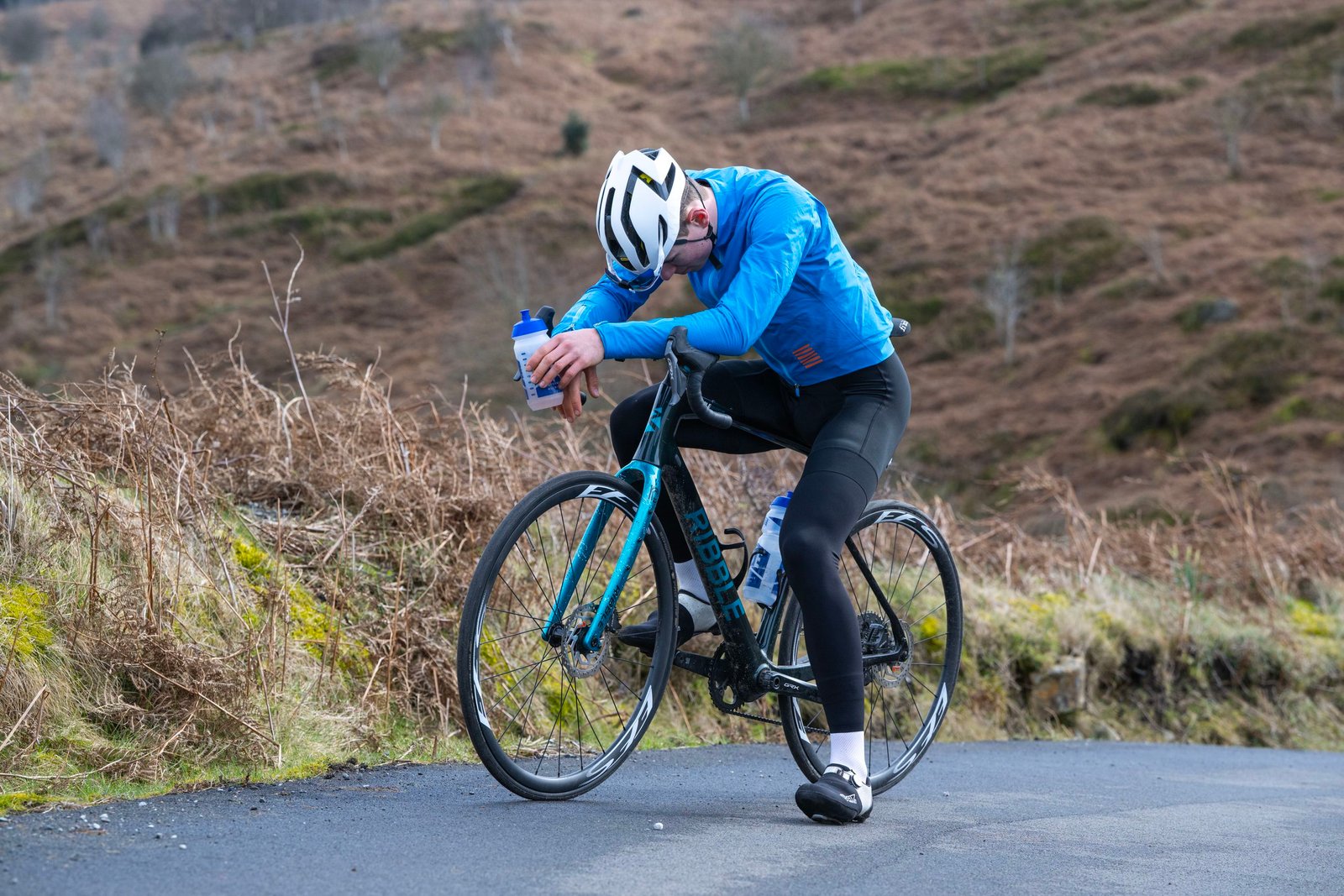
Whereas homeostasis is the body’s attempt to keep vital signs within a very tight, static range, allostasis is the active process of adaptation. Allostatic load is the body’s running total of stress. Every challenge – a hard training ride, poor sleep, work pressure, illness, travel, even emotional strain – triggers stress systems whose purpose is to adapt and reach a ‘new normal’. Provided the stress doses are manageable, this is a healthy process.
It’s how you adapt and get fitter. “While allostasis is the healthy process of the body changing its internal state to match external demands- such as your heart rate rising during a steep climb – allostatic load is the physiological price the body pays for that adaptation over time,” says Professor Sebastian Sitko.
When stress is frequent, intense or long-lasting, and recovery is incomplete, the strain starts to build up. Over time, this cumulative “wear and tear” can affect mood, immunity, energy levels and long-term health.


(Image credit: Future)

lecturer in sports science at the University of Zaragoza, and the author of Cycling 2.0: Evidence-based training for peak performance on the bike.

Emeritus professor at Loughborough University, and the author of Sport Nutrition (fourth edition) and Eat Move Sleep Repeat
What is allostatic load?
Allostatic load is the cumulative strain that builds when those demands keep stacking up without enough recovery. “Allostasis is how the body adapts to challenges,” says Professor Mike Gleeson. “But every adaptation has an energy cost.” In simple terms, your body doesn’t try to stay at one fixed point – it constantly adjusts to meet demand. Training, racing, work stress, travel and lack of sleep all require adjustment.
“For a cyclist, this load is not just the sum of kilometres ridden or total kilojoules burned,” says Sitko. “It is the integration of training stress, environmental factors like heat or altitude, and psychosocial stressors such as career pressures or lack of sleep.” The body does not distinguish between the stress of a VO2max interval and the stress of a high-pressure deadline at work; they both draw on the same recovery resources.
How does allostatic load affect cyclists?
What does the evidence say?

(Image credit: Getty Images)
Research shows that chronic stress affects multiple systems at once: hormonal, immune, metabolic and psychological. In wider health research, scientists use clusters of biomarkers to measure cumulative strain. “In sport, we see the same multi-system pattern,” says Gleeson. “Heavy training combined with poor sleep, low energy availability and psychological stress increases the risk of illness and underperformance.” Studies on overreaching, immunity and mood disturbance consistently show that combinations of stressors predict problems better than any single factor.
Allostatic load doesn’t mean training hard is harmful. “Stress is necessary for adaptation,” explains Gleeson. “The problem is sustained overload without adequate restoration. An athlete doesn’t experience stress in compartments.” When the total load rises too high, early warning signs can include stalled progress, unusually high perceived effort, irritability, low motivation and more frequent colds.
“In my experience, one of the most telling signs is a ‘muffled’ heart rate response,” says Sitko. “If during a high-intensity effort your power is failing, yet your heart rate refuses to rise to its typical training zones, this can indicate autonomic nervous system fatigue, where the body effectively applies a ‘governor’ to prevent further damage.”
Other manifestations include a loss of explosive ‘snap’ in the legs, disrupted sleep patterns despite deep physical exhaustion, and an increase in perceived exertion during routine efforts. “The athlete is capable of riding, but the physiological ceiling has been significantly lowered,” adds Sitko.
CONCLUSION
Allostatic load reminds cyclists that fitness gains come at a cost. As Gleeson puts it: “Adaptation thrives on challenge – but only when recovery keeps pace. Ultimately, the best way to manage allostatic load is autoregulation – having the flexibility to adjust the training prescription based on the total stress of the day.” “By treating sleep, nutrition and psychological downtime with the same discipline as a structured interval session, a cyclist can ensure that their adaptations remain productive rather than destructive,” concludes Sitko.
To mitigate the risk of progressing into overtraining or relative energy deficiency (REDs), cyclists must move beyond simply tracking external metrics such as power or training stress score (TSS), and begin monitoring internal response markers. “One of the most effective protocols is the use of heart rate variability (HRV) as a morning readiness check,” suggests Sitko.
A consistent downward trend in HRV is a clear signal to prioritise recovery over intensity. “Addressing the energy availability component is also critical,” he adds. “Many cyclists trigger REDs by trying to stay lean while increasing training volume. Ensuring that carbohydrate intake scales with training intensity is a non-negotiable requirement for hormonal health and bone density.”

Recovery is key if you’re going to let your body get over all the stress that it has to deal with.
(Image credit: Future)
OVERLOAD ALERT: IDENTIFY, ADAPT, RECOVER
How to identify
– Hard sessions feel unusually difficult: Power drops while perceived effort rises.
– Muted heart-rate response: “Your heart rate may refuse to rise to typical zones,” says Sitko.
– Loss of ‘snap’ in the legs: Explosive efforts feel flat or sluggish.
– Sleep disruption: Fatigue is high but sleep becomes restless.
– Mood changes: Irritability, low motivation or mental fog.
– More frequent illness: Repeated colds or lingering infections.
How to respond
– Prioritise sleep and recovery days.
– Match carbohydrate intake to training load.
– Track HRV or readiness markers.
– Adjust training when life stress is high.
– Maintain consistent fuelling to avoid cumulative strain.

