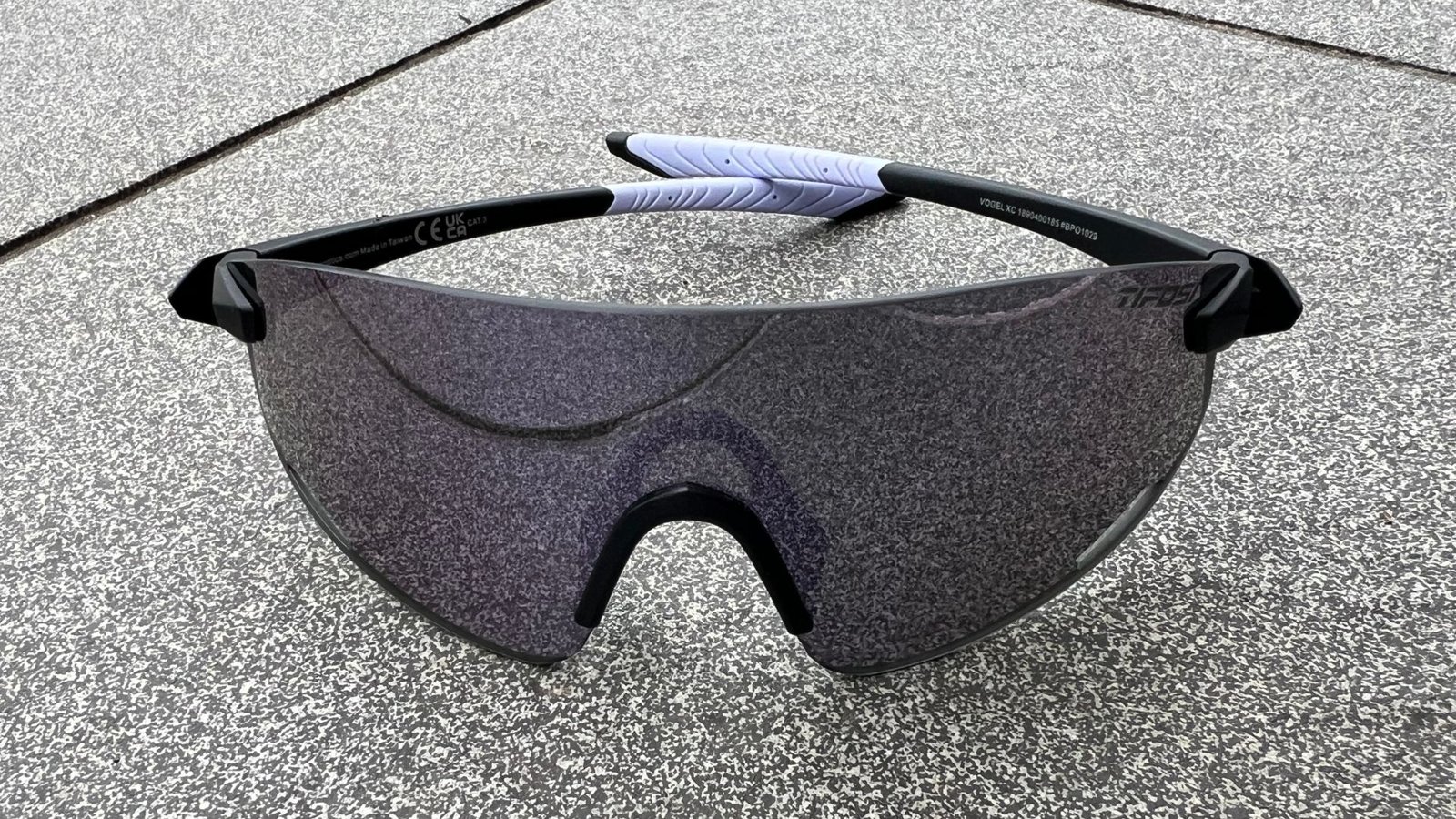
When it comes to eyewear, there are three filters I apply before a purchase:
1. Can I afford them?
2. Do they fit?
3. Do they look good?
Unfortunately for me, I’ve only had the green light on all three once in my life and as a result I’m still wearing a 10-year-old pair of Tifosi Crit sunglasses. There’s nothing theoretically wrong with them; they pass the first two filter tests, but they are now decidedly dated. Like ankle socks, and short short sleeves, my sunglasses are retro, and not in a good way.
While most riders have been donning large lens eyeshields, commonplace among the best cycling sunglasses, since the early 2020s, my small face means that not only do they look more like a windscreen, but they are so ill-fitting that, unless I point my nose in the air, even the slightest road imperfection will send them crashing to the ground.
However, my decade-long streak of facial fashion faux pas has finally abated. And it’s thanks to the same brand that had managed to turn all the sunglasses filters green before, Tifosi.
(Image credit: Hannah Bussey)
Construction
The ‘frame’ of the Volgel XC is made from Grilamid TR, a transparent polyamide known for its low density, toughness, flexibility, and good bending strength.

I say “frame,” but in reality, this is just the arms and a lens hinge. The rest of the glasses have polycarbonate wraparound lenses, which, according to Tifosi, offer 100 per cent UVA/UVB protection.
The nose and ear pads are made of hydrophilic rubber, which is designed to attract a thin layer of sweat and become tackier, effectively gripping the sunglasses in place. It should also prevent pressure points, which can occur from the over-tightening of adjustable nose pieces.
This minimal design helps keep the glasses lightweight, with my matte black pair weighing just 26 grams on my scales.
The glasses measure 130mm across the temple, which is the same as the aforementioned Tifosi Crit and another incredibly old pair of 100% Speedtrap sunglasses. However, from top to bottom is another story. While the Vogel measures 50mm, the Crit measures just 45mm, while the Speedtrap model is nearly 65mm (no wonder they swallow my face). The gap across the nose pieces also plays a large part in fit, with the Vogel measuring the smallest at just 25mm at its widest, while both the Crit and Speedtrap measure at least 30mm, although the Crit does have adjustable tabs.

(Image credit: Hannah Bussey)
Performance
As I ticked off each item on my checklist, it became clear that the Tifosi Vogel XC were already standing out from the crowd.
Priced at just £54.99/ $39.95, these are firmly in my affordability camp, and are competitive with many of the best budget sunglasses. They also provide an incredibly good fit. My small face is often swallowed whole by oversized wraparound glasses, but these fitted like the proverbial glove, stayed put regardless of the terrain, and best of all, actually looked really good.
I was initially concerned that the lack of polarisation would prevent riding in low light levels or under tree canopy, but so far, so good. Thanks to it being spring in northern England, we now get daylight from 4am until nearly 10pm, so nighttime riding is yet to be tested. Tifosi do make the Rail Clarion with a photochromic lens, but they are more expensive.
I have, however, again thanks to spring in the north of England, thoroughly tested them in the rain and hail and can confirm that despite their wraparound design, I’ve not suffered from any lens fogging; even in the rain, the water seems to bead off, creating constantly clear optics.

(Image credit: Hannah Bussey)
Value and conclusion
I rate the Tifosi Vogel XC so much that it’s genuinely hard to find fault. They are super versatile for both road and off-road riding, and the lens clarity is incredibly clear thanks to minimal frame scaffolding, with minimal hindrance. In fact, there are times when I forget I’m wearing them because they’re so lightweight.
However, there is a concern that no lens swap-out/replacement is available, and, coupled with the lack of a hard carry case, I’m worried that the mirrored lens will scratch easily when not on and just in a kit bag or at home. I can commandeer a case from another pair, but sacrificing a case from another pair of glasses to protect them does jar, even though I appreciate that not including one has helped keep the cost of the glasses down.
With some brands of cycling sunglasses costing upwards of $ 300/£300, finding a pair that fits brilliantly and looks good for less than triple digits feels like I’ve actually won something. If this statement may seem a little too gushing for a pair of sunglasses, then you’ve clearly never had the struggle of trying not to look like you’re a decade late to the bike ride or have just finished welding a bike frame together.

