American 50-Meter Specialists Ready to Capitalize on New Olympic Events
In the United States, the 50-meter stroke events remained second-class races for years, even after their addition to the World Championships program in 2001. The Americans contesting the 50 butterfly, backstroke and breaststroke at major competitions have typically been those already on the team for other events, usually the corresponding 100s. Any success was considered a bonus but not as important as the events that were part of the Olympic program.
Elsewhere in the world, however, 50s had been a central focus the entire time. No insistence on prioritizing only Olympic events, yes to offering the 50s for all ages at every swim meet. In the U.S., 12-and-under swimmers race 50s, but from age 13 on, the only stroke events are 100s and 200s. USA Swimming does not even keep National Age Group records for 50s for the 13-14 and older age groups.
That way of thinking vanished last April when the International Olympic Committee finally added those races to the program for the 2028 Games in Los Angeles. For the first time in 2025, the World Championships selection procedures weighed the 50s with equal importance to other events. Michael Andrew, Quintin McCarty, Dare Rose and McKenzie Siroky all qualified for Singapore solely because of their performance in one-lap stroke races, and two of the Americans’ nine gold medals came in those events.
Despite years of shifting attention toward the longer events, the United States swim team finds itself in perfect position to take advantage of the new races scheduled for the LA Games. In each of those six races, at least one American swimmer has made a case as a bona fide medal contenders. Some of these swimmers may have already left the sport if the opportunity to race a 50 on the Olympic level did not exist.
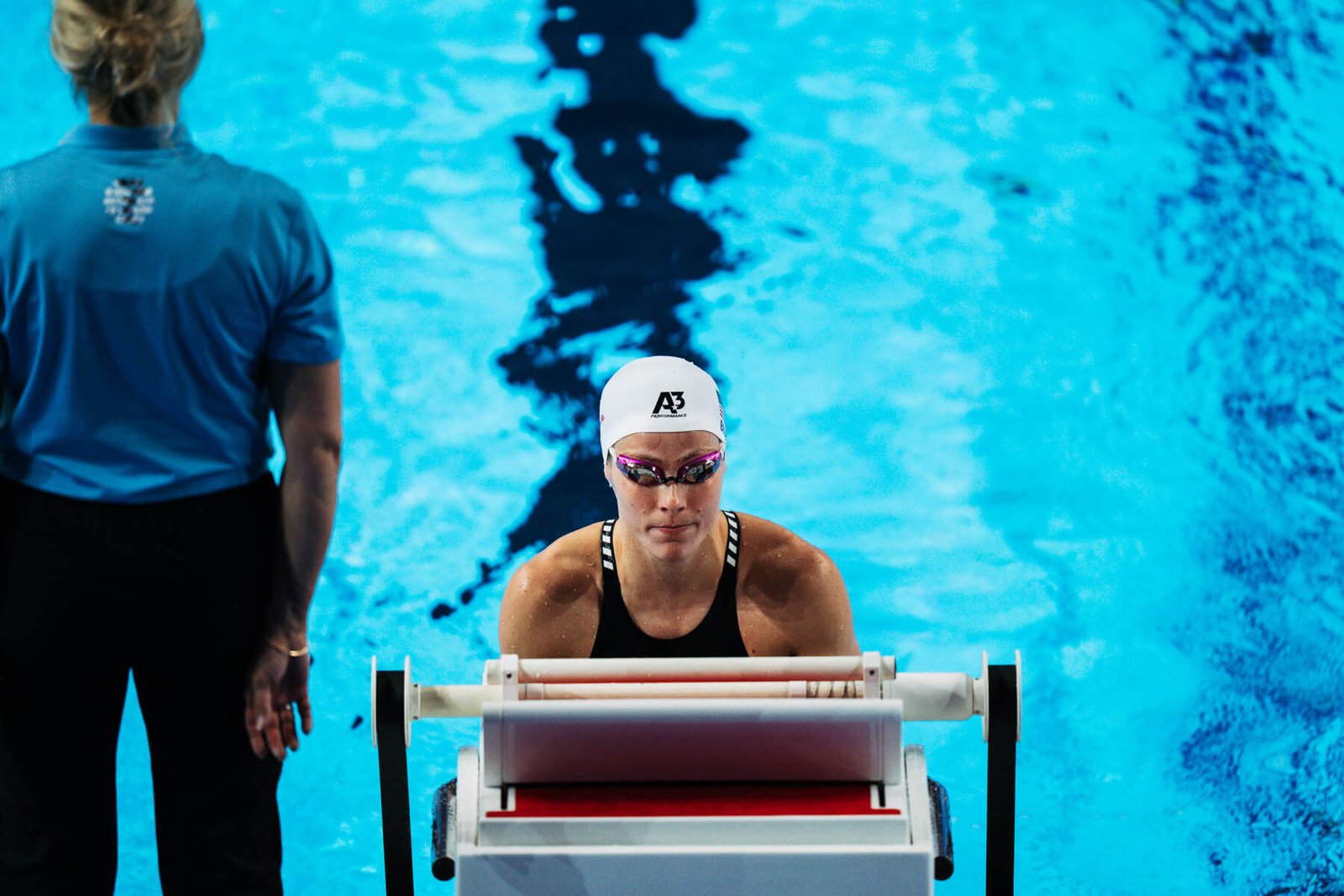
Gretchen Walsh — Photo Courtesy: Peter H. Bick
The two swimmers to capture world titles in 50s last year were Katherine Berkoff in backstroke and Gretchen Walsh in butterfly. The U.S. actually went 1-2 in the 50 back with Regan Smith earning silver, less than two tenths behind Berkoff. World-record holder Kaylee McKeown was absent from that race last year, but Berkoff has taken further steps toward establishing her dominance. At the recent Pro Swim Series in Indianapolis, Berkoff finished just off her American record in the event with a time of 26.98, and she could challenge McKeown’s world record later this summer.
Walsh has put distance between herself and the rest of the world in the 50 fly, winning last year’s world title by more than a half-second. She is the second-fastest performer in history in the event, although world-record holder Sarah Sjostrom is returning to the sport after a layoff while she gave birth to her first child. Still, expect Walsh to remain a podium force at minimum here.
For breaststroke, Lilly King has retired, but Siroky has continued to make strides after her World Championships debut last year. During the recent Mare Nostrum circuit, she swam as fast as 29.64, becoming the sixth-fastest performer in history (and second-best American behind King), and her time would have been sufficient for silver at last year’s World Championships.
On the men’s side, consider the accomplishments of Van Mathias, the 25-year-old who returned to the sport while working full-time as the director of operations for the Indiana swim and dive team. Mathias, who focused on individual medley and longer events during his college career, emphasized low-yardage sprint and power training in his comeback, initially aiming primarily for the 50 breast. That strategy worked as he qualified for the Pan Pacific Championships based on his 2025 swims in the one-lap event.
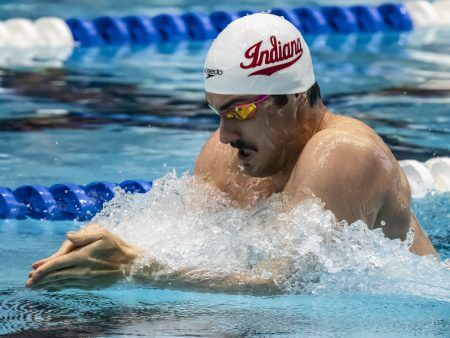
Van Mathias — Photo Courtesy: Peter H. Bick
This year, Mathias has broken out as the top U.S. swimmer in the 100 breast, and he continues to impress in the 50. At the recent Pro Series, he lowered his American record to 26.30, making him the fifth-fastest performer in history while going 0.24 quicker than the winning time from last year’s World Championships. His remarkable improvement suggest that Mathias could chase the 26-second barrier in due course.
For the men’s 50 fly, no U.S. man reached the final at last year’s Worlds, but Ilya Kharun will begin representing the Stars and Stripes later this year. Kharun, swimming for Canada at the time, finished 2025 as the fourth-ranked swimmer in the world, and he currently sits No. 2 for 2026 with his time of 22.64 on the Mare Nostrum circuit.
The 50 backstroke looks like a bit more of a stretch as far as medal contention, but Quintin McCarty is perfectly suited for the event. A win at U.S. Nationals last year launched his international career, and he went on to place fifth in the World Championships final. Amid a difficult meet for the American men as the team battled widespread illness, McCarty was the only backstroker to finish in the top-eight.
Pretty strong positioning all around for a country that spent decades treating the 50s as an inconvenience, at best. The American sprinters have already taken advantage of these new opportunities, with several already building their cases as early favorites for the inaugural Olympic finals two years away.

