There are so many avenues to create a healthy organization and an eventually viable Major League Baseball team, almost all of it unfolding far away from the bright lights of the draft’s first round.
Yet you can tell a lot about a franchise based on how it chooses to spend its very first pick during MLB’s annual selection meeting.
Advertisement
Certainly, not all top picks are created equal. Some aren’t even first-rounders, thanks to compensation owed for free agents, too much money spent in violation of luxury tax ceilings or even sign-stealing punishments.
With that in mind, USA TODAY Sports set out to grade the last 10 years of each team’s top picks, taking into account their average draft position and the total WAR (as tabulated by Baseball-Reference) produced by big leaguers in this past decade. In the event a top pick did not sign, the first signee was graded.
Come Saturday, July 11, the first round will create a fresh crop to assess over time. But here’s who did it the best with their first picks from 2016 through 2025:
A+
Seattle Mariners
Average draft position for first pick: 14.7
Advertisement
Major leaguers produced: 8
Total WAR accumulated: 30.7
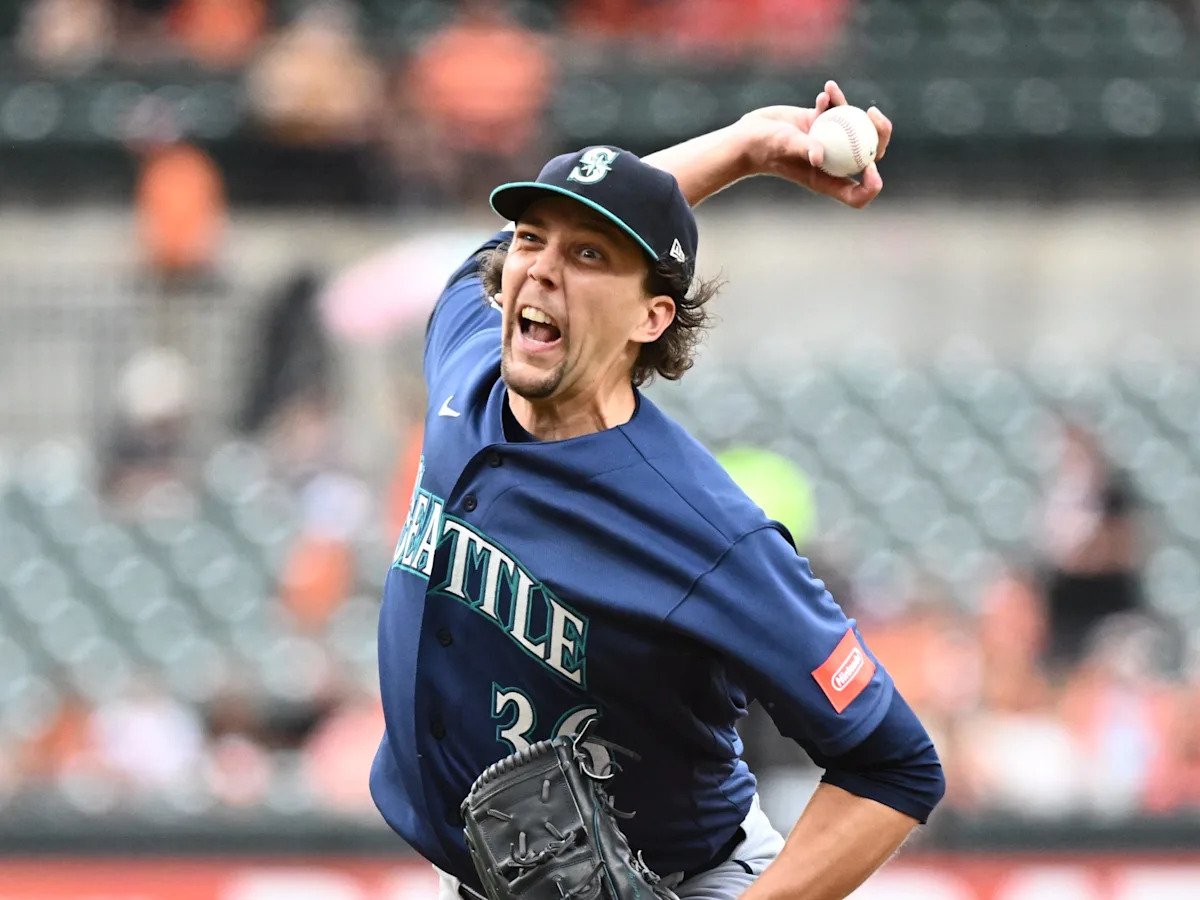
Notable: One of four clubs to produce eight big leaguers, the Mariners should make it 10 out of 10, as every top pick from 2016 to 2023 made it. Along the way they put together a rotation with collegiate right-handers Logan Gilbert (14th overall, 2018), George Kirby (20th, 2019) and Emerson Hancock (sixth, 2020). And then they snagged a middle infield from the 21st and 22nd spots in the draft, snagging high schoolers Cole Young and Colt Emerson in consecutive years. Lucking into the No. 3 pick and Kade Anderson a year ago was simply unfair.
Logan Gilbert was the first of three eventual rotation mainstays drafted by the Seattle Mariners from 2018 to 2020.
A
Detroit Tigers
Average draft position: 8.6
Advertisement
Major leaguers produced: 7
Total WAR: 24.3
Notable: They had six top 10 picks in this stretch and didn’t really screw them up. Hey, this thing is harder than it looks. Along the way they got a three-time All-Star outfielder (Riley Greene), an All-Star starting pitcher (Casey Mize), a slugging first baseman (Spencer Torkelson) and the game’s No. 4 outfield prospect (Max Clark). Lest we forget, All-Star Kevin McGonigle doesn’t even count in these computations, taken after Clark in 2023.
San Diego Padres
Average draft position: 14.9
Major leaguers produced: 6
Total WAR: 37
Notable: MacKenzie Gore, CJ Abrams and Jackson Merrill became All-Stars – and one of them even did it with the Padres. Yep, AJ Preller’s high-wire act is something to observe, with big bets on high-ceiling but volatile high schoolers (nine of 10 top picks in this period were spent on preps) before trading many of them to keep the big league club potent. Save for Merrill, every top pick from 2016 to 2022 – Cal Quantrill, Gore, Ryan Weathers, Abrams, Robert Hassell III and Dylan Lesko – were traded. Now, Preller must pray prep lefties Kash Mayfield and Kruz Schoolcraft – his last two first-rounders – pop soon, for himself or someone else.
Advertisement
A-
Milwaukee Brewers
Average draft position: 18
Major leaguers produced: 6
Total WAR: 27.3
Notable: It’s not easy keeping mid-market success up when you start winning and the draft picks come later and later. Yet from 2018 to 2021, the Brewers found second baseman Brice Turang and outfielders Garrett Mitchell and Sal Frelick between picks Nos. 15-21 – and they’re still leading the NL Central. This stretch began with a pair of misspent top 10 picks (Corey Ray, Keston Hiura) but the Brewers have found their sweet spot with college bats, with slugging corner infielder Andrew Fischer, No. 20 overall a year ago, knocking on the door.
Advertisement
New York Yankees
Average draft position: 25.2
Major leaguers produced: 7
Total WAR: 16.8
Notable: What a streak: Every top pick taken from 2016-2022 touched the majors, either in New York or elsewhere. Their consistent success means the highest pick this past decade was No. 17 in 2017 – spent on Clarke Schmidt. Six of their 10 picks have landed between 25 and 39, yet they reeled in Anthony Volpe (No. 30, 2019) and Austin Wells (No. 28) in consecutive years. Scouting still matters, even for the 1%-ers.
B+
Chicago Cubs
Average draft position: 27
Major leaguers produced: 7
Total WAR: 30.6
Notable: Just call this the Nico Hoerner Show: The contact-hitting savant produced a whopping 23.1 of that WAR after he was picked 24th overall out of Stanford in 2018. The Cubs definitely have a type: Nine of their 10 draftees were collegians. After a bit of a slump they hit on high picks from 2022 to 2024 in Cade Horton (2.3 WAR), Matt Shaw (3.7) and Cam Smith (3.1), who was used to reel in Kyle Tucker.
Advertisement
New York Mets
Average draft position: 22.2
Major leaguers produced: 6
Total WAR: 24.7
Notable: Quite a mishmash here, as one would expect given that this decade of draftees spanned five regimes of baseball operations. And while the Mets were wise enough to draft Pete Crow-Armstrong, they didn’t have the foresight to keep him. No matter: PCA’s 13.8 WAR goes on the board here. Lest we forget, David Peterson (20th overall, 2017) produced 5.5 WAR and Brett Baty (2.4) has value. Yet the future gift may be Carson Benge, who will be a 3-win player in his rookie year, one year after getting plucked 19th out of Oklahoma State.
Advertisement
Philadelphia Phillies
Average draft position: 15.1
Major leaguers produced: 7
Total WAR: 17.3
Notable: They’re gonna go 10 for 10 on big leaguers as the first seven have already debuted and Aidan Miller, Dante Nori and Gage Wood will get there. Bryson Stott (10.1 WAR) and Alec Bohm (4.5) account for the bulk of the big league damage and heck, it’s a little easier filling the team with superstars when you snag a pair of infield stalwarts in the first round. The more pressing question is how high the ceilings are for center fielder Justin Crawford – he’s having a nice if neutral rookie season – and right-hander Andrew Painter, back in the minors after struggling mightily with command.
Advertisement
B
Chicago White Sox
Average draft position: 11.7
Major leaguers produced: 8
Total WAR: 27.2
Notable: Hagen Smith is close and 2025 prep shortstop Billy Carlson should get here and make these White Sox another perfect club the past decade. Garrett Crochet (No. 11 in 2020) is of course the gift that keeps giving, with three regulars in the lineup after they dealt him to Boston, and shortstop Colson Montgomery and first baseman Jacob Gonzalez are also contributing big to this year’s surprises. But they blew a No. 4 pick on infielder Nick Madrigal and No. 3 overall on first baseman Andrew Vaughn, who eventually figured it out – in Milwaukee.
Advertisement
Arizona Diamondbacks
Average draft position: 18.6
Major leaguers produced: 6
Total WAR: 25.5
Notable: Kind of another one-man show here, as Corbin Carroll consumes 18.9 of that WAR, Jake McCarthy another 5.2. After that? Not much else. How half-full you view this glass depends on how much hope you retain that prep draftees Jordan Lawlar (No. 6 overall, 2021) and Druw Jones (No. 2, 2022) can make themselves viable.

Corbin Carroll, chosen 16th overall in 2019, has produced 18.9 career WAR for the Arizona Diamondbacks.
Baltimore Orioles
Average draft position: 12.6
Major leaguers produced: 7
Total WAR: 23.8
Notable: They picked 1-2-5-1 in four consecutive years, and history will determine if Adley Rutschman, Heston Kjerstad, Colton Cowser and Jackson Holliday constitute an appropriate haul for such good fortune. The old regime rolled the dice on prep pitchers DL Hall and Grayson Rodriguez, while the Mike Elias contingent’s legacy may hinge on whether collegiate bats Enrique Bradfield, Vance Honeycutt and Ike Irish return any value between picks 17-22.
Advertisement
B-
Kansas City Royals
Average draft position: 15.8
Major leaguers produced: 4
Total WAR: 37.6
Notable: The Royals produced more WAR with their top picks the past decade than anybody. So why no A grade? Well, 70% of that is tied up in the great Bobby Witt Jr., and kudos to KC for not messing him up. Yet the Royals have had four top 10 picks that have not made the major leagues. The jury’s still out on catcher Blake Mitchell (No. 8, 2023), but outfielder Gavin Cross (No. 9, 2022) is running out of time, while pitchers Asa Lacy (No. 4, 2020) and Frank Mozzicato (No. 7, 2021) failed to launch. Current Red Brady Singer and sophomore slugger Jac Caglianone are all that’s left to show for a decade of prime picks.
Advertisement
Los Angeles Dodgers
Average draft position: 33.3
Major leaguers produced: 4
Total WAR: 8.8
Notable: Yep, the average Dodgers top pick the past decade has fallen outside the top 30. That’s life in the big city, eh? Their WAR haul here does not reflect the 23.8 Will Smith racked up as the 32nd overall pick in 2016, but hey, rules are rules. Dalton Rushing was their top pick at No. 40 overall in 2022, meaning they’ve drafted two catchers from Louisville that will outperform many, if not most first-round picks. Not that they’re perfect: Jeren Kendall (No. 23 overall, 2017) and Kody Hoese (No. 25, 2019) were Vanderbilt and Tulane products who flopped in their system.
Advertisement
Texas Rangers
Average draft position: 14.4
Major leaguers produced: 8
Total WAR: 22.4
Notable: Lefty Cole Ragans started this run as the 30th overall pick in 2016 and he was used to fetch World Series closer Aroldis Chapman before starring for Kansas City. Nice start. But the Rangers burned a ton of capital on a pair of Vandy right-handers – Jack Leiter (No. 2, 2021) and Kumar Rocker (No. 3, 2022) – and the jury is very much out, if not coming back soon. Of the eight big leaguers, five have negative WAR, while the new generation is rescued by Wyatt Langford, who’s delivered big time on his No. 4 overall selection in 2023.
Advertisement
C+
Atlanta Braves
Average draft position: 20.5
Major leaguers produced: 6
Total WAR: 16.2
Notable: Turns out the best player they produced – catcher Shea Langeliers – accrued almost all his 10.2 WAR with the Athletics. Still, they had enough hits to piece together a perennial winner and 2021 World Series champion, as 2016 No. 3 overall pick Ian Anderson accrued just 3.1 WAR but pitched in some huge playoff games. Best future hope is long lefty Cam Caminiti, a high school sign in high Class A at 19.
Cleveland Guardians
Average draft position: 24.4
Major leaguers produced: 6
Total WAR: 12.5
Notable: Their penchant for being Consistently Pretty Good has reduced the Guardians to picking 23rd or higher six of the past 10 years. And until the lottery balls bounced their way and they snagged Travis Bazzana No. 1 overall in 2024, their highest pick was 14. Smiling through it all, the Guardians grabbed Gavin Williams at No. 23 and Chase DeLauter at 16 in consecutive years, and Bazzana is an All-Star just weeks after debuting. Yeah, they still know what they’re doing.
Advertisement
C
Cincinnati Reds
Average draft position: 8.1
Major leaguers produced: 7
Total WAR: 37.1
Notable: Second to Kansas City on the WAR list here, so why the C? Well, they’ve had seven top 10 picks the past decade, and produced just two All-Star selections – one each for right-handers Hunter Greene and Chase Burns, each taken No. 2 overall. Another No. 2, 2016 pick Nick Senzel, produced minus-3.1 WAR, the biggest negative among all top picks the past decade. Somehow, the Jonathan Indias and Nick Lodolos haven’t added up to a contender in Cincy.
San Francisco Giants
Average draft position: 18.9
Major leaguers produced: 5
Advertisement
Total WAR: 35.8
Notable: Two-thirds of the production came from their top pick in 2016, Bryan Reynolds, who they picked 59th overall and traded to rent Andrew McCutchen. So, good for the Pirates, we guess. Eight top picks were spent on collegians, yet the two high schoolers – outfielder Heliot Ramos and slugger Bryce Eldridge – are their only everyday players. That’s what happens when a No. 2 overall pick is burned on Joey Bart, who like Reynolds flourished in Pittsburgh, and a No. 10 on Hunter Bishop, who touched AAA but never found the power he flashed at Arizona State.
Pittsburgh Pirates
Average draft position: 9
Advertisement
Major leaguers produced: 8
Total WAR: 22.9
Notable: They have had six consecutive top nine picks, the first three producing a part-time shortstop (Nick Gonzales), a backup catcher (Henry Davis, who went 1/1 in 2021) and a struggling AAA infielder (Termarr Johnson). Now, the good news: Paul Skenes, Konnor Griffin and Seth Hernandez, the latter now striking out 13.4 batters per nine innings in high A, one year after he was plucked out of high school. Too bad they didn’t hold onto Shane Baz or unlock Quinn Priester.
Athletics
Average draft position: 14.1
Major leaguers produced: 7
Total WAR: 19
Notable: Kyler Murray, we hardly knew ye. Things got a little brighter after 2018’s ninth overall pick decided NFL riches were the surer thing, beginning with plucking Tyler Soderstrom with the 26th overall pick in 2020. And then Nick Kurtz was popped fourth overall in 2024, and Yolo County didn’t know what hit it in 2025. Indeed, those two comprise almost all the value from the last decade, and perhaps things would’ve gone better in Oakland had Murray, AJ Puk and Austin Beck been bypassed for other picks at nine, six and six, respectively.
Advertisement
C-
Boston Red Sox
Average draft position: 19.1
Major leaguers produced: 6
Total WAR: 11
Notable: Yet another franchise that underwent significant regime changes this past decade, but that’s not much excuse for just two top pick players – Tanner Houck and Triston Casas – producing more than 1 win above replacement. They did burn Kyle Teel and Braden Montgomery to snag Garrett Crochet, but the meh tone was set with prep lefty Jay Groome failing to catch on after he was picked 12th overall in 2016.
St. Louis Cardinals
Average draft position: 24.9
Major leaguers produced: 6
Total WAR: 13.1
Notable: They’ve drafted late and played it safe over the years, selecting almost entirely uninspiring collegians with seven of their 10 top picks. Turns out rolling the dice on prep guys was wise: Nolan Gorman (19th overall in 2018, 3.4 WAR) and Jordan Walker (No. 21 in 2020, first-time All-Star in 2025) were their only bright spots the first five years. The latter group has been saved by right-hander Michael McGreevy (No. 18 in 2021) and JJ Wetherholt, who in 2024 became their first top 10 pick since 1998. He’s now the best defensive second baseman in the game.

JJ Wetherholt, chosen seventh overall in 2024, was the St. Louis Cardinals’ first top 10 draft pick since 1998.
Minnesota Twins
Average draft position: 15.2
Advertisement
Major leaguers produced: 5
Total WAR: 15.2
Notable: A tough break when your 1/1 – Royce Lewis, 2017 – has suffered through almost nonstop injuries, though he’s still got runway as a major leaguer. Keoni Cavaco, a prep shortstop chosen 13th in 2019, never made it out of A ball while their top pick a year later, former North Carolina first baseman Aaron Sabato, has finally made it to Class AAA. There are high hopes for their past three No. 1 picks – prep outfielder Walker Jenkins and college shortstops Kaelen Culpepper and Marek Houston.
Los Angeles Angels
Average draft position: 11.1
Major leaguers produced: 9
Advertisement
Total WAR: 23.2
Notable: You get what you pay for: Draft a nonstop stream of close-to-the-majors collegiate players and watch none of them become All-Stars. That’s pretty much how it’s gone down in Anaheim, where shortstop Zach Neto has produced 12.2 WAR and lefty Reid Detmers has finally found his stride. As for Will Wilson, Sam Bachman, Nolan Schanuel and Christian Moore, all chosen between picks eight and 15? They’ve all made it to Anaheim, but seem helpless to prevent a third consecutive last-place finish.
D+
Toronto Blue Jays
Average draft position: 16.1
Major leaguers produced: 6
Total WAR: 9.8
Advertisement
Notable: They basically have one All-Star season from Alek Manoah and two amazing months from Trey Yesavage to show for a decade of top picks. Tough back-to-back selections in 2017 and ’18, as collegiate shortstop Logan Warmoth (No. 22) reached AAA but was gone by 2023, while Jordan Groshans played 17 games for the Marlins in 2022.
Tampa Bay Rays
Average draft position: 18.7
Major leaguers produced: 5
Total WAR: 2.7
Notable: Yeah, seems weird to see the Eternally Smart Rays at the back of the class here. But they’ve perhaps swung too big with their top picks, going the high school route seven of 10 times, with only outfielder Josh Lowe producing positive WAR. It didn’t help when two-way player and 2017 No. 4 overall Brendan McKay ran into shoulder issues; Tampa Bay would pick between 16 and 29 the next seven years.
D
Miami Marlins
Average draft position: 9.5
Major leaguers produced: 5
Total WAR: 19.2
Notable: Trevor Rogers and JJ Bleday largely popped elsewhere and drafting high schoolers six times in nine years didn’t return many dividends. They did right in 2020, grabbing Max Meyer with the third overall pick, and now he’s an All-Star rotation stalwart. The new regime’s pivotal guy is Aiva Arquette, the 6-foot-5 shortstop from Oregon State taken seventh overall last year. Will he return more value than a slew of highly regarded prep shortstops and proven college arms that went behind him?
F+
Houston Astros
Average draft position: 35.6
Major leaguers produced: 6
Total WAR: Minus-2.3
Notable: They were really good on the field (two World Series titles) and really bad off it (a grim sign-stealing scheme) and both conspired to push Astros picks later in the draft, as they were stripped of first- and second-round picks in 2020 and ’21 after their nefarious scheme was discovered. That still doesn’t excuse some awful top picks, beginning with four players who produced negative WAR in their big league careers: Right-handers Forrest Whitley and JB Bukauskas, outfielder Seth Beer and catcher Korey Lee. They had to wait until Nos. 72 and 87 to pick in 2020 and ’21, but given the freedom of choice again, opted for college outfielder Drew Gilbert at No. 28 in ’22. Oy. At least ’23 No. 1 Brice Matthews is contributing to the big league roster, and last year’s No. 1, Xavier Neyens, is far toolsier than many of their previous top picks.
F
Washington Nationals
Average draft position: 14.8
Major leaguers produced: 6
Total WAR: Minus-1.3
Notable: Yet another good team, bad decisions scenario: The Nationals picked between No. 17 and No. 28 from 2016 to 2020, but that didn’t mean they had to choose bad players. Alas, all that’s left from that bunch is Cade Cavalli (No. 22 in 2020), and he’s perhaps established himself as a rotation mainstay. It probably got worse as the Nats got bad, the nadir coming when they selected prep outfielder Elijah Green fifth overall in 2022. Now 22, Green has 141 strikeouts in 313 plate appearances (45% K rate) at high Class A this season. A new regime and last year’s 1/1, shortstop Eli Willits, should produce better outcomes.
F-
Colorado Rockies
Average draft position: 14
Major leaguers produced: 7
Total WAR: Minus-1.6
Notable: Can’t really blame this on Coors Field. The Rockies took a hitter four out of five years at one point, and they all went belly up, from Ryan Vilade (No. 48, 2017) to Michael Toglia (No. 23, 2019) to Zac Veen (No. 9, 2020) and Benny Montgomery (No. 8, 2021). Veen is still knocking on the door, but these past 10 years got off to a tough start when they spent the No. 4 overall pick on prep right-hander Riley Pint in 2016; he quit baseball, came back and then said, “I’m good” after five big league games. There’s some hope for the new generation though good health must return for Chase Dollander and 2025 No. 4 overall Ethan Holliday, and slugger Charlie Condon needs to cut down his strikeouts at AAA.
This article originally appeared on USA TODAY: MLB draft grades for what teams did with top picks over last 10 years: Top squad surprises

