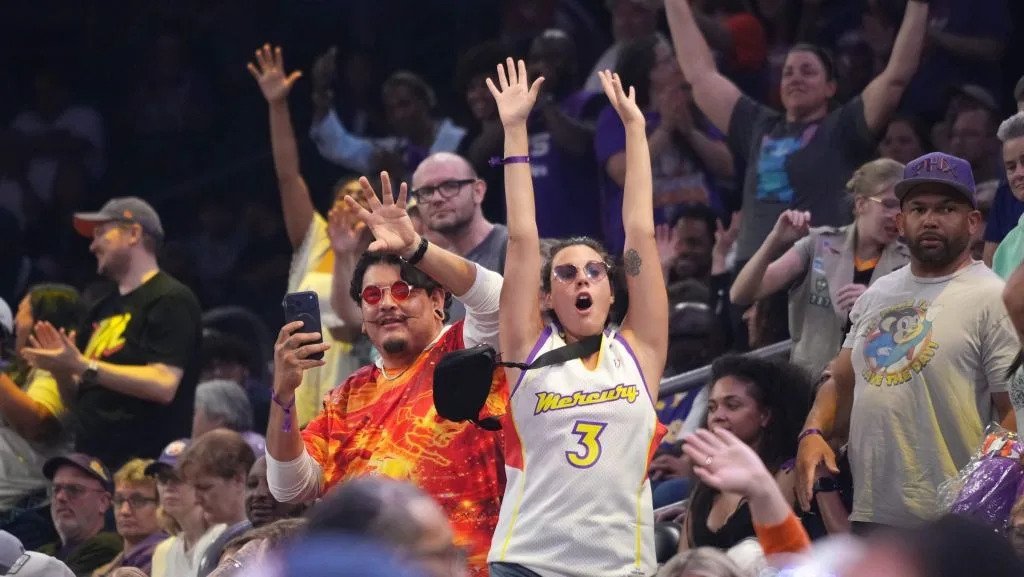
As the WNBA continues to grow, some of its most loyal fans fear they’re being priced out.
Coming off an All-Star Game that saw the get-in price quintuple from year to year, Front Office Sports spoke to season ticket holders in several markets who say they were hit with sticker shock after receiving their renewal offers.
Advertisement
The Washington Mystics—who, at 16–12, are one of the WNBA’s pleasant surprises this season—were one of the first teams to send out renewal notices for the 2027 season.
A Mystics season ticket holder since 2021 told FOS that they don’t plan to renew their floor seats at CareFirst Arena after seeing a 48% jump in their ticket cost ($6,907.50 to $10,200). The 2027 price is also up nearly 250% from last year, when it cost $4,207.50, according to invoices viewed by FOS.
“As much as I love it, my love for it can’t sustain the pricing anymore,” said the season ticket holder, who asked to remain anonymous.
The Phoenix Mercury, who have struggled this year after making the finals in 2025, have also sent out renewal offers. One season ticket holder, Adrian, told FOS that his courtside seats at the Mortgage Matchup Center increased by 60% from $9,100 to $14,600 per ticket.
Advertisement
Mystics and Mercury season ticket holders received offers in mid-July, according to emails viewed by FOS. Both emails mentioned the WNBA’s expanded regular-season schedule starting next year—each team will play 25 home games, a 13.6% increase from the current 22.
Washington’s website FAQ also cites additional games as a culprit for the increased prices.
But more inventory does not account for the entire price hike. The Mystics are increasing ticket prices per game by around 22 to 50%, based on a pricing chart viewed by FOS.
Another Mystics season ticket holder since 2025 saw a 70% jump on their total ticket price, with a per game cost for a seat in the stands jumping 50% from $51.14 to $76.50 per game.
They spoke to a sales representative about their price hike concerns. The rep pointed to the new collective bargaining agreement, saying price increases were needed to help offset increased salaries. Adrian also said that a Mercury representative mentioned the CBA and increased salaries. (The average WNBA salary jumped from about $120,000 last year to around $600,000 this season.)
Advertisement
“I don’t really think that I need to be the one that’s paying to keep the lights on when you have a billionaire sitting in a seat in front of me,” one Mystics season ticket holder told FOS.
Terri Carmichael Jackson, the executive director of the players’ union, was disturbed by the suggestion that teams were increasing ticket prices to cover salaries, and called on the league to maintain “affordable” pricing.
“If fans are being told that ticket price increases are because of the new CBA, that is inaccurate,” Jackson told FOS. “Ticket pricing is a business decision made by individual teams and their ownership groups. The WNBPA and its members are neither consulted on nor involved in those decisions.”
The WNBA has long been more accessible than its counterparts in U.S. pro sports, something that may be changing as it grows in popularity.
Advertisement
“WNBA fans have been instrumental in the game’s extraordinary growth, and they deserve transparency about pricing decisions,” Jackson said. “A healthy league is one where players receive a meaningful share of the revenues they help generate and every fan enjoys an affordable, first-class experience. Those goals are not mutually exclusive.”
The Mystics did not immediately respond to a request for comment.
Supply and Demand
Attendance is up for most WNBA franchises, and the league attendance has hit a record average of 11,255 this year. But Washington has the second-smallest arena in the WNBA, only fitting 4,200 fans.
Advertisement
Natasha Cloud, who played eight seasons in Washington, told FOS she knew demand would eventually be a problem when the team moved to CareFirst Arena. (The team drew more than 6,000 fans per game in its last two seasons before moving.)
That problem was exacerbated by the WNBA’s growth and the sudden success of the Mystics, who were supposed to be in an extended rebuild.
“An arena that already didn’t fit that fan base for the Washington Mystics, with the new influx of players and the college fans that came with them, it’s even worse now,” Cloud said.
Emily Faith Morgan-Imagn Images
One Mystics fan, who was part of the first group of season ticket holders in 1998, told FOS they were abruptly removed from their section a few years ago. While they were given comparable seats, they believe the move was a byproduct of the arena’s limitations.
Advertisement
“They eliminated our row so that they could make more floor seats,” said the season ticket holder, who had tickets from 1998 to 2002 before returning in 2019.
The Mystics have the third-highest average resale ticket price this season ($146), behind the Atlanta Dream, who have an even smaller arena, and the Caitlin Clark-led Indiana Fever, according to SeatGeek. Washington’s average ticket sale price on SeatGeek is up 26% year-over-year. (One Dream season ticket holder told FOS they expect their season ticket prices to “double” given the team’s success and the addition of Angel Reese, but the team has yet to send out renewal offers.)
Washington will play one game at Capital One Arena this year—the regular season finale on Sept. 24—and could theoretically move more games to the 20,000-seat arena also owned by parent company Monumental Sports and Entertainment. But their lease at CareFirst runs through 2037.
Other teams that play in arenas that fit under 10,000 fans are the Dream, Connecticut Sun, and Dallas Wings. The Sun are moving to Houston to play at the Toyota Center and the Wings announced Monday that they will play the 2027 season at the American Airlines Center next season; both are NBA arenas that seat more than 18,000 fans. The Dream told FOS last year that they are searching for a new venue and have a “year-to-year” lease in College Park.
Advertisement
Many Mystics fans would welcome a move to Capital One as a way to justify prices. But for some fans who spoke to FOS, improved perks at CareFirst would suffice.
The desire for a more premium experience is common among season ticket holders looking to make the investment. A longtime Chicago Sky season ticket holder, who said the team has yet to send 2027 renewal offers, told FOS the financial component matters less to them than improved perks: “One, I want player engagement. Two, better quality food. And three, I think that just being valued more at where we’re sitting.”
Priced Out
There is a sentiment among some fans that price increases are a positive sign of the team and league’s health.
Advertisement
Abby Tannenbaum, a Mystics season ticker holder since 2024, told FOS she was surprised by a 42% total increase in her ticket prices, but remains excited about supporting the Mystics, the WNBA, and women’s sports.
“Both things can be true at the same time,” Tannenbaum said. But there is a concern that the increased prices have and will continue to drive out loyal fans.
In Phoenix, there is no capacity issue as they play at the same arena as the Suns which fits about 18,000 fans, and the team is averaging about 10,700 fans per game this year. And fans have raved about the gameday experience.
“It’s great, and all the perks they give us are great,” Jon Allenza, a season ticket holder since last year, told FOS. Owner Mat Ishbia has been known to incorporate fan-friendly offerings since taking over in 2023, including affordable concessions.
Advertisement
But the price increase appears to be hitting courtside seats—which have a waitlist—the hardest.
A source familiar with Mercury ticket prices confirmed to FOS that the biggest price increases hit the “premium and courtside” tickets.
“Pricing reflects demand, and demand isn’t the same everywhere in the building,” the source said.
Allenza told FOS his season ticket he was surprised when his courtside ticket jumped from $3,900 to $5,600 next season. He also has two season tickets in the stands that only received a 5% per game increase.
“Our biggest concern is that it’s going to end up like the NBA where it’s all corporations that have all the courtside seats and not real fans,” Allenza said. Adrian said fans feel they are being “pushed out” in favor of corporate buyers.
Advertisement
Allenza said he plans to keep his tickets until next season, but may not be able to afford additional price hikes that he’s somewhat resigned to as a result of the WNBA’s growth.
“I don’t think it’s going to be better. It’s going to be worse, if anything. But I get it,” he said. “There’s increased demand. There’s a lot more eyes on the league at this point and a lot more people trying to get seats.”
The post WNBA Season-Ticket Holders Grapple With Soaring Prices appeared first on Front Office Sports.

