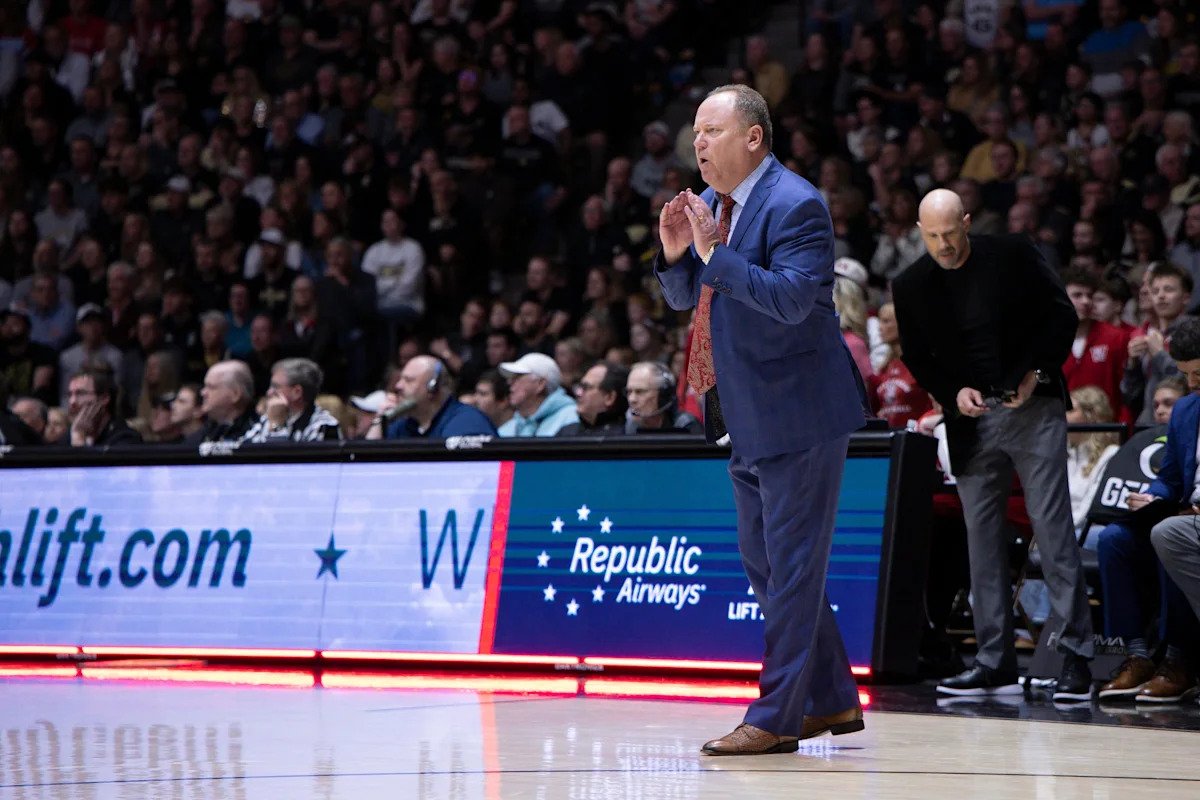
Over the past few years, the Wisconsin Badgers have found a way to be successful in the Big Ten, finishing in the Top 5 in each of the past three years despite constant turnover with the roster.
Wisconsin has also done so without a top-tier Big Ten budget, which is expected to continue this year, as resources continue to increase significantly across the country. That’s what prompted the departures of starters John Blackwell and Aleksas Bieliauskas in the offseason, with the former heading to Duke on a deal that is reportedly expected to exceed $4 million this season.
Advertisement
With Blackwell departing, the Badgers retained big men Nolan Winter and Austin Rapp, while adding Owen Foxwell, Trey Autry, Eian Elmer, and Victory Onuetu to the roster from either overseas or the transfer portal. Without that clear 1-2 punch like Wisconsin had with Blackwell and Nick Boyd last year, this season’s team feels more system-oriented with quality fits across the board.
Does Wisconsin still have what it takes to be a contender in the Big Ten? Brian Butch believes so, and it’s because of one key reason: Greg Gard.
“Because it’s what they do. It’s Greg Gard,” Butch said about the Badgers being a sleeper Big Ten contender. “Like, I mean, that’s all I need to say is Greg Gard, and everyone said, ‘okay, yeah, that makes sense.’ Like, I think part of it is though is they’ve invested. They had to pick with John Blackwell. Do you invest the majority of your budget with John, or do you go get Nolan Winter, Austin Rapp, and then fill around those 2 guys? I’m going to take 2 versus 1. In this day and age, it’s irresponsible to go pay a guy a boatload of money, take half your budget away, and now all of a sudden, you’re sitting there, you know, we got to fill a roster. I think that’s part of what they’re at.
“You will understand the way Wisconsin wants to play. They put money into the front court last couple of years, and I think the tournament success hasn’t been there because of this. And I think Greg’s has addressed that defensively. They got guys that are better. You look at Victory [Onuetu] from Hofstra, the big he’s going to be there to be able to block shots, get aggressive. We’ve talked about every Big Ten team has invested in bigs, it seems like, ‘okay, that’s the one.'”
Advertisement
That fact about bigs has been true. We’ve now seen teams prioritizing size in the frontcourt and the possession battle be extremely successful over the past few years. The Florida Gators are one of those teams. Illinois is another. Tennessee did quite well this year. Duke had/has good size. Michigan, this year’s winners, had a very dominant frontcourt. The examples go on and on.
Now, adding size does cost money, so Wisconsin had to be diligent with how its resources were spent. But they were able to retain two key bigs from last year, while adding Victory Onuetu to the depth on the bench with Will Garlock. That four should keep the Badgers more competitive in the frontcourt.
But there’s also the system fits, such as Owen Foxwell and Eian Elmer, who seem to have bought in to what Wisconsin wants to do on both sides of the court.
“You talked about Owen Foxwell. I think he’s going to be elite and what he’s able to do,” Butch continued. “I think this Wisconsin team is going to be more of a system-type offense than rely on one guy to go and make a play. The last couple of years, that’s what it’s felt like, whether it’s John Tonje, whether it’s been Nick Boyd, John Blackwell. They’ve been more, okay, go break a guy down, go score. I think now there’s more system.
Advertisement
“And when you have more system on the offensive side, It really changes the way that defenses have to guard you. They’ve got to guard all 5. We know Wisconsin wants to spread it and really shoot more 3s, and get to the rim. They’ve done that. They’ve added that in [Eian] Elmer from Miami of Ohio, what he’s able to do. So I think in general, the pieces are all there.”
Now, the pieces have to come together. While that did happen offensively, and in a big way last year, the Badgers weren’t as connected defensively, despite having some quality individual defenders. To return back to that top tier that Wisconsin showed in 2024-25, the Badgers need to be a more complete team with a top-30 defense.

