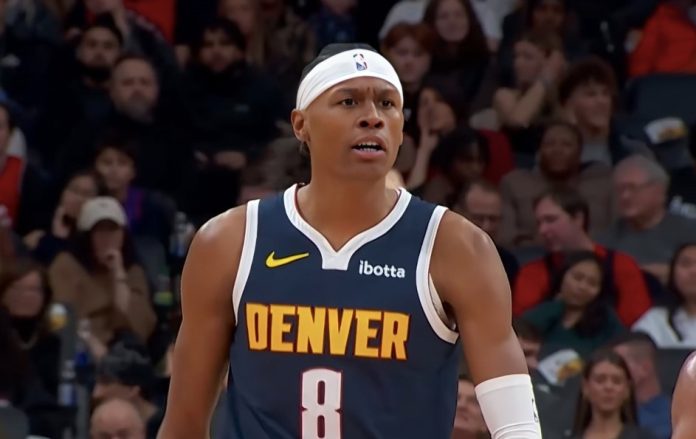
Rich Paul says he discouraged Peyton Watson from returning for the 2026 playoffs because the Denver Nuggets forward was still recovering from a Grade 2 left hamstring strain, even though Watson wanted to play.
Speaking on his “Game Over” podcast with Max Kellerman, the Klutch Sports CEO said Watson needed protection from the pressure to return during the postseason while approaching a major contract decision.
“You’ve got to remember, he didn’t finish the season. He didn’t play in the playoffs,” Paul said, via Arthur Hill of Hoops Rumors. “He was dealing with a hamstring injury, soft tissue injury. And when you’re dealing with those injuries, you have to be very careful in your return.”
Paul explained that Watson’s competitive instincts and contract situation created additional pressure to get back on the court.
“Guys want to play, and you have to protect them from themselves in that moment,” Paul said. “Because you’re up for a contract and it’s the playoffs, and I’ve had a pretty good year, so I need to play. And it’s important to protect that.”
Watson was having his best NBA season before suffering the hamstring injury in early February. The 23-year-old appeared in 54 regular-season games, including 40 starts, and averaged 14.6 points, 4.9 rebounds and 2.1 assists in 29.6 minutes per game.
His offensive growth was particularly significant. Watson shot 49.1% from the field and a career-best 41.1% from three-point range on 3.6 attempts per game, producing a 56.0% effective field-goal percentage.
After missing more than six weeks, Watson returned for five games with restricted minutes before Denver shut him down again in early April. He did not appear in the postseason as the third-seeded Nuggets lost to the Minnesota Timberwolves in six games in the first round.
The decision became more notable because Aaron Gordon was also managing a hamstring issue and played in three playoff games. According to Hill, some members of the Nuggets organization believed Watson could have returned, while Paul’s comments indicate his camp preferred a more cautious approach.
Watson’s absence also came as he entered a crucial contract summer. He reportedly sought a deal in the range of $25 million annually, while Denver’s latest offer was reportedly worth $70 million over four years.
Denver ultimately moved Watson to Cleveland in a sign-and-trade completed around August 20, giving the Cavaliers another starting-caliber wing after their 52-30 season and run to the Eastern Conference Finals.

