Bangladesh needing more than 100 runs in the last ten overs is usually a recipe for disaster. They have won just three such chases in T20Is, never at home. When they faced this exact situation in Chattogram on Monday, it was hard to imagine that it would pan out any differently.
Only, it did. Bangladesh completed the 183-run chase with two overs to spare. In the five previous occasions Bangladesh scored 100-plus runs in the last ten overs of a T20I chase, they had never taken this few balls to do so.
Bangladesh were heading towards a tough chase when Tanzid Hasan and Saif Hassan batted too slowly at the start. By the time Tanzid departed, the hosts were scoring at 7.70 per over, with a mountain to climb by Bangladesh’s standards. On most days, a batting collapse would be incoming.
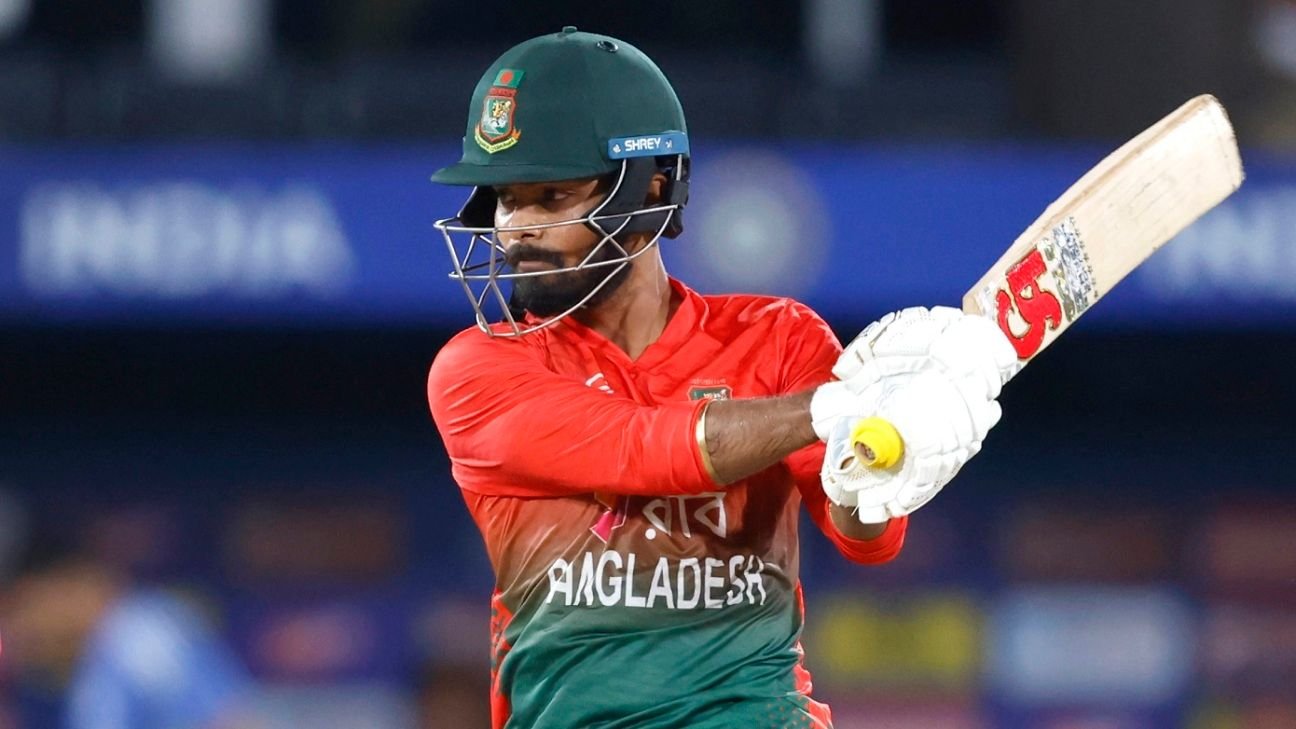
But then, the middle-order trio of Tawhid Hridoy, Parvez Hossain and Shamim Hossain combined to score 110 runs at a collective strike rate of 203.7. Between them, they struck 13 boundaries and put on two fiery partnerships. Hridoy, who top-scored with an unbeaten 51, said that the 28 and 31 from Parvez and Shamim, respectively, were as good as half-centuries.
“You might get the occasional half-century batting at No. 5 or 6. If you see someone getting a fifty from that position, you will figure out that the team is on the back foot, as we must have lost three or four early wickets,” Hridoy said. “Having said that, I thought Shamim and Emon played the type of innings that was as good as scoring fifties.
“It is important to understand the importance of such impactful innings. We are also guilty of thinking about fifties and hundreds, but sometimes even an innings of ten runs can have an impact in a T20 match. The way Shamim and Emon batted, it made us win with a lot of ease.”
Hridoy said he enjoyed the way Shamim struck his boundaries, particularly the no-look scoop off Nathan Smith that went dead straight behind the wicketkeeper for six. “He plays the type of shots that very few players can pull off,” he said. “Bowlers are under pressure when a batter plays such shots. You need a player like Shamim at No. 6, who can play such cameos. I just pray that he continues to be successful.”
Bangladesh’s turnaround in this game started with Parvez going after Ish Sodhi in the over in which he dismissed Tanzid with the first ball. Sodhi went for 18 with Parvez hammering him for a four and a six to end the over.
“The saying goes, attack is the best form of defence,” Hridoy added. “You can’t cut it at international level if you are bogged down. I think Emon played his shots with a clear mind. I gave him some information, but he executed his shots really well.”
Hridoy, who had come under some criticism for the way he farmed – or failed to farm – the strike in the third ODI in Chattogram, said that Bangladesh have the mindset to chase down big targets but it cannot be done often. “That’s the game,” he said, “but I think we are improving every day.
“I usually try to fulfil the team’s demand. In that situation today, we needed quick runs. I just planned to attack, otherwise it would have been tough for us. So I tried to be as attacking as possible.”
Meanwhile, New Zealand could have scored more than their eventual 182 had they not suffered a collapse in the middle overs. From 61 for 1 in the powerplay, set up by Dane Cleaver and Katene Clarke, the New Zealand batters could not keep the tempo up after both half-centurions were out in the space of 12 balls.
“I think we would have hoped to get 200, considering the platform that we laid,” Cleaver said. “But we also know that in these conditions, we saw it in the ODIs as well, it gets harder as the ball gets softer. And obviously, the [Bangladesh] bowlers bowled well at the end to restrict us, but we would always like to get a few more.
“We were sort of just in flow, sort of playing each over, match-up as we could at the time. We weren’t looking too far ahead at that stage. But when we came off after unfortunately getting out, we sort of talked about 180 being par.”

