What is the SCORE Act supposed to accomplish? The answer depends on who is being asked.
Leaders of the autonomy conferences in college athletics — the SEC, Big Ten, Big 12 and ACC — will make the case that this legislation will provide more regulation and clarity amidst the chaotic landscape fostered by the creation of name, image and likeness (NIL) compensation, revenue sharing and the transfer portal. It would reshape the oversight of college athletics and pave the way for new standards.
Advertisement
However, as opponents of the legislation will point out, it will also give the NCAA and its member institutions antitrust protections and allow the NCAA to make its own rules on eligibility and compensation, pre-empting state laws. It would also — perhaps most importantly — prohibit college athletes from being considered employees, taking away their rights to collectively bargain.
Rep. Lori Trahan of Massachusetts — a former Division I volleyball player at Georgetown — says it a bit more bluntly.
“This is a partisan piece of legislation that bails out the NCAA and the (SEC and Big Ten) by silencing athletes and rolling back the rights that they fought so hard to win. That’s a choice. It’s a choice to put the interests of the wealthiest organizations in college sports ahead of the athletes who create the value in this industry,” Trahan said Tuesday. “… Their decision to do so this week shows that they were willing to put those multi-billion-dollar special interests ahead of the American people. The SCORE Act is being sold as a fix for college athletics. It’s not. It hands the NCAA and conferences a sweeping antitrust exemption in perpetuity.”
For now, the SCORE Act — that’s an acronym that stands for the mouthful “Student Compensation And Opportunity Through Rights and Endorsements” Act — is in limbo.


After the Congressional Black Caucus announced united opposition against the bill, House Republicans pulled the bill from the agenda on Monday night, marking the second time in less than a year that an official vote on the SCORE Act was canceled.
Advertisement
Before the vote was canceled, Trahan planned a press conference for Tuesday alongside several women’s sports figures. Among them were a handful of college basketball players who were eager to slam the NCAA and dance on the grave of the SCORE Act.
One of them was Charlisse Leger-Walker, a key member of UCLA’s national championship team this season who is now in her rookie year in the WNBA with the Connecticut Sun.
“The SCORE Act does nothing to solve the problems of our current system and I am glad that it’s finally dead once and for all,” Leger-Walker said. “It is clear that the NCAA agenda is to wield absolute power over all college athletes. They want to push women’s sports back into the past. … We cannot trust the NCAA to do the right thing and neither should Congress.”
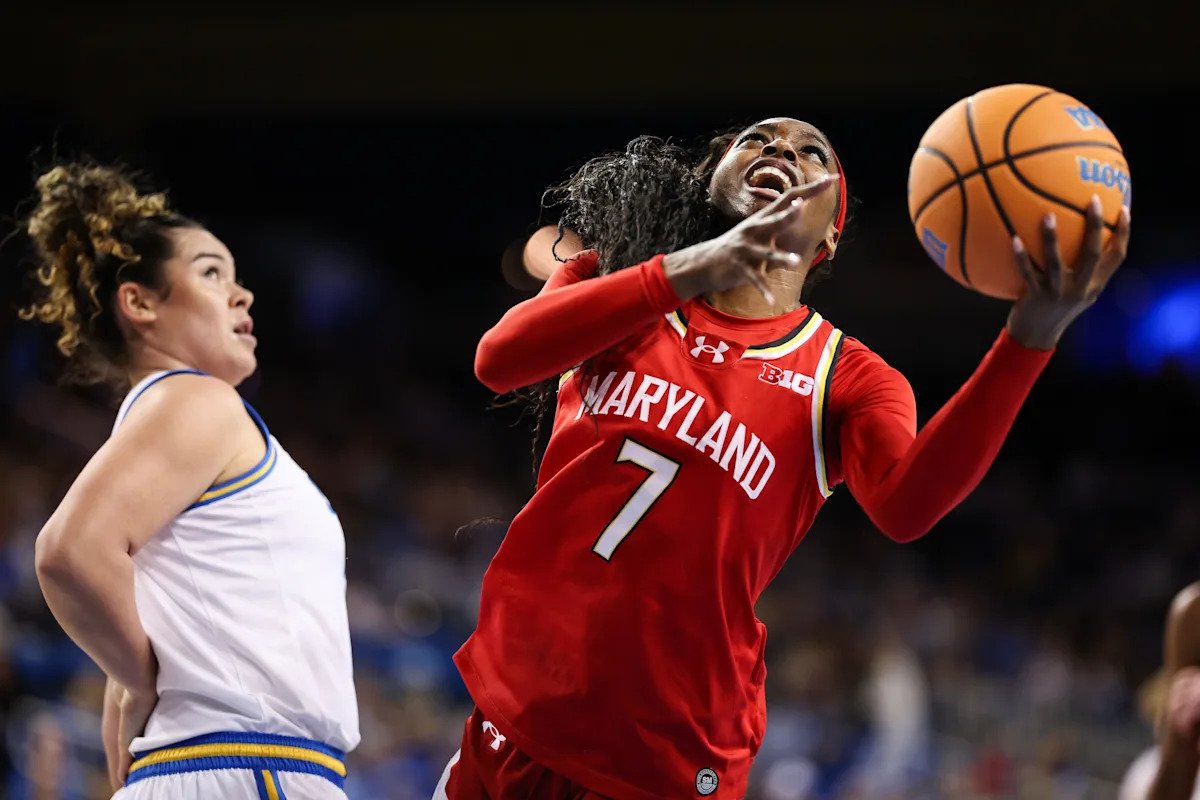
Trahan and Leger-Walker were joined on a Zoom call with reporters by current Maryland women’s basketball player Oluchi Okananwa and Michigan women’s basketball player Brooke Daniels. Andrew Cooper, the Executive Director for the United College Athletes Association, and NWSL Players Association Executive Director Meghann Burke also added comments.
Advertisement
All of them agreed that, going forward, when legislation is being crafted around college athletics, athletes need a seat at the table.
“The NCAA has not been taking care of us. In fact, they’ve been doing the complete opposite. The public and Congress need to understand how harmful it is for the NCAA to be having these conversations without us athletes involved at all,” Okananwa said. “We need a legally binding position on a level playing field with the NCAA to negotiate our rights and working conditions.
“It’s obvious that we are not just student-athletes; that myth has surely been debunked. We are professionals. The sheer amount of revenue college sports brings in alone — it’s ridiculous not to recognize us as the professionals that we are.”
Leger-Walker and Daniels have both exhausted their eligibility, so Okananwa was the only person on Tuesday’s call speaking from the perspective of a current college athlete. She played her first two seasons of basketball at Duke — where she was the ACC’s Sixth Player of the Year and MVP of the ACC Tournament — before transferring to Maryland, where she was an All-Big Ten selection this past season.
Advertisement
A native of Boston, Okananwa averaged 17.8 points per game for the Terps this past season. And now, she’s using her platform to speak out against what the NCAA is trying to do with the SCORE Act.
“It’s great that the SCORE Act is dead, but we do not trust the NCAA to have our best interests in mind while they’re carrying on secret negotiations in the Senate without us. We need to have our voices heard,” Okananwa said. “Conversations like these affect generations. … I think that there’s a lot of college athletes that are just not privy to most of this information, and if they were made aware, they would be fighting just as hard as we are.”
Daniels, a two-time All-Defense selection in the Big Ten, started 31 games for Michigan this past season as the Wolverines made a run to the Elite Eight. A political science major at Michigan, Daniels finds it puzzling that lawmakers are spending so much time and effort on this issue.
“The NCAA tells us that they support us right to our faces, but then … turns around and spends tens of million (of) dollars lobbying Congress to limit our rights, trying to silence our voices,” Daniels said. “Why is Congress spending time on this in the country right now? The Voting Rights Act is being dismantled, war issues, working people are struggling with rising prices, gas issues, a broken healthcare system and more. Why does Congress need to be involved here?”
Advertisement
Ahead of the landmark House v. NCAA antitrust class-action settlement being formally approved last June, more than 100 Division I women’s college basketball players — including Leger-Walker and her Connecticut Sun teammate Raegan Beers — requested a meeting with leaders of the SEC and Big Ten in an attempt to secure that seat at the table with decision makers. Cooper said Tuesday that SEC Commissioner Greg Sankey and Big Ten Commissioner Tony Petitti refused to meet with the players.
Trahan said that sort of unwillingness to negotiate with the other side is what doomed the SCORE Act from the beginning.
“The SCORE Act failed because it was drafted behind closed doors by lobbyists for the NCAA and the Power Two conferences, and not in good faith with athletes, with Democratic members, or with anyone who has actually immersed themselves in these issues,” Trahan said. “I think any bill that can actually pass the Senate and be signed into law has to be built much differently, and from the ground up.”
This article originally appeared on USA TODAY: Women’s college basketball players slam NCAA as SCORE Act stumbles

