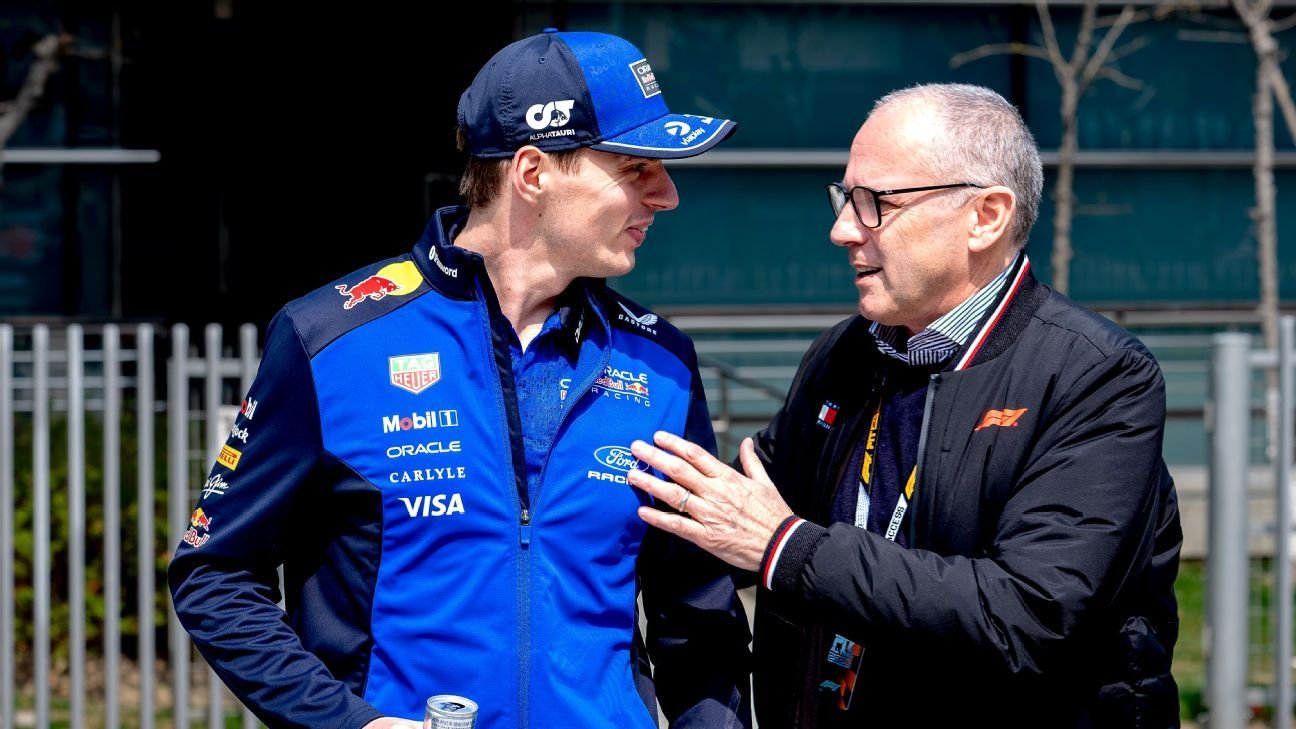
Critics of Formula 1’s new style of racing and its controversial new cars have “short memories”, according to championship CEO Stefano Domenicali.
Formula 1 undertook an unprecedented change to its cars this year, with new aerodynamic designs and new engines.
The engines have been particularly controversial — a near 50/50 split between combustion and electrical power has created a huge focus on to harvesting and deploying battery power throughout qualifying and races.
Driver criticism has included four-time world champion Max Verstappen calling the new cars “anti-racing” and likening them to Mario Kart, while Fernando Alonso has teasingly renamed Formula 1 the “battery world championship”.
Fan feedback has also been mixed, especially at the new form of so-called yo-yo overtaking created by the new battery boosts.
Speaking to Autosport on the new rules, F1 boss Domenicali defended the product.
“You know, overtaking … some people are saying it is artificial,” he said. “What is artificial? An overtake is an overtake.
“People have a short memory. Because in the turbo age in the 80’s, I was already following quite well Formula 1, [and then] the lift and coast were using different turbos, different speeds. And you have to save in racing, because otherwise the fuel tank was too small. You couldn’t have the time.
“Maybe some of the old people are criticising or having some comments, have a short memory. So look back in the 80’s, at the turbo time, these things were there there.
“It’s part of the game, as always. Globally speaking, it’s been very positive reaction from the fans.”
– George Russell: Enough ‘low-hanging fruit’ to improve F1 regulations for Miami GP
– Red Bull reshuffles technical department amid F1 woes, key departures
– F1 boss calls on Max Verstappen to respect the impact of his comments
Formula 1 is currently undergoing a process which might lead to a tweak around some of the rules ahead of the Miami Grand Prix on May 3.
Technical figures from the sport have already had preliminary discussions on some changes, although F1 has insisted any tweaks will be relatively minor, and aimed at addressing certain specific driver concerns rather than sweeping overhauls to the overtaking itself.
A meeting on April 20 between Domenicali, the governing FIA and the teams will likely lead to some small tweaks, specifically centred around qualifying.
F1 has been keen to stress what they feel has been an overwhelmingly positive response to the new type of racing, despite the majority of drivers criticising the product.
“The attention on what we are doing is fantastic,” Domenicali said. “Three events sold out. In terms of viewership, we are growing, we are getting higher in terms of numbers. The attention on our sport has never been so good. We take on board everything … but have a clear line on what you want to do for the future.”
F1 has not given a detailed breakdown on the TV metrics quoted by Domenicali, other than to circulate figures that its “top 10 markets” are up collectively in terms of overall numbers.
It has also not specified how it has been measuring fan feedback, positive or negative.
Domenicali said there is more attention on the product from young people than ever before.
Speaking about new commercial partners the sport has welcomed lately, he said: “It’s not only Kit-Kat. It’s LEGO. It’s Disney. We’re moving and shifting the attention to the younger generation.
“We are moving from B2B [business-to-business] to B2C [business-to-consumer]. The consumer side of it, [we want to] attract their attention on things that are part of their lives.
“That’s the focus we want to have. To see and touch and leave Formula 1 in places you would not expect to have. Now we are there.
“We need to be relevant for the younger generation — they need to understand ‘ah, Formula 1, it is here, it’s there, it is here.’
“We are talking about a sport where the centre is always, and always will be, cars, fighting on with other drivers. With the human factor that will be the central part of it, always. AI can come, it’s already here, but the human factor will always be at the centre of our product.”

