Every January, for as long as I can remember, my now-elderly father has spent many days congratulating himself on his extraordinary ability to write the correct year when he’s putting the date on a cheque.
No one under the age of 80 considers this a skill. No one under 35 even knows what he’s talking about. And I’m not planning to explain. Cheques will perhaps become fashionable again one day, as a sort of retro thing, but it hasn’t happened yet.
There are, however, many analogous lost skills in our own corner of the world. Things that even a decade ago were core competencies that many normal riders took for granted as part of cycling, and which we’ll never do again unless we get jobs in a heritage museum.

We used to know how to true a wheel. If you’ve been cycling less than a decade, this is a wild concept. Wheels, when they had shallow metal rims, sometimes used to go funny. Sort of crooked and wobbly, like a poppadum. When that happened you had to adjust the spokes with a special spanner to make it straight again, like someone tuning a circular harp.
If you did this right, the wheel straightened up. Usually you just made it worse and had to take it to a bike shop and tell them lies about a “mate who swore he knew how to fix it.” But for the first few moments of truing it always looked like it was getting better, and you felt like an artist.

Multiple national time trial champion from 10 miles to 12 hours, best selling author of The Hour, Faster and Re-cyclists, Dr Hutch writes a column for Cycling Weekly every week.
Dear Doc
A few years ago, I decided to upgrade to a road bike with electronic shifting. On my first ride, I looked down and saw the low-battery indicator flashing red on the rear derailleur.
Extensive testing by the bike shop showed it to be in perfect working condition. Another ride, same flashing light. Back to the shop and again, no issues identified.
On my next ride I stopped to try to work out what the hell was going on. Closer inspection of the rear mech revealed the ‘low battery indicator’ didn’t actually exist. What did exist was the reflection from my flashing rear light.
Kind regards
Paul Edwards
We used to have to pretend to have a grasp of metallurgy. When bicycles were made of steel or aluminium, the tubing had numbers that told you the proportions of steel or aluminium and various other metals, like zinc, manganese and molybdenum.
It is important to know that these proportions made next to no difference. (To performance. They made a difference to price, all right.) But we had to behave as if they did. It was like a community of atheists all pretending to be evangelical Christians: “When I switched from 531 to 753 it was if I’d been born anew.”
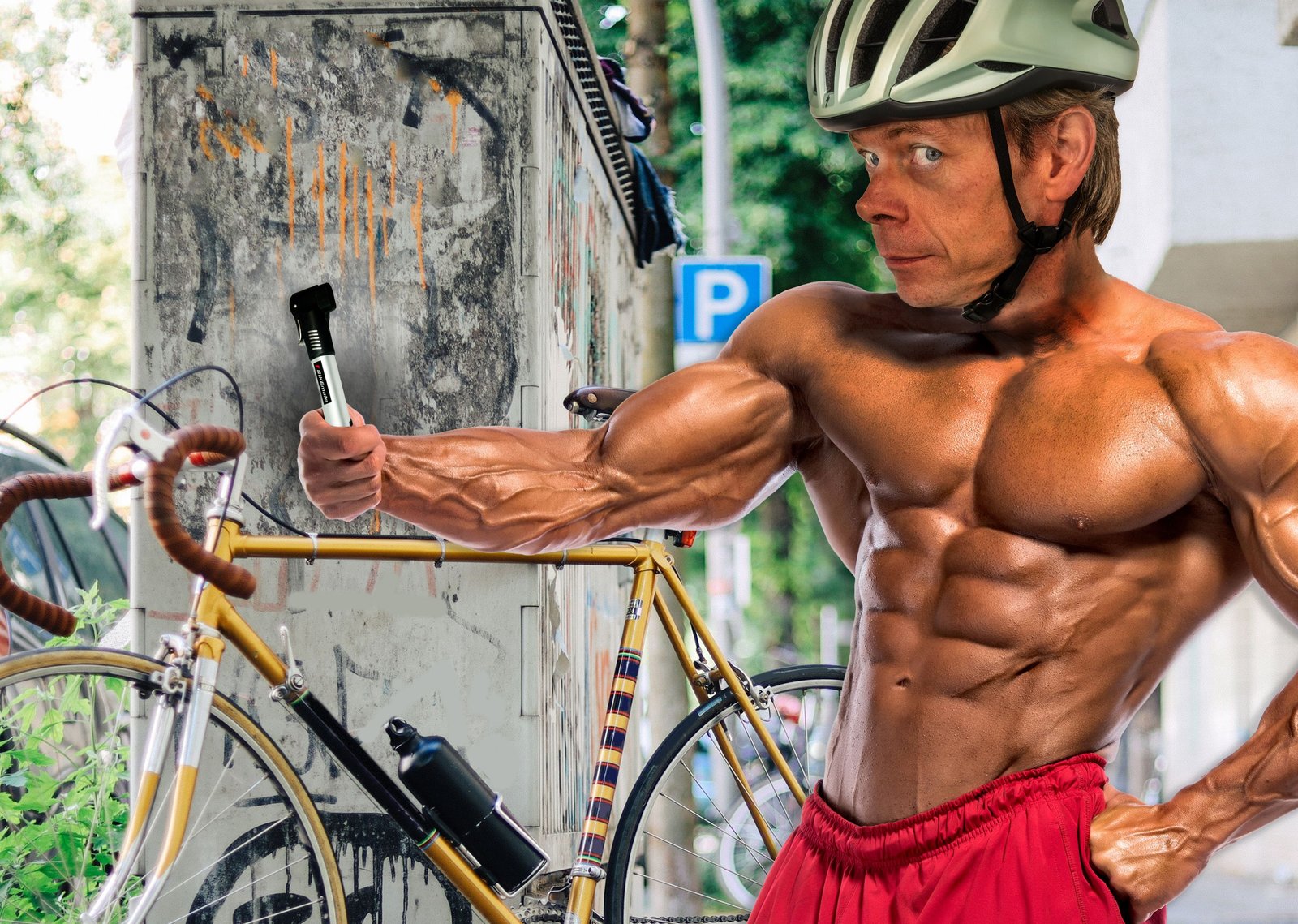
We used to know how to pump things up with pumps that didn’t really work. In the merry days when tyres were narrow and pressures were high, punctures were frequent. You haven’t truly known time to pass slowly until you’ve tried to pump a tyre up to 120 psi armed with a mini pump that pumps the atoms individually. If someone had come back in time with a little electric pump you could put in a jersey pocket, we’d have built cathedrals in their honour. But at least, in the pre-gym days, it gave us an upper-body workout.
We used to know how to glue on a tyre. I don’t mean deal with a bit of sealant. I mean glue. Race tyres used to be tubular, which is to say the carcass went all the way round the inner tube. They looked like an inflatable hula-hoop. You glued them onto a more or less flat rim, and in order to firstly stop the tyre just falling off and secondly make you unhappy, the rim was bigger than the tyre. If you think trying to get a Continental tubeless tyre onto a standard clincher rim is fun, imagine doing it when it’s covered in glue. This used to be a core skill, possessed of every racing bike rider. Honestly, it was only about fifteen years ago, but now it feels like knowing how to shoe a horse.
Don’t get too smug, by the way. The time will come when something you know how to do right now will become irrecoverably cute. I don’t know what it will be – it might be clipping into a pedal, or knowing how to work a torque wrench. But one day you’ll feel old too.
Great Inventions of Cycling – Altitude
Until the 1968 Olympics took place in Mexico City, at over 2000 m altitude, cycling hadn’t paid very much attention to the whole idea of elevation other than to note that long steep climbs are very difficult and the further up you go the harder it gets. Essentially, until 1968, no one had really done a flat, timed race up a mountain. I mean, why would they?
In Mexico City, on the track the kilo and individual pursuit records were demolished. On the road, the 100 km team time trial was rattled off at an unprecedented pace, even if there was no actual record for it. Runners and swimmers might have struggled in the thin air, but for cyclists it was an exciting new frontier in free speed, which is basically all any of us has ever wanted.
Ole Ritter broke the Hour Record in Mexico City (actually while the 1968 Olympics was on), followed by Eddy Merckx who took the record on the same track in 1972. Mexico has seen many Hour records since.
Riders going to Mexico City noticed that after a week or two they started to get over the initial feelings of breathlessness. Then they, and the scientific community, started to log data showing that when they went back to sea level many of them performed better than before the trip. This was a second frontier in free speed.
This led to training camps up mountains, riders moving to Andorra, and many other ways of making athletes a bit homesick. And it’s entirely possible that without the 1968 Olympics, the Colombians would have managed to keep the whole thing to themselves.

