The new CBA brought a ton of changes to the WNBA. One of the most notable was the creation of the developmental player position.
Now, teams can sign two development players. These players are allowed to participate in all training sessions and practices. They can also travel with the team. But, they can only be on the active roster for 12 games.
Advertisement
Teams, thus, are allotted total 24 development player games. Even if they cut a developmental player and sign a new one, the active game limit does not reset. Once they are used, they are gone.
With no strict standards for how teams must use these positions, it was unknown how teams would take advantage of this new class of players. Early in this season, development players seem to have been embraced across the WNBA, with 24 of the 30 spots filled, according to the Her Hoop Stats WNBA Salary Cap Database.
The only teams that have yet to use any of their development contract spots are the Las Vegas Aces and the Toronto Tempo.
And in the Aces’ case, head coach Becky Hammon mentioned before a recent game that they’ve attempted to add development players, but the players they had in mind found homes elsewhere.
The mere fact that, after a handful of games, most of the spots are occupied proves just how necessary these positions are in the WNBA.
Advertisement
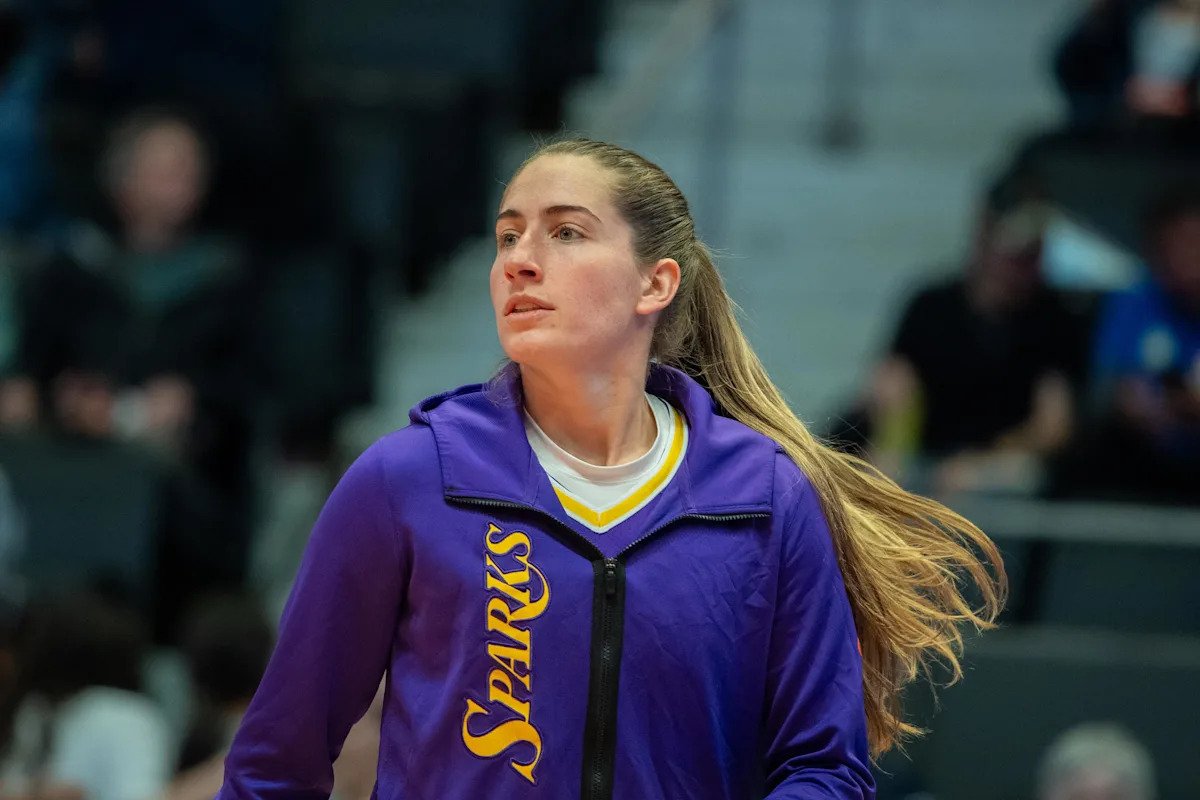
When a team has a key player suffer an injury, such as the Los Angeles Sparks with Kelsey Plum or the New York Liberty with Sabrina Ionescu, the ability to turn to development players gives them a better chance of winning games. For the Sparks, Martin has played in five games; the Liberty have activated Anneli Maley for two games.
Development player positions are even better for the players themselves. Instead of being completely out of the WNBA, they are working closely with teams and earning approximately $6,000, or the pro-rated minimum, for their active games.
Martin is an illustrative example. In the years prior, Martin, who was waived by the Golden State Valkyries prior to the start of the season, would have had to debate whether to remain in the States, staying ready for a potential opening, or decide if playing overseas was a better move. Instead, she is still in the league, as the Sparks picked her up immediately on a developmental-player deal.
She recently played 13 minutes in a game against the Connecticut Sun, when LA was competing on the second night of a back-to-back.
Advertisement
The development player position prevents teams from having to totally give up on a player, even if they no longer have a standard roster spot for them. For example, when Leïla Lacan arrived in Connecticut, the Sun had to waive Hailey Van Lith. But, they were able to immediately bring her back as a development player.
We’ve yet to see any surefire success stories for these players on developmental deals, but that will come with time. (The Washington Mystics’ Alicia Flórez might be trending that way).
For now, the biggest benefit is that the WNBA is retaining more talent than ever before. It won’t be long before more development players are making an impact in wins, getting promoted to standard deals and even having long careers that started on this new path.
Advertisement
The league creating these spots will go a long way towards players having even more chances to showcase their skills, making it harder for talent to fall through the cracks and go unnoticed due to a lack of opportunity.
And that’s a win for both the players and the league. And that’s exactly what this new CBA was supposed to accomplish: sustainable ways to grow the game.

