Most NASCAR fans know Richard Childress as the man who gave Dale Earnhardt the equipment to become a legend. What gets talked about far less is the operation behind the scenes in Welcome, North Carolina: the engine shop that grew into one of the most influential forces in stock car racing. ECR Engines builds hand-assembled V8s each year, supplies power to multiple Cup and Xfinity teams, and has contributed to NASCAR’s fuel-development efforts. And according to Childress, it all started with him turning wrenches himself.
During an appearance on SPEED alongside Kevin Harvick and Buxton, the 80-year-old was asked if he had always built his own engines, and he simply said:
Advertisement
“I built for myself. I was the engine builder myself for many years, up until 1981 when we put Dale in the car.”
As the team grew, Childress began hiring additional help and bringing in experienced people from Rod Osterlund’s team, but the mindset never changed. He wanted control of the entire program—engines, chassis, cars, everything under one roof.
That attitude is basically the foundation on which ECR was built. Today, the shop employs around 90 engineers and technicians. Every engine is hand-built and gets dyno-tested before it ever sees a racetrack. These are 358-cubic-inch NASCAR V8s machined to absurd tolerances, down to two ten-thousandths of an inch in some places, tighter than the width of a human hair. Depending on the track package, they give out either 550 or 750 horsepower, with NASCAR managing output through restrictors and engine mapping.
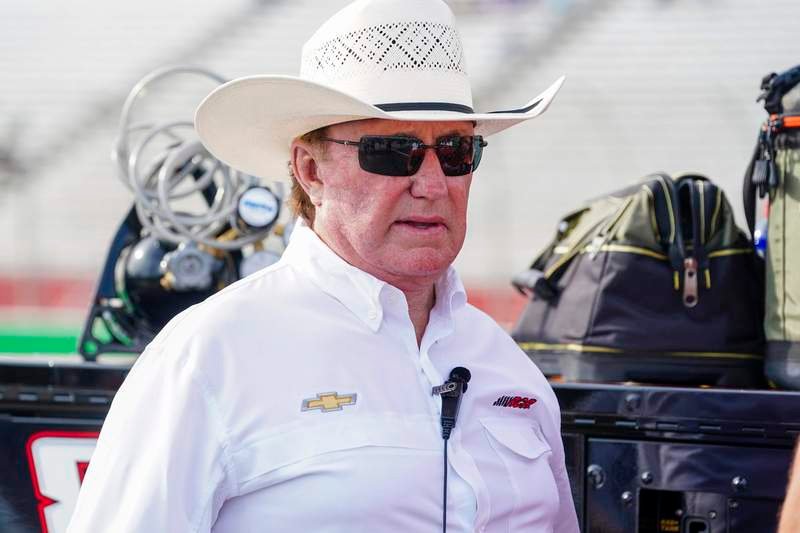
NASCAR, Motorsport, USA Cup Qualifying Jul 8, 2023 Hampton, Georgia, USA NASCAR Cup Series car owner Richard Childress during qualifying on pit row at Atlanta Motor Speedway. Hampton Atlanta Motor Speedway Georgia USA, EDITORIAL USE ONLY PUBLICATIONxINxGERxSUIxAUTxONLY Copyright: xMarvinxGentryx 20230708_tbs_sg8_089
And ECR power is everywhere. It feeds Richard Childress Racing’s own Cup cars and also powers Trackhouse Racing, including cars driven by Shane van Gisbergen and Ross Chastain. And Gisbergen’s road-course performance this season? Every one of those wins came with an ECR engine under the hood. The company has also supplied Xfinity teams and contributed to Chevrolet and Cadillac sports car programs over the years.
Advertisement
Richard Childress has also had a hand in NASCAR’s ethanol push dating back to 2006. On the podcast, he sounded almost frustrated that the series hasn’t gone further.
“We tested everything from E15 up to E30,” he said. “If it were up to us today, we’d be running E30. It’s cleaner, it’s better.”
NASCAR still runs E15, but that testing programme helped land Childress a seat on the Growth Energy board. What makes the whole operation impressive is how wildly different the engines have to behave depending on the track.
At places like Daytona International Speedway and Talladega Superspeedway, the engines spend hours pinned wide open at around 550 horsepower. Cooling openings are tiny because teams want every aerodynamic advantage possible, so the engine is basically cooking itself at more than 240 degrees while trying not to explode.
Advertisement
Then you go somewhere like Martinsville Speedway or Bristol Motor Speedway, and the entire philosophy changes. More power. Bigger cooling ducts. Constant throttle-and-brake abuse every few seconds. Different software tuning. Different stresses. Different survival problem.
And none of it is cheap. Leasing one of these engine programmes for a season can run anywhere from $800,000 to $1.3 million per car. This makes it even more remarkable that this whole thing goes back to Childress building engines himself in the 1970s.

DAYTONA, FL – FEBRUARY 18: Car owner Richard Childress walks through the garage area during practice for the Daytona 500 on February 18, 2022 at Daytona International Speedway ion Daytona Beach, Fl. Photo by David Rosenblum/Icon Sportswire AUTO: FEB 18 NASCAR, Motorsport, USA Cup Series – DAYTONA 500 Practice Icon220218116100
Now ECR is one of only two major Chevrolet engine suppliers in the Cup Series, alongside Hendrick Motorsports. But the past two seasons have also shown how brutal this business can be when things go wrong.
Advertisement
Where the ECR failed to deliver
In May 2025, AJ Allmendinger lost an ECR engine six laps into the AdventHealth 400 at Kansas. It was the second major failure for his team in barely three months, and his radio message wasn’t exactly polished for PR.
“Hey, ECR, you guys suck,” Childress remarked.
Then, at Texas this year, Austin Dillon lost an engine almost immediately in practice. The team had to swap to a backup power unit, which meant starting at the rear under NASCAR rules before the race even began. Still, the bigger issue right now doesn’t appear to be the engines. It’s the race team around them.
Advertisement
Despite having one of the strongest engine programmes in the garage, RCR has looked lost at times. Kyle Busch’s crew chief got fired just 10 races into the season after a miserable stretch that produced a 22.1 average finish, easily the worst run of Busch’s career. And Childress himself finally said the quiet part out loud over the radio at Dover:
“We are in trouble. We have got to get some race cars, period.”
That line probably explains the situation better than anything else. The engines aren’t what’s holding RCR back. The speed in the chassis, the setups, the execution on race weekends, that’s where the cracks are showing.
Trending Articles
Advertisement
The post “I Built for Myself”: Richard Childress Recalls ECR’s Past Glory as He Suggests a Step Forward in Future appeared first on EssentiallySports. Add EssentiallySports as a Preferred Source by clicking here.

