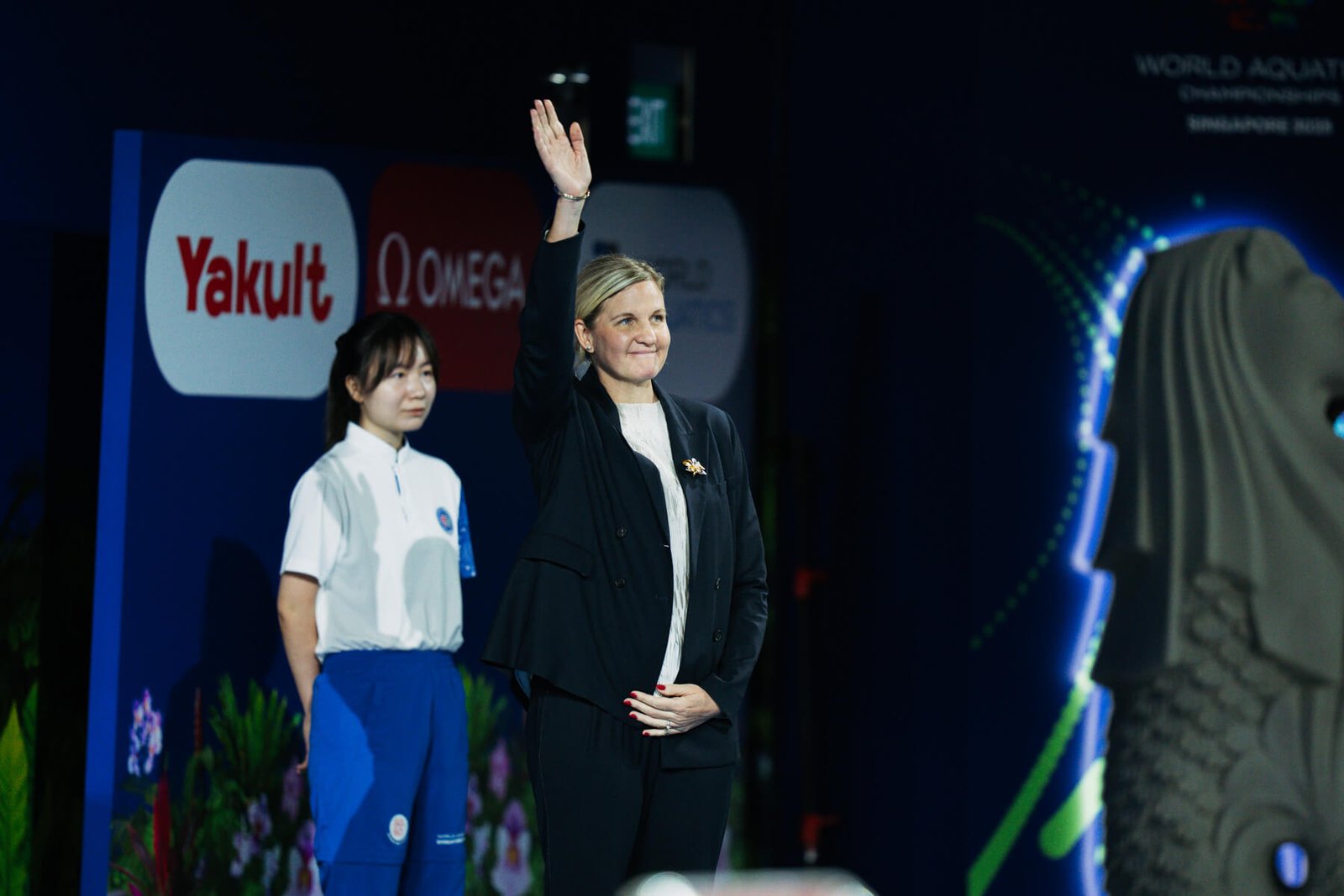
IOC President Kirsty Coventry: ‘I Don’t Believe in Paying Athletes’
In a visit to Oceania, new International Olympic Committee president Kirsty Coventry has reasserted that she doesn’t believe in directly paying athletes on the Olympic stage.
Coventry, an Olympic gold medalist swimmer from Zimbabwe and both the first woman and first African to lead the IOC, spoke to media in New Zealand during her tore there. She has pushed an agenda of making the Olympics “fit for the future,” though she’s doing that with a pull quote that seems straight out of the Pierre de Coubertin legacy of amateurism.
Coventry is against paying athletes directly, preferring to default to the current model of national sporting organizations that are taxpayer funded, sponsorships and self-funding.
“I don’t believe in paying athletes” Coventry told Sport Nation in New Zealand. “I come from a small country, I came from a sport that doesn’t necessarily pay athletes very well and I still don’t think we should be paying athletes at the Olympic Games.”
While Coventry said she believes the IOC has, “to find more ways to directly impact athletes and find ways to help them on their journey to becoming Olympians and while they’re Olympians,” direct prizes for gold medals doesn’t seem to be it. She instead identified talent identification and resources – things like the Olympic solidarity fundings – and career transitions after the athletic careers to be more impactful.
Coventry also weighed in on whether or the IOC should follow in the pathway of the American NCAAs in compensating athletes for the name, image and likeness (NIL) when they use their star power to advertise the Olympics. Courts in the U.S. have decided that the NCAA needed to compensate those athletes; the former Auburn swimmer’s argument sounds like that of the NCAA’s a decade ago, one that didn’t stand up to legal rigor.
“Well, they get beautiful venues,” she said. “They get beautiful villages. They get a beautiful experience. And all of that comes from the money that we raise.” She also rose the possibility – familiar to many from the NCAA debate – that more sharing of money could lead to “have not as many countries, we’d have not many sports.”
“I don’t think that’s the Olympic Games,” she concluded, “and I don’t think the Olympic movement thinks that’s the Olympic Games.”
Read the full interview here.

