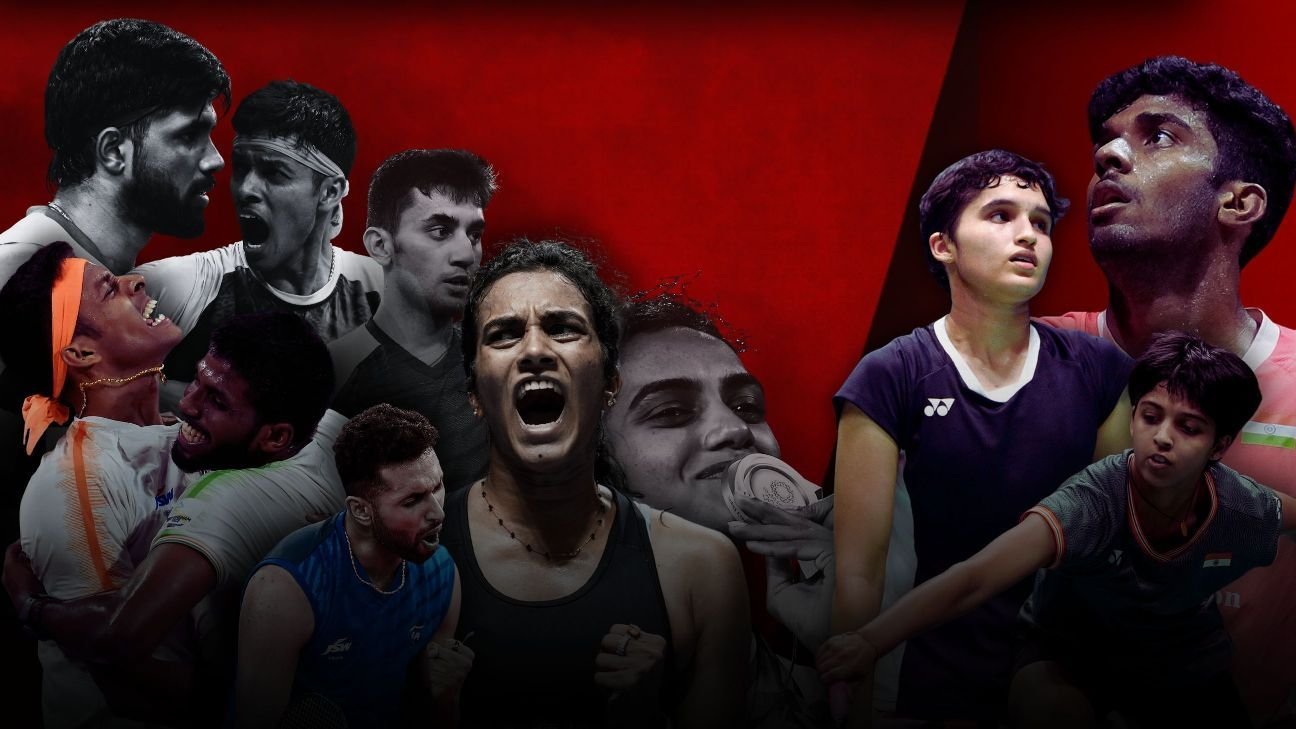
Badminton is not typically a team sport, which makes the few, rare team competitions more special, and none are as big as the Thomas and Uber Cup.
The team world championships of badminton – Thomas Cup for the men and Uber Cup for the women – happen once in two years and are an occasion to see both a country’s team depth and team atmosphere. Both these elements make for compelling viewing as success can depend on your lowest-ranked player as much as your No 1 and the presence of a whole crew behind can paint some amazing underdog scenes.
As the 2026 edition of the Thomas and Uber Cup begins from Friday, here’s a look at both Indian teams and their chances at the team championship.
When is the 2026 Thomas and Uber Cup?
Both the men’s and women’s competition will be held simultaneously from April 24 to May 3 in Horsens, Denmark.
What is India’s squad like?
An interesting word to describe India’s squads will be – inter-generational. There are teenagers, players in their 20s and 30s in the mix.
India are fielding their full-strength squad, with the only exception of women’s doubles where the top pair had to withdraw due to the injury.
Men’s Squad:
Lakshya Sen, Ayush Shetty, Kidambi Srikanth, HS Prannoy, Kiran George, Satwiksairaj Rankireddy, Chirag Shetty, Hariharan Amsakarunan, MR Arjun, Dhruv Kapila
Women’s Squad:
PV Sindhu, Unnati Hooda, Tanvi Sharma, Devika Sihag, Isharani Baruah, Shruti Mishra, Priya Konjengbam, Kavipriya Selvam, Simran Singhi, Tanisha Crasto
The men’s squad has all the heavyweights who won a historic first Thomas Cup title back in 2022, with Lakshya Sen back as India No 1 and in good nick. Add to that 20-year-old rising star Ayush Shetty, fresh off his silver medal run at the Badminton Asia Championships. However, the 2026 versions of Srikanth and Prannoy are in the 30s – both age wise and in their rankings and the injury-hampered season of Satwik-Chirag means that the team strength is not at its best.
With the sole exception of PV Sindhu, the women’s squad is a much more inexperienced one. More so after the withdrawal of Treesa Jolly and Gayatri Gopichand due to injury. But it’s brimming with prodigious singles talent like Tanvi Sharma (17 yo), Unnati Hooda (18 yo), Devika Sihag (21 yo), Isharani Baruah (22 yo) who have all shown great progress on the BWF tour over the last few months. This Uber Cup exposure will only augment their growth. The young doubles pairs of Shruti Mishra-Priya Konjengbam and Kavipriya Selvam-Simran Singhi are a bit too new on the tour to have great expectations, though.
What about India’s draw?
This is where things can get tricky. The Thomas and Uber Cup are 16-team events with four groups of 4 and knockouts from quarterfinal onwards.
These are India’s groups:
Thomas Cup – China, India, Canada, Australia
Uber Cup – China, India, Denmark, Ukraine
See that China in both groups, the defending champions? That fixture could very well see India not finish on top in their group and that mean a tougher quarterfinal opponent from the top team in other groups. That is, of course, if India manage to beat two out of three teams in the group stage. Both the Canada (M) and Denmark (W) ties could be tough, with Canadian men’s badminton seeing a surge with Victor Lai and Brian Yang.
But this is where the unique format of the Thomas and Uber Cup ties can come in handy.
A refresher on the format
The ties consist of five matches – three singles and two doubles. Crucially, the order of play is determined by the world rankings, which means the top-ranked players of the country will face off, followed by the No 2 and so on.
Hence, a team is often as good as their lowest-ranked singles player – the No 3 – who will play the decider. In an ideal world, the top 3 finish the job without dropping a match, but in close encounters, it’s bench strength that counts.
P.S. This is where the Indian men’s team lucked out back in 2022, with Prannoy playing some cracking fifth rubbers. But this also where India have a disadvantage – the second doubles pair – a void after SatChi that is not close to being filled.
So, what are the Indian teams’ chances?
Realistically, expecting a title run may be a bit far-fetched on current form, even from the veteran men’s team. But there’s definitely a chance for a deep run.
In the Thomas Cup, India’s Top 3 are Lakshya Sen, the All England runner-up last month, former world No 1 pair of Satwik-Chirag, and Ayush, the BAC runner-up from earlier this month. The second doubles can be a write-off with WR 34 Hariharan-Arjun still being almost rookies. But the decider will have Srikanth, who still has the skill to beat anyone on his day (and lose to anyone too).
The Uber Cup, on the other hand, is a massive learning opportunity for an upcoming generation. Sindhu’s form is yet uncertain and she will be tested against the No 1 of her opponents. The No 2 Unnati and No 3 Tanvi are both talented teenagers who will benefit from this sort of a team environment. The younger generation get to play together alongside Sindhu, get good experience against top players… and get a chance to cause some upset wins with a loud team cheering on for them.
In the last edition, both Indian teams lost in the QF to eventual champions China (3-1) in Thomas Cup and to Japan (3-0) in the Uber Cup. The men should aim to at least go one better this time.
The beauty of team competitions in individual sport is that the whole is often more than the sum of its parts, and both the Indian men and women have proven that in the recent past with gold runs at the Thomas Cup in 2022 and Badminton Asia Team Championship in 2024.

