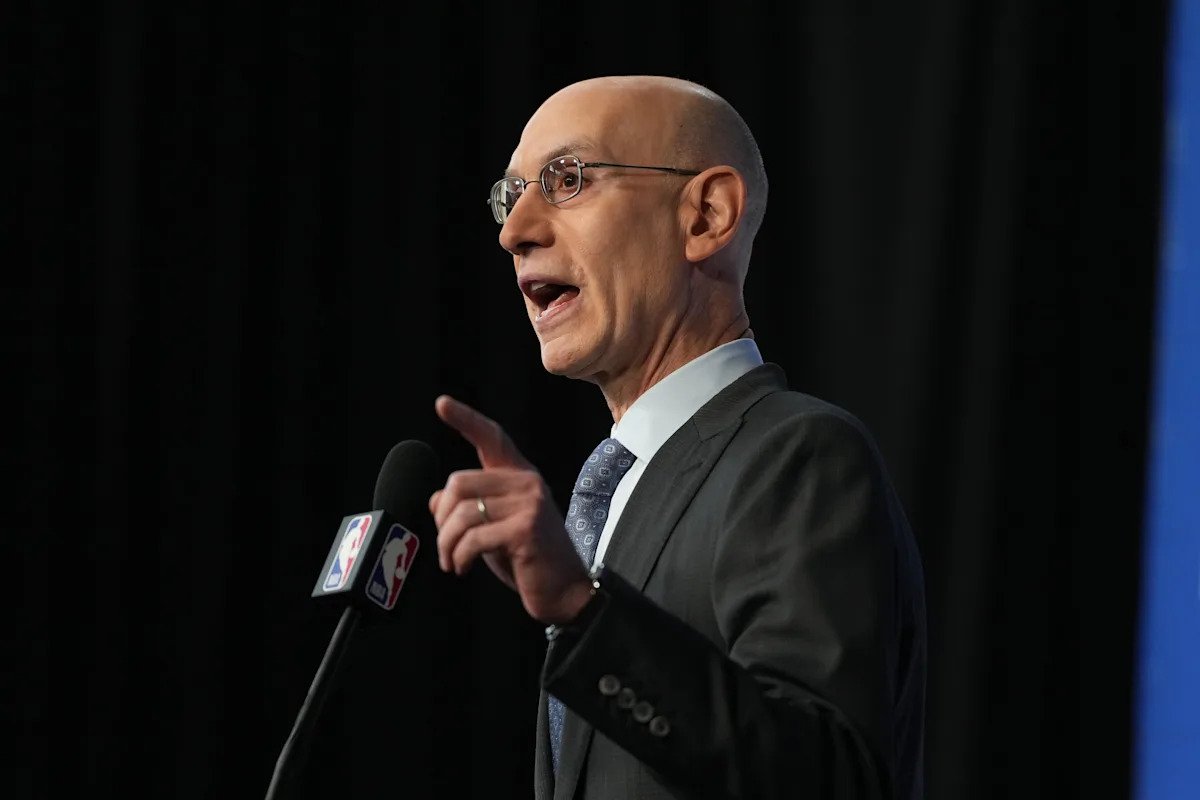
The NBA Board of Governors met on May 28 and passed a comprehensive lottery reform intended to stop tanking that will take effect starting with the 2027 draft, the league announced. Only the Memphis Grizzlies voted against the proposal, commonly referred to as the “3-2-1” model, which significantly alters how the lottery will work going forward and has some retroactive effects.
It’s not a surprise the proposal passed, as there have been rumors outlining the model and suggesting it had broad approval. Here’s all you need to know.
Advertisement
How the new lottery works
-
The lottery will be expanded to include 16 teams.
-
One of the reform’s main goals is to dissuade teams from bottoming out. To do so, the league will punish the teams with the three worst records by awarding them only two lottery balls each, out of a total of 37. Teams from fourth to 10th will receive three balls each. The ninth and 10th seeds will receive two balls, just like the bottom three. The losers of the seventh vs. eighth play-in will receive one each.
-
Previously, only the top four picks would be decided by the lottery. Now, the order of all 16 picks will be decided by the lottery, but the bottom three teams can’t pick lower than 12th. Picks from 12th to 15th can’t be protected in trades.
-
In hopes of deterring long rebuilding processes and preventing anyone from getting too lucky, teams won’t be able to get the top pick in consecutive drafts or to pick in the top five three times in five years. The rule starts counting from the 2025 draft and includes traded picks.
-
The commissioner will have more power when it comes to curbing tanking, up to changing lottery odds or where teams pick.
-
The reform includes a sunset provision, which means the changes will be in place until the 2028/29 season. After that, the league will decide whether to stick to it or make other tweaks.
Why the reform could be good
Tanking has always been a controversial topic in the NBA, where a single player can change the fate of a franchise, and the draft is the best way to secure elite talent at a cheap price and have control over it for years. The league has seen extreme versions of it before, but it was getting worse lately.
Not only were there teams that built their roster with as little proven talent as possible, but also some that had talent but were either holding healthy players out from games or sitting them in second halves to secure losses, which was even worse for optics. Something had to be done to prevent the regular season from being completely meaningless and from having games that became farces. Change was needed, and decentivizing teams from being the worst in the league should at least help avoid the most embarrassing tank jobs.
Advertisement
The worst teams still have a chance of getting the top pick, so anyone who tries to win but simply can’t is not automatically doomed, and the teams that were previously stuck in mediocrity because they were too good to get the best odds but not good enough to make the playoffs have a path to finding a centerpiece without having to bottom out. The draft should still provide fan bases hope, but now full teardowns won’t be as enticing, which could help with parity.
The changes are drastic, but the sunset provision shows that the league is not committed to them. If they don’t work, they can reverse them or find another solution.
Why the reform could be bad
The plan might have been discussed for years, but there wasn’t a lot of time between the news coming out that change was likely and this sweeping reform. Teams made moves thinking something similar to the now old lottery system would remain in place. The best example is the Grizzlies, which traded Jaren Jackson Jr. to the Jazz for a pick that now has zero chance of landing in the top five, because Utah has picked there twice already in the past two drafts.
Advertisement
As for the future, even if some of the changes might deter tanking at the lowest spots, it might incentivize it near the play-in range, as it might be better for teams to finish just below the 10th seed and get an extra lottery ball. That’s just one of many potential unintended consequences of a plan that might implement some good changes, but it is so comprehensive that it could alter how the league works in unpredictable ways, at least for the next few years. A more gradual approach might have been better.
Ultimately, even if someone agrees with all the changes in a vacuum, there should have been reforms to free agency and trading to go with them. The reason franchises in small or non-glamorous markets were more likely to tank is that it was the best and arguably the only way they could land foundational stars. Restricted free agency keeps young players with the team that drafted them, and established superstars normally dictate where they land. Tanking isn’t a good thing, and it provided no guarantees, but it at least gave franchises that can’t normally attract top-tier talent a plan on how to get it.
The changes don’t really matter for the Spurs
The Spurs already had their top three picks in five years and have a core in place that should keep them in contention for a while. The Hawks’ pick they own in 2027 seemed unlikely to land in the lottery now that Atlanta has reshaped its roster. The swap right to the Celtics’ pick in 2028 is the only one that falls into the window where the changes are guaranteed to be in place, but Boston was never expected to be a bottom-three team, and that hasn’t changed.
Advertisement
If anything, the reform helps the Spurs. No one will be able to land near the top of the draft consistently in the next few years and build a core that could rival San Antonio’s. The Silver and Black will be fine with these changes. Whether they are good for the rest of the league remains to be seen.

