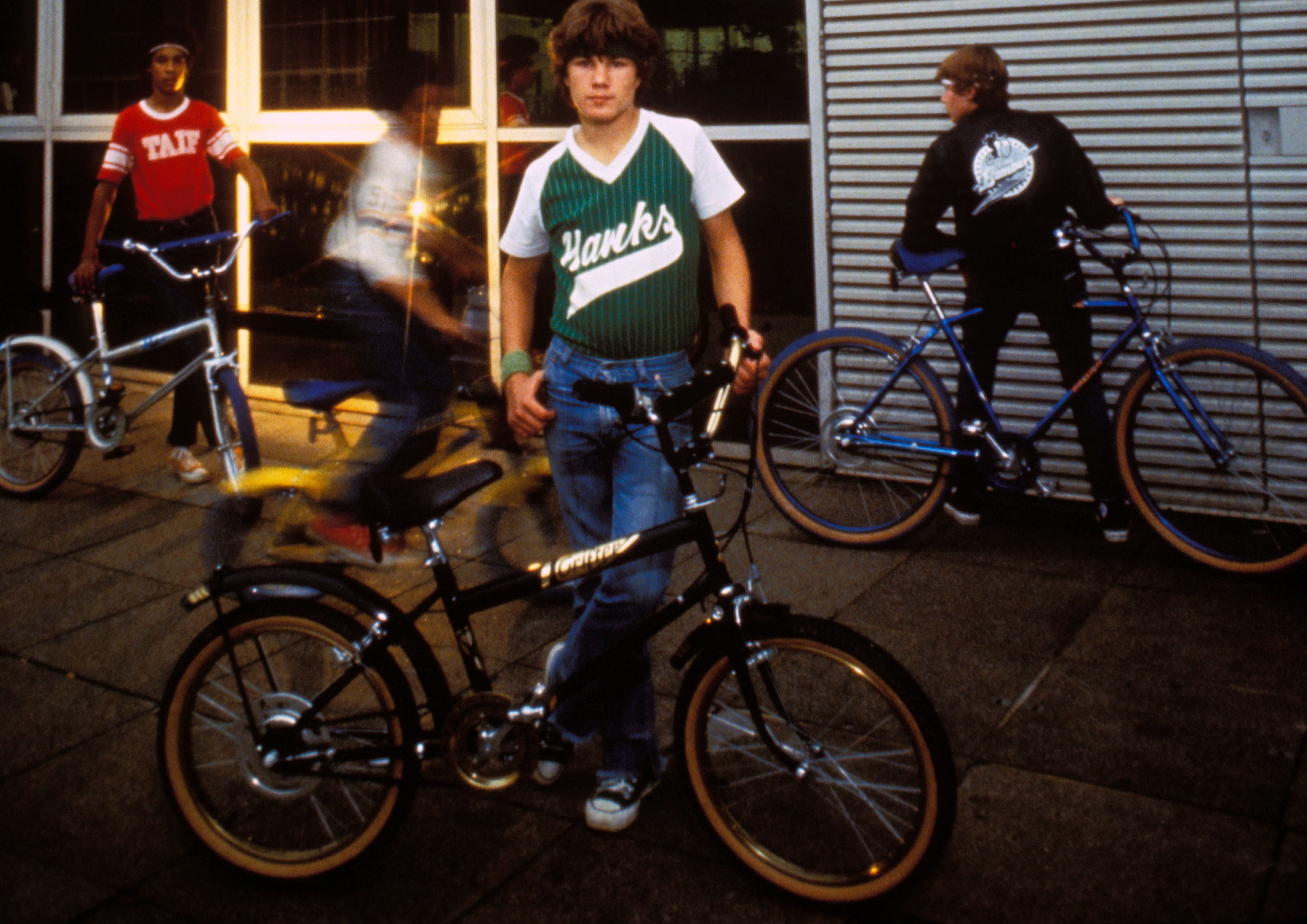
While massive Asian and American brands like Giant, Trek and Specialized now completely dominate the bike market, Nottingham-born Raleigh was once the biggest name in the cycling game.
The Raleigh Bicycle Company was launched in 1887, four years before Cycling Weekly first appeared in print, and for riders of a certain age, the instantly recognisable big-R heron-topped logo will forever be tattooed on their heart.
With Raleigh’s future now looking rocky (Accell Group, the Dutch company that owns both Raleigh and Lapierre, began insolvency proceedings last week, was declared bankrupt this week, and at the time of writing no rescue bid has been forthcoming), I’ve realised just how warm my memories of the brand and its bikes are.
Latest Videos FromCycling Weekly
Unlike my best buddy Jamie, I never had a Raleigh Grifter, something I spent much of the early 1980s whinging about, and I was forever covetous of my older cousin’s classic Raleigh Chopper. Instead, my first ever bike was a kid’s Raleigh racer, back when I had a haircut straight out of Stranger Things that was never troubled by a bike helmet. I was faster than my mates, but it was less good for wheelies, endos and jumping off planks.
Later, during a period of post-degree peripatetic indecision in the mid 1990s, I spent a season working as a bike courier in London, riding around on my old man’s Raleigh Peak, a proper sturdy steel-framed, sans-suspension so-called mountain bike, with a surprisingly decent Shimano groupset. I stuck a set of bar-ends and some slick tyres on it, and rode that bike completely into the ground. Sorry dad.
You don’t have to search far on the internet to find vintage versions of all these classic steeds, some of them very impressively pimped. They might not have been the world’s most ergonomically designed bikes, but along with the odd spot of oil they all absolutely oozed style. However, it looks increasingly likely you will no longer be able to buy any new Raleigh bikes for much longer.
“It’s so sad,” says Tim Bright, who recently rode around Britain’s coastline on a Chopper. “Raleigh has been around for decades. I recently saw a film about the company, made just after the war – the amount of people they employed was incredible, and to see British craftspeople and engineers working to such a high standard opened my eyes to just how good the bikes were. And of course the iconic Chopper, never to be forgotten and maybe never to be repeated.”
But, as Molly Monks, insolvency specialist and business expert at Parker Walsh, says: “Nostalgia does not pay wages, suppliers or interest. A company can be known and loved by millions and still reach a point where it cannot meet its financial obligations.”
So here, with misty eyes, we look back at some of most iconic Raleigh bicycles ever made, in the hope that the heron gets to fly again.
Raleigh Chopper
(Image credit: Future (Richard Butcher))
There is really only one place to start, and that’s with the Raleigh Chopper, a bike that first rolled off the production line in 1969 and went on to feature large in youth culture for more than a decade. Instantly recognisable with its high-rise bars, banana-seat (with spring suspension) and muscle bike profile – apparently inspired by a Harley-Davidson motorbike – the Chopper featured a 16-inch front wheel and 20-inch rear wheel. It also boasted a three-speed Sturmey Archer gear box, which was mounted on the top bar of the frame. Pure class. I still want one.
Raleigh Grifter

(Image credit: Getty Images)
Originally released in 1976, and refined in the MK2 model in 1978, the Raleigh Grifter was the bike everyone wanted to own for the next few years. Built with a heavy-duty, thick carbon steel frame, it felt as heavy as a tractor, and had chunky tyres to suit, but Grifters were virtually indestructible. One of the bike’s defining innovations was the three-speed Sturmey Archer hub gear system, which was controlled by a handlebar-mounted twist grip that had a horrible habit of shifting the gears down every time you pulled a wheelie, resulting in some serious bumpy contact between saddle and nether regions when the torque suddenly disappeared. As soon as BMXs bounced onto the scene, in the early 1980s, the Grifter fell from favour faster than flares.
Raleigh Burner BMX
This seminal BMX bike was born in 1982 and immediately bunnyhopped into must-have status as films like E.T. and BMX Bandits helped propel the backyard sport into an essential pastime for teenagers across the globe. Available in 15 models, including the top-end Aero Pro with a chrome-finish Japanese-made Tange frame and fork, over 500,000 Burners were bought in the first two years, and the star-studded Raleigh BMX team dominated the sport for ages. This was the bike that launched Nicole Kidman’s career…
Raleigh Vektar
Flush with the success of the Burner, in 1985 Raleigh released the beast that was the Vektar. On its powder-coated steel frame, it had an actual electronic dashboard featuring Tomorrow’s World-level technology including a speedometer, odometer, an FM radio (with a big aerial extending out the back of the bike) and sound effects to suit its futuristic features. It also had a price tag that put it well out of the reach of the majority of us. But wow, what a machine.
Raleigh Bomber
Launched in 1981, the versatile Raleigh Bomber was a single-speed steed that sat somewhere between a street cruiser and an off-road explorer – a classic, reasonably affordable do-everything freedom machine for older teenage kids who’d outgrown the chopper but still went everywhere on their bikes. Boasting wide balloon tyres, a low-slung frame and cowhorn bars, it was also the first bicycle made by Raleigh to feature the 26-inch wheels which the mountain-bike revolution would very soon roll in upon. The marketing team would likely go with a different name these days, but this was a deadset bomber of a bike.
Raleigh TI

Raleigh’s Specialist Bicycle Development unit made a one-off bike when Olympian Tommy Godwin made a comeback
(Image credit: Future)
Between 1972 and 1983, the British-backed Dutch-registered TI–Raleigh team were super dominant in bike racing, with all-conquering riders sat astride frames made with state-of-the-art Reynolds 753 steel alloy tubing. Joop Zoetemelk won the 1980 Tour de France on this beautiful bike, a limited number of replicas of which were built and released in 2020, to mark the 40th anniversary of that victory. Only 250 were made – lucky you if you bagged one.
Raleigh Banana TT Bike

(Image credit: Future)
There are vanishingly few numbers of this unique time trial bike left in existence, and none of us ever owned or rode one, but the sight of it will invoke a few memories. Made for the short-lived but unforgettable Raleigh Banana cycling team in the dying days of the 1980s, the dragster profile was achieved via a banana-shaped sloping top tube (made with Reynolds 753 tubing), with a 700c disc wheel at the back and a deep-section 650c at the front.

