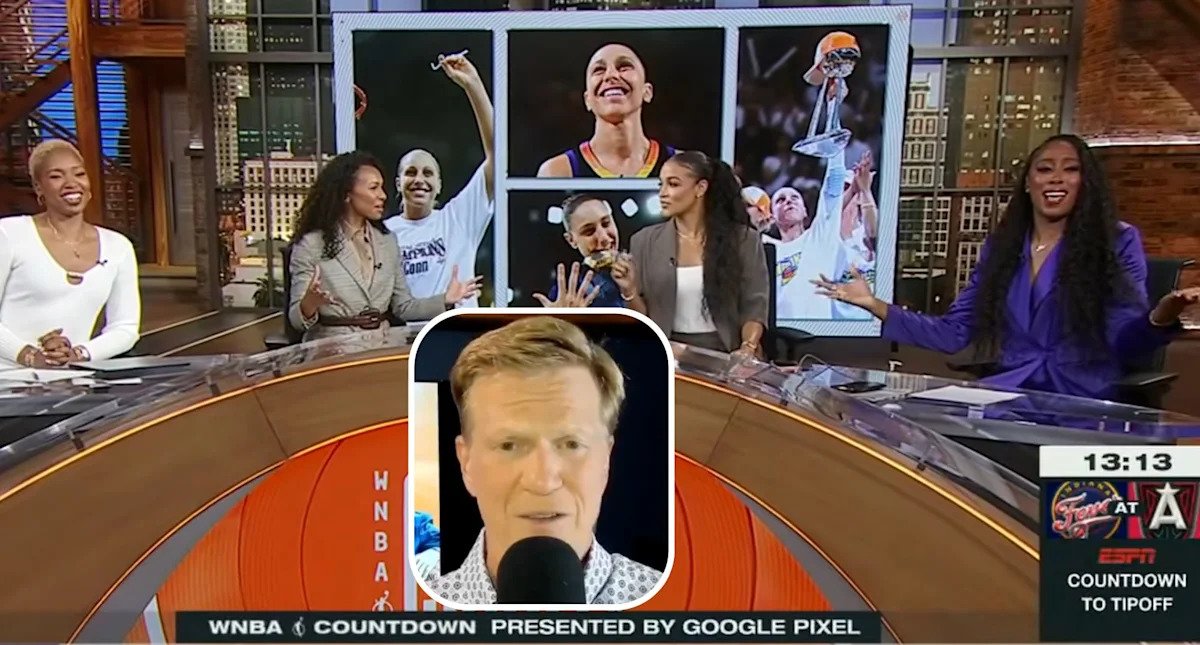
Longtime NBA analyst Ric Bucher used his latest On The Ball with Ric Bucher podcast to go in on women’s basketball and the WNBA.
Bucher called out the disingenuous hysteria around transgender athletes in women’s sports, claimed NBA owners’ lack of interest as the WNBA’s actual problem, weighed in on Caitlin Clark vs. Kelsey Mitchell, and took issue with how the WNBA is covered.
Advertisement
“I consider it an insult to women’s basketball in general — and the WNBA, in particular — that anyone who doesn’t know what they’re talking about would be given a platform to give an opinion on it,” Bucher said. “But this is part and parcel to the problem with the WNBA. It is not treated with respect by those that are closest to it. Not by the NBA, which owns and shadow runs it. Not by the media that covers it. And, unfortunately, not always by the coaches and the players who compete in it.”
Later in the 25-minute episode, Bucher fantasized about a WNBA in which NBA commissioner Adam Silver and NBA owners cared to implement “standards of protocol” for all league matters. This led to a rather clunky segue into another criticism of WNBA coverage.
“Why are all the color analysts and studio hosts women?” Bucher mused. “Women have served in a variety of positions on national NBA broadcasts. Why shouldn’t there be diversity on national WNBA broadcasts? What are the networks afraid of?”
Bucher continued, eventually citing DiJonai Carrington’s Flagrant 2 foul on Sophie Cunningham from last weekend:
“The only males you will find on a national broadcast now are young, up-and-comers doing play-by-play. Is the WNBA not worthy of being discussed and dissected by a variety of voices and perspectives in the same way the NBA is? There are some smart, basketball-savvy women, both in the studio and the broadcast booth, but I don’t hear a whole lot of differing opinion or debate.
“It all comes off as safe and monotone and cookie cutter, especially when it comes to controversial topics. DiJonai took Sophie Cunningham‘s head off, and the broadcasters were debating whether it would be elevated to a Flagrant 2. They sounded afraid to say it, even after multiple replays showed DiJonai made no attempt to make a play on the ball. The studio analysts were no better.
“All of it feels like a girls’ club. The media protecting the league from real scrutiny or critique. I’ll ask again: What are they afraid of? Players can’t take it? That critiquing a woman in public is no way to treat one?”
There’s a lot to unpack there.
Advertisement
The WNBA does not have to mirror the NBA in order to be a successful league. To judge the WNBA on mainstream (and male) palatability or profitability is to miss entirely what makes the league so special. And while national broadcasts aren’t the end-all-be-all, the WNBA features extremely diverse national broadcast teams.
Beyond that, plenty of men cover the WNBA in a nuanced, thoughtful way. Nekias Duncan and Steve Jones’ The Dunker Spot podcast for Yahoo! Sports and Myles Ehrlich and Owen Pence’s Pull Up podcast come to mind.
This is all before mentioning the countless beat reporters, sideline reporters, podcast hosts, and independent creators, of all genders, who have dedicated their lives to women’s basketball. You can find some of them on those aforementioned national broadcasts. Their voices hold weight in the WNBA community; they cared long before the national media caught the WNBA bug.
The post Ric Bucher asks why WNBA national broadcasts don’t feature more men: ‘All of it feels like a girls’ club’ appeared first on Awful Announcing.

