As a dedicated cycling fan, you’ll know only too well that it is now 318 days since our annual dose of French mayhem that we call the Tour de France ended. The wait has been a long one. Nil desperandum though, for there are only 24 left as I write until the show blasts off again and yesterday we were afforded a teasing glimpse as to what it might look like.
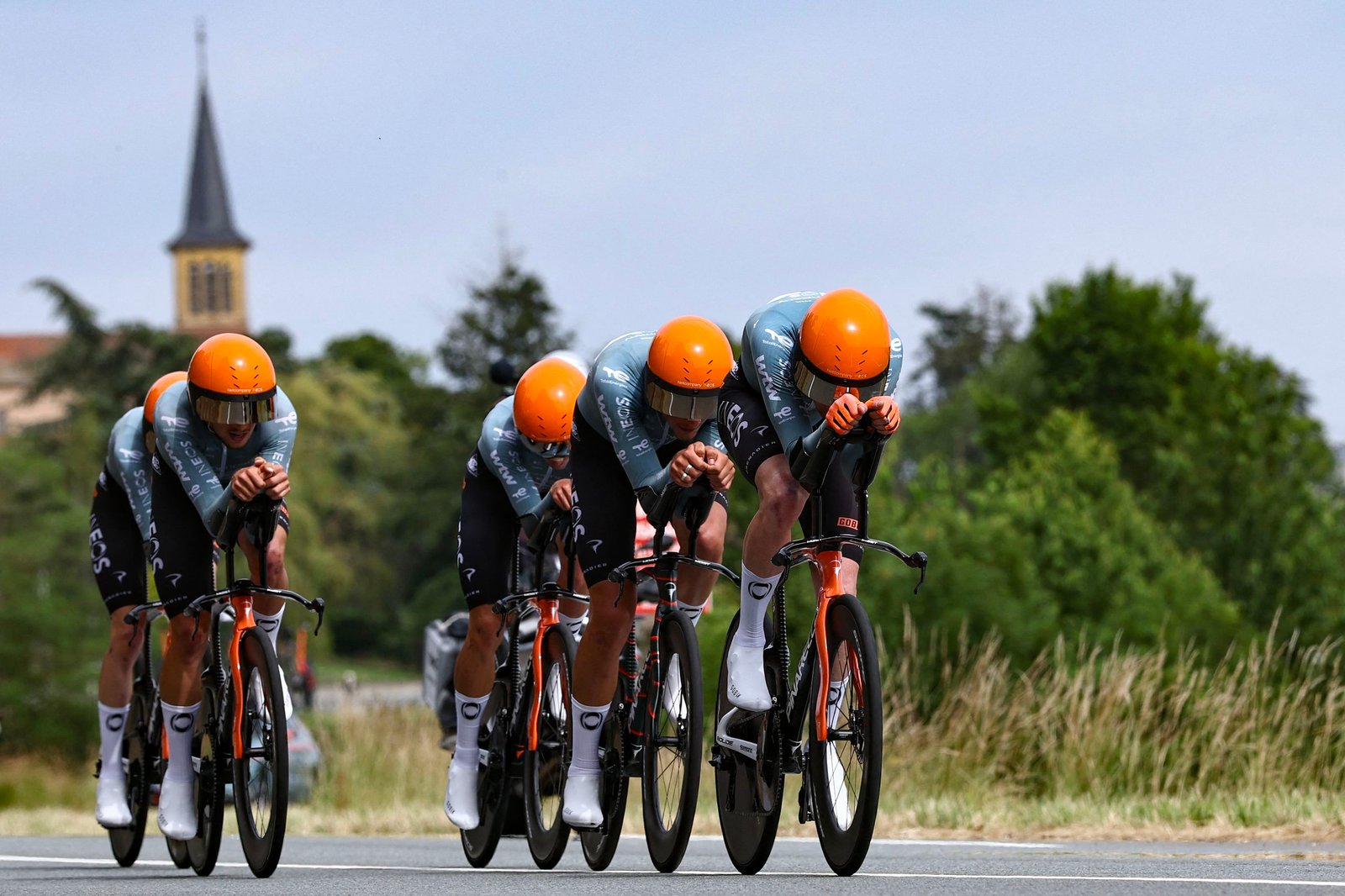
The third stage of the Tour Auvergne-Rhône-Alpes was a team time trial, exactly like we’ll see in Barcelona when the Tour de France begins on 4 July, and if yesterday’s event is anything to go on, we’re in for an absolute treat.
Team tactics, rider hiccups, big stars and even bigger time gaps are what we’re likely to be looking at when the dust settles on the stage-one razz around the Spanish city. Far from the usual week-long wait to see which GC hopeful will deign to pop their head above the Tour’s parapet first, it’s going to take a mere 19 blistering kilometres of breath-holding.


James Shrubsall
Having been at Cycling Weekly for over two decades, and cycling a little bit longer, James is in a good position to tell you what’s good and what isn’t in the world of bike riding.
The jeopardy levels have been raised by ASO’s new-ish team time trial format, which sees rider times all recorded individually, with the fastest rider home registering the win for their team. It was first trialled at Paris-Nice in 2023, and was used in the Tour Auvergne-Rhône-Alpes on to great effect.
With teams no longer hamstrung by having to wait for a certain number of riders (the time is usually taken on the fourth rider through the finish), they are now free to push on if they think it more efficacious, however many members get tailed off. This in-flight decision pressure was starkly outlined yesterday when Netcompany-Ineos GC hope Oscar Onley dropped his chain. The team waited for the young Scot, but not without much flailing of arms and, one presumes, gnashing of teeth, from his fellow GC man Kévin Vauquelin, who was frustrated by the delay.
In addition, rather than the team having to stick resolutely together all the way to the chequered flag, as the finish approaches the most spritely rider is free to blast off alone to snatch the quickest possible time.
This is exactly what happened yesterday on the 800m climb to the finish – a very similar finale to the one in Barcelona. We saw teams launch their strongest (almost universally GC) riders from the bottom of the climb, with Paul Seixas, Isaac Del Toro and, most successfully, Matteo Jorgenson of winners Visma-Lease a Bike put in all-out solo efforts to the top, while Onley and Vauquelin worked as a duo despite the earlier friction to record the second-best time. Just behind them, yellow jersey Alex B made his own heroic effort, hanging on to the race lead after a nail-biting climb to the finish which looked as though it could go either way almost to the end.
In the final count, more than a minute separated the top-10 finishers and the GC had been chipped, flicked, and volleyed into the crowd – aside from its leader it was almost unrecognisable.
Many of the usual ‘best’ teams were there or thereabouts, and in Barcelona we can probably expect Tadej Pogačar and Jonas Vingegaard to be among the top finishers. But they’re going to be relying on their teams even more than usual, and the gaps are going to open.
The team time trial, which hasn’t been seen in the Tour since 2019, was always a spectacle, but it could also be rather dull, or feel like an unjust punishment for GC hopefuls with weaker teams. Refreshed and liberated in this new format, its reappearance on 4 July has the potential to be remembered as one of the most exciting stages of this year’s race.
Explore More

