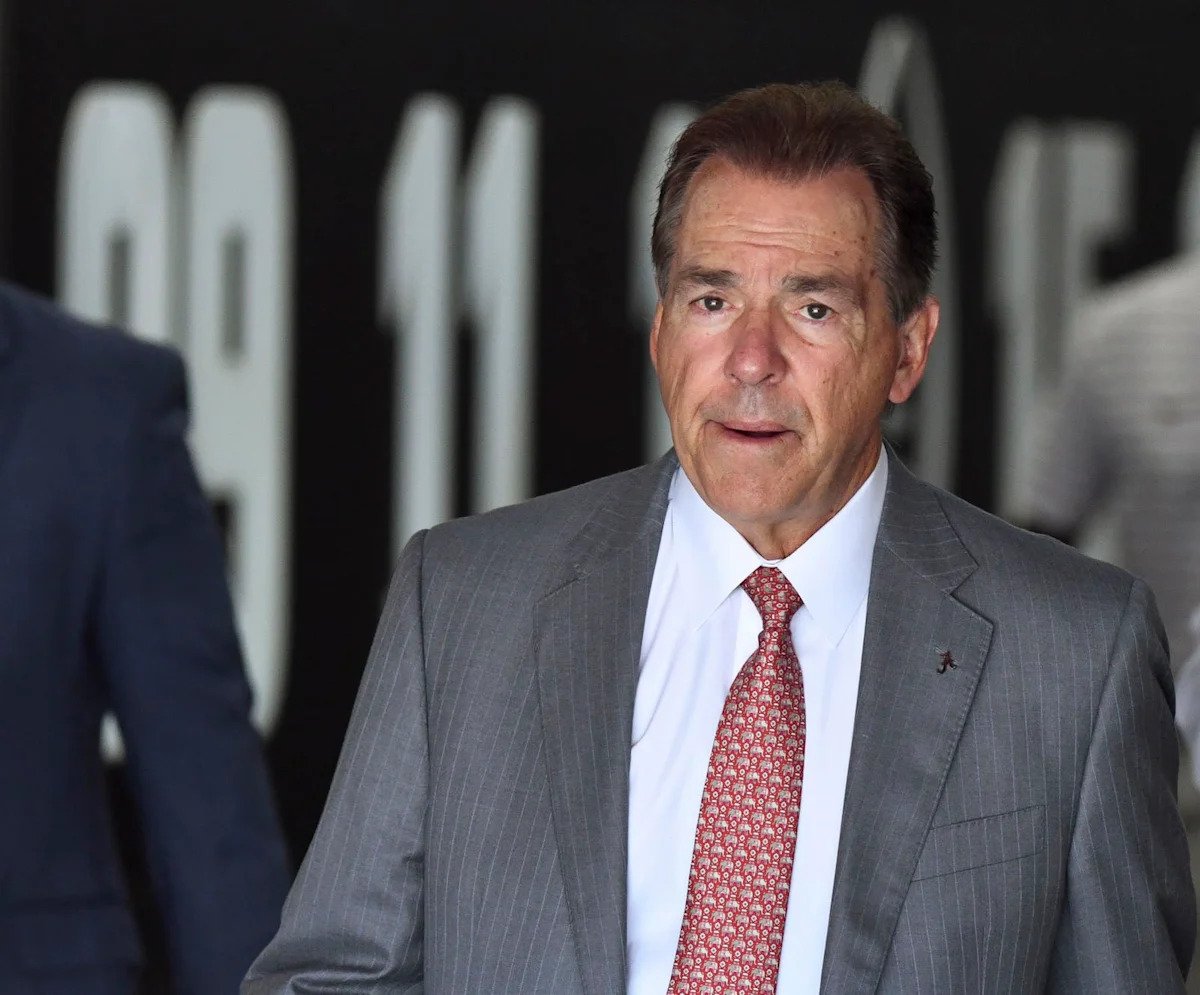
There was a time when what Nick Saban accomplished at Alabama almost became… well, normal.
That sounds ridiculous to say now, but it’s true.
Winning 11 games? Expected.
Competing for an SEC Championship? Expected.
Advertisement
Playing for a national championship? Expected.
Putting another first-round draft pick into the NFL? Expected.
Replacing an entire coaching staff without missing a beat? Expected.
For 17 seasons, Nick Saban made the extraordinary look routine. Success became so consistent that Alabama fans, and really the entire college football world, began measuring the Crimson Tide against an impossible standard that Saban himself had created.
Only now, a few years removed from his retirement, are we beginning to understand just how impossible that standard really was.
Not because Alabama suddenly forgot how to play football. Not because Kalen DeBoer can’t coach. But because college football itself has changed in ways that have made sustained greatness harder than ever before.
Advertisement
Ironically, every new challenge the modern game presents only makes Nick Saban’s dynasty look even more remarkable.
When Alabama won another SEC Championship under Saban, people barely blinked. When the Crimson Tide signed another No. 1 recruiting class, it felt inevitable. When another assistant coach left for a head coaching job, nobody panicked because the assumption was always the same:
Nick Saban would find someone else.
And somehow…
He always did.
Lane Kiffin.
Kirby Smart.
Steve Sarkisian.
Brian Daboll.
Mike Locksley.
Jeremy Pruitt.
Bill O’Brien.
Tommy Rees.
The names kept changing. The results rarely did.
Advertisement
Most programs spend years trying to recover from losing one elite coordinator. Saban lost elite assistants almost every offseason, yet Alabama never stopped competing for SEC and national championships.
At the time, we expected it. Today, we realize just how extraordinary it really was.
And it wasn’t just the assistant coaches.
Think about the quarterbacks who led Alabama during Saban’s tenure.
Greg McElroy.
Blake Sims.
Jalen Hurts.
Every one of them was different.
Some won with precision. Others with athleticism. Some thrived in run-first offenses. Others flourished in wide-open passing attacks. Yet regardless of who was under center, Alabama kept winning.
Advertisement
That’s because Nick Saban never allowed himself, or his program, to become stagnant.
Early in his Alabama career, the Crimson Tide won with suffocating defense, dominant offensive lines, and a physical rushing attack. It was a formula that worked, and for many coaches, that would have been enough.
But Saban understood something that separates the truly elite from everyone else. If the game changes, you either change with it or get left behind. Instead of resisting the offensive revolution sweeping through college football, Saban embraced it.
He hired Lane Kiffin and completely transformed Alabama’s offense. Steve Sarkisian elevated it even further, helping produce one of the greatest offenses in college football history in 2020. Bill O’Brien and Tommy Rees each brought their own philosophies, and while every offense looked a little different, the expectation never changed.
Advertisement
Win championships. That’s one of the most overlooked aspects of Saban’s legacy.
He didn’t build one championship formula and ride it for 17 seasons. He built a culture that could evolve.
When offenses became faster, Alabama became faster. When explosive passing attacks took over college football, Alabama became one of the nation’s most explosive passing teams. When quarterback play became more important than ever, Saban developed Heisman winners and first-round draft picks.
The greatest coaches aren’t the ones who refuse to change. They’re the ones who know exactly when to.
Advertisement
Nick Saban didn’t just sustain excellence. He reinvented it over and over again.
Now think about how difficult that would be in today’s college football landscape. When Saban built Alabama into the gold standard of the sport, recruiting was already one of the toughest jobs in America. Today, recruiting is only half the battle.
Now coaches have to recruit their own roster every offseason.
Players can transfer almost immediately. NIL has completely reshaped roster management. Revenue sharing has introduced another layer of complexity. Tampering has become one of the sport’s worst-kept secrets, and every offseason feels more like NFL free agency than college football.
Advertisement
Even some of the best coaches in the country have admitted that keeping a roster together is just as difficult as building one.
Think about that.
Nick Saban dominated an era that was already incredibly difficult. Imagine trying to sustain that same level of excellence under today’s rules.
That’s why his dynasty somehow continues to grow in stature with each passing season. The further college football moves away from the game Saban mastered, the more remarkable his accomplishments become.
People often point to the six national championships.
The nine SEC titles.
The Heisman Trophy winners.
The first-round draft picks.
Advertisement
Those accomplishments deserve every bit of recognition they receive.
But perhaps Saban’s greatest achievement wasn’t any trophy.
It was consistency.
He made excellence sustainable. For nearly two decades. That almost never happens in sports.
Dynasties don’t usually end because talented players disappear. They fade because complacency creeps in. Players lose motivation. Coaches leave. Recruiting slips. Culture changes.
Yet somehow, year after year, Alabama kept finding itself back in the championship conversation.
Every season felt like starting over, but the expectations never changed.
And somehow… Neither did the standard. That isn’t luck. That’s leadership.
Advertisement
Looking back, maybe the greatest compliment anyone can give Nick Saban is this: He made greatness feel ordinary.
When something extraordinary happens often enough, we stop treating it as extraordinary. We simply begin to expect it. That’s exactly what happened at Alabama.
Fans debated whether an 11-win season was disappointing. Playoff appearances were criticized because they didn’t end with another national championship.
Think about how unbelievable that sounds. Most programs would celebrate those kinds of seasons for decades. At Alabama, they sometimes felt like failures.
That wasn’t because Alabama fans were spoiled. It was because Nick Saban completely redefined what success looked like.
Advertisement
He didn’t just change Alabama football. He changed the expectations of an entire sport.
Years from now, people will remember the championship trophies.
They’ll remember the statues. The NFL Draft records. The SEC titles. And they should.
But I don’t think that’s what will make Nick Saban’s legacy continue to grow.
I think people will remember that he made the impossible feel ordinary.
He built a program that withstood coordinator turnover, quarterback changes, schematic evolution, early NFL departures, relentless expectations, and the pressure of being every opponent’s biggest game every single Saturday.
Advertisement
College football isn’t designed for that kind of sustained dominance. No one stays on top forever. Yet somehow, Nick Saban did.
The longer we watch today’s version of college football, with constant roster movement, coaching turnover, NIL negotiations, revenue sharing, and an ever-changing landscape, the easier it becomes to appreciate what Saban accomplished.
His dynasty hasn’t become more impressive because he won another championship. It’s become more impressive because college football keeps reminding us just how difficult sustained excellence really is.
And with every passing season, one truth becomes even clearer: Nick Saban didn’t just build one of the greatest dynasties in college football history. He built something we may never see again.
Roll Tide.

