Swimming’s Marathon: Why Open Water Deserves a Bigger Stage
There is something about endurance sports that draws people in.
Thousands of fans line the streets of Boston and New York to watch athletes run 26.2 miles. Spectators stand along mountain roads for hours waiting for the Tour de France peloton to pass for only seconds. These events are long, sometimes unpredictable and rarely decided in the opening minutes, yet that is exactly what makes them so compelling. A story develops as the race unfolds.
Swimming has its own version of that. It is open water swimming, and it deserves far more attention than it gets.
The recent Pan Pacific Championships were another reminder of what makes the discipline so exciting. In the women’s 10k, Australia’s Moesha Johnson claimed the title after racing within the lead group before charging ahead late. Japan’s Airi Ebina and Ichika Kajimoto followed in second and third, while American Becca Mann narrowly missed the podium.
The men’s race played out differently. Germany’s Florian Wellbrock, one of the most accomplished open water swimmers in the world, won in 1:49:51, followed by Mexico’s Paulo Strehlke Delgado and Italy’s Dario Verani. Americans Josh Brown, Ivan Puskovitch and Joey Tepper finished fourth, fifth and sixth.
That unpredictability is part of what makes open water so special.
Pool swimming is beautifully controlled. Every swimmer has a lane, the distance is exact and the environment is designed to make the competition as consistent as possible. Open water takes those familiar pieces of swimming and adds an entirely different layer.
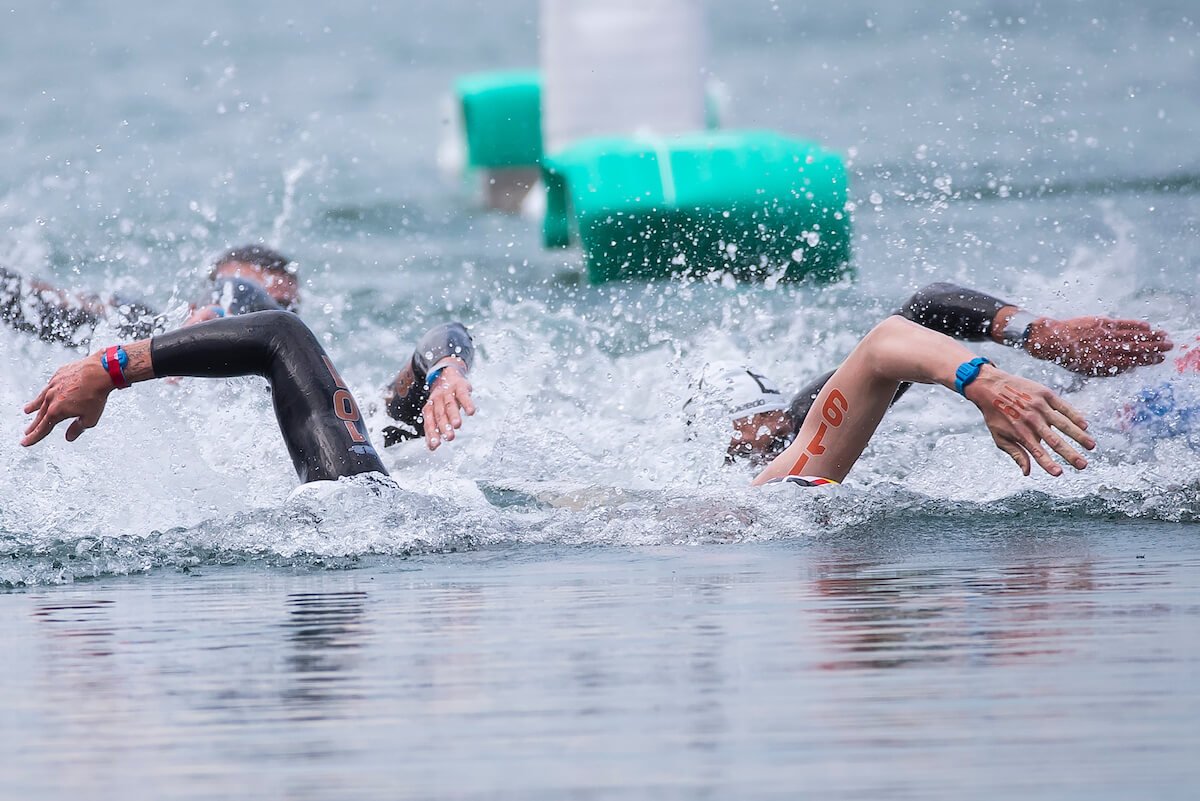
There are no lane lines separating competitors. Swimmers draft off one another, battle for position, navigate buoys, manage feeds and decide when to conserve energy or make a move. Conditions change. Contact happens. The fastest swimmer on paper is not automatically guaranteed to win.
In many ways, it is swimming’s combination of marathon running and road cycling.
A marathon is not exciting because runners sprint for 26.2 miles. The excitement comes from watching the race develop. Who is willing to lead? Who stays patient? Who responds to a surge? Who looks like they are struggling at mile 20, only to find another gear at mile 24? Road cycling operates similarly. Riders draft, attack, respond and constantly make tactical decisions about when to expend energy.
Those same stories exist during a 10k swim. We simply need to do a better job of telling them.
For decades, other endurance sports have shown that longer events can attract passionate audiences when fans understand what they are watching and know the athletes competing. Open water deserves that same investment through better broadcasts, more storytelling, stronger commentary and more opportunities for fans to learn the strategy behind the race. That feels especially important right now.
Marathon swimming will be contested at the 2028 Olympic Games in Los Angeles, but questions surrounding its place at Brisbane 2032 have created uncertainty about the event’s Olympic future. For a discipline that has been part of the Olympic program since 2008, the possibility of losing that stage should matter to the entire swimming community, not only those who race open water.
Open water provides another pathway in our sport. Not every great swimmer is defined by explosive starts, underwater speed or perfect turns. Some athletes discover that their greatest strengths emerge when the walls disappear and the race becomes longer, more physical and more tactical.
Running celebrates everything from the 100-meter dash to the marathon. Cycling has track events and road racing. There is room for different versions of greatness.
Swimming should be no different.
And this is where we, as swimmers, coaches, parents and fans, have a responsibility to come together.
There is plenty about the future of sports that we cannot control. Olympic programs evolve. Events change. Decisions are made far beyond the pool deck or shoreline. But one thing swimming has always been able to depend on is its community.
We show up for teammates. We celebrate swimmers from other clubs. We understand the years of early mornings, difficult practices and sacrifices behind a single race. When something matters to our sport, we have the ability to stand behind it together. Right now, open water needs that support.
A petition has been created calling for open water swimming to remain part of the 2032 Olympic Games in Brisbane. Signing it takes only a moment, but supporting the discipline goes beyond one signature. Watch the races. Share them. Learn the names of the athletes. Talk about open water with young swimmers. Give the discipline the attention we give the events inside the pool.
Sign the petition to save open water swimming at the 2032 Olympics.
Open water does not need to compete with pool swimming for its place in our sport. It is part of swimming.
At a time when its Olympic future may feel uncertain, the swimming community can make one thing very clear: the athletes who race beyond the lane lines deserve our attention, our support and a stage worthy of what they do.
Swimming has its marathon.
Now we need to make sure it has a future.
Summer Finke is a regular contributor to Swimming World. A two-time qualifier for the United States Olympic Trials, she competed collegiately for North Carolina State University and was a multi-time NCAA Championships qualifier.

