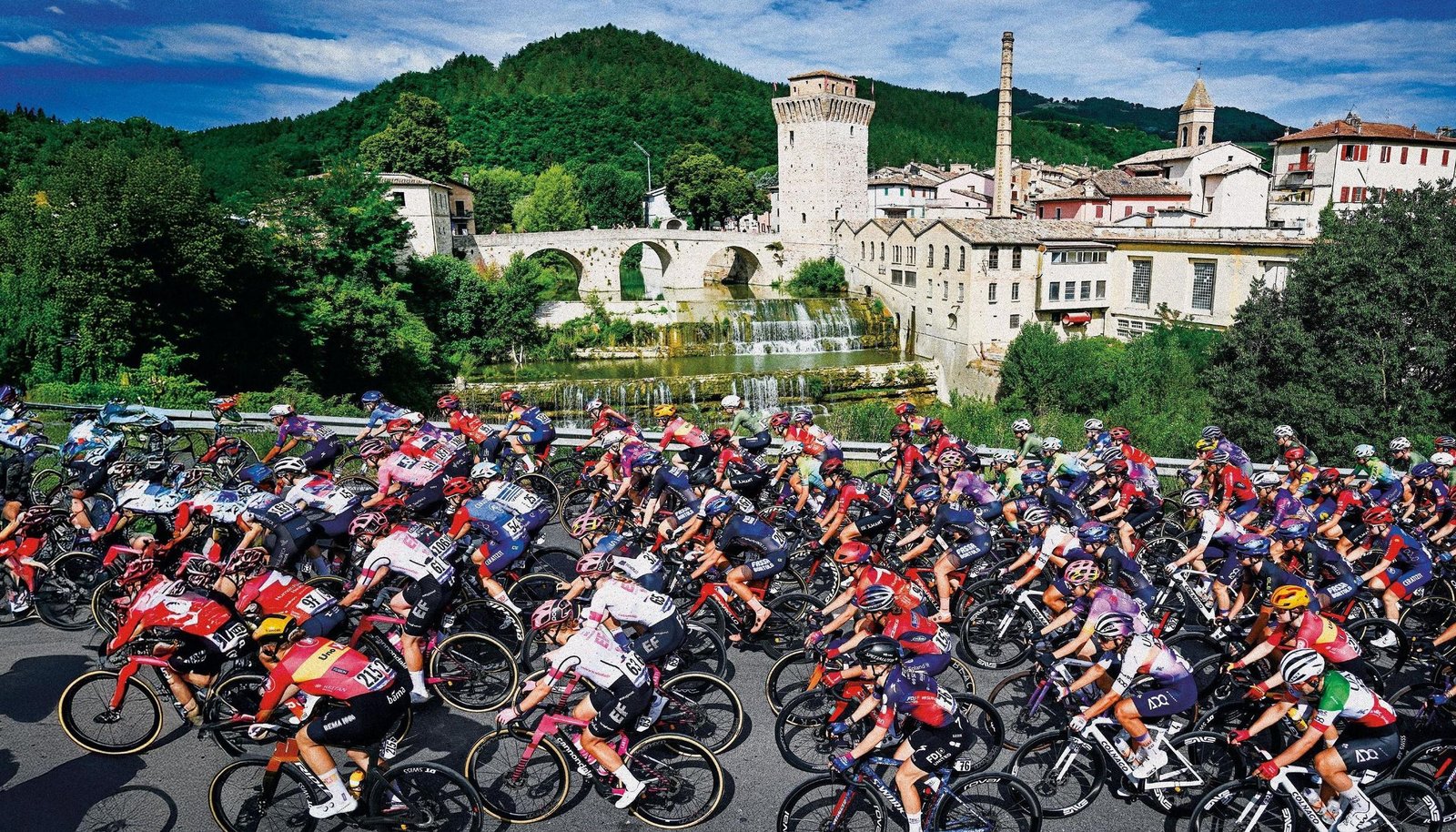
Every July, the Tour de France acts as a sporting eclipse, soaking up the world’s broadcasting hours and media attention. But while the men’s race stole the global limelight, a parallel history was being written in Italy.
From 1988, the Giro Donne navigated the Tour’s massive shadow to serve as the defining battleground of the women’s calendar. For decades, it was the only true Grand Tour for the women’s peloton – a race of rich heritage and gruelling climbs that is finally stepping into the sun.
As if fighting for exposure with the biggest annual sporting event on the planet was not enough, in 2022 the Giro Donne – rebranded as the Giro d’Italia Women in 2024 – acquired a new rival. The arrival of the Tour de France Femmes avec Zwift, positioned just three weeks later on the calendar, meant the Italian Grand Tour now had to fight for participants as well as media coverage.

It was high time, then, for the Giro d’Italia Women – for many years the only race on the women’s calendar that could be considered a genuine Grand Tour – to step out of the shadow.

(Image credit: Writer/Photo credit)
GIving the women’s Giro Room to breathe
That’s precisely what has happened this year: the Giro Women has been moved on the calendar from early July to instead begin as the men’s version ends, on Sunday 30 May – the day of a mountainous penultimate stage. The refreshed women’s race continues for nine stages until the following Sunday, 7 June.
The new slot falls three weeks after the year’s first women’s Grand Tour, the Vuelta Femenina, and nearly two months before the Tour Femmes, giving all three events room to breathe.
The brief initial overlap with the men’s race is deliberate, says race director Giusy Virelli. By the time the women’s opening stage finishes, the men will have already wrapped up their 20th stage to Piancavallo – finishing early to allow them time to fly to Rome for their finale. With the men’s race out of the way, the Giro Women has all the space it needs to satisfy what Virelli calls “a craving” among fans for the cycling action in Italy to continue.
“For the following stages, we have, for sure, more space, and I think that we can also satisfy the craving by the fans after the Giro d’Italia,” says Virelli. “In the last days [of the Giro] on social media, you always see some images and posts by the fans, because they say they don’t have anything to watch the day after. So now they do.”
“We thought that moving the Giro Women to a slot just after the men’s, with a partial overlap, was better for the events.”
Women’s Giro race director, Giusy Virelli
In its previous July slot, despite the crossover with the men’s Tour de France and proximity to the women’s, there were upsides for the Giro d’Italia Women, as race director Giusy Virelli points out: “Overlapping with the men’s Tour was a pull for the race for the TV audience,” she says.
“But in the end, it affected a lot of the space that we had on the TV schedule. For example, in Italy, we only had 45 minutes on our national TV. After consideration, we thought that moving the Giro Women to a slot just after the men’s, with a partial overlap, was better for the events.”

Longo Borghini celebrates winning in 2025 with her team mates
(Image credit: 2025 Getty Images)
Making space for TV coverage was not the only consideration for Virelli and her fellow Giro organisers. The new kid on the block – the Tour Femmes – had created a bottleneck that often saw riders choosing between the two.
Last year, for example, the Giro Women finished on 13 July and the Tour Femmes began less than two weeks later, on 26 July. Given the newer race had the history and the pedigree of the Tour de France behind it, it’s easy to guess which race usually lost out when riders were forced to pick just one.
“I don’t think that our race, the routes, the technical aspects of our organisation are less than the Tour”
Women’s Giro race director, Giusy Virelli
However, Virelli is not fazed by the rapid rise of the Tour Femmes against the Giro Women’s near-40-year history. She concedes that the Tour name will always attract attention, but clearly believes in her race.
“The Tour de France is the biggest stage race in cycling for men,” she says, “so it’s also normal that women aim to be at the start of the Tour de France. [But] I don’t think that our race, the routes, the technical aspects of our organisation are less than the Tour… For the riders it is [also] very beautiful to come to Italy to ride – there’s also a lot of attraction and passion [for cycling] in the country.”
Alluding to the history of her race – Virelli has been at the helm of the RCS Sport-organised event since 2024 – she calls the Giro Women “a long story”. All the same, she pays homage to the Tour Femmes, saying: “Of course our cousins at [Tour Femmes organiser] ASO are doing a great job. So obviously, you always look at what other organisers – not only ASO – are doing, to find some ideas, some new input.”
Race scheduling stack-up
The Giro Women is not the only stage race to be rehomed on the cycling calendar this year: the Tour Femmes will now begin the weekend after the men’s race finishes, with director Marion Rousse declaring: “We no longer need the men’s race [for us] to exist.” Meanwhile, the Tour of Britain Women moves from May to August.
This creates a near two-month gap between the two Grand Tours, and while it makes the month of July less densely packed, the women’s cycling calendar has come in for criticism for what is now a major May/June pinch point. In little over a month, there are 25 WorldTour racing days.
Then again, as The Cyclists’ Alliance point out: “In the second half of the 2026 season, from July to October, there are only 22 race days – 31% of the total – and only 13 possible race days for riders not selected for the Tour de France Femmes.” This led Grace Brown, the president of the riders’ union the TCA, to claim that “the sport remains built on fragile foundations”.

Four time Giro winner Annemiek van Vleuten
(Image credit: Getty Images)
The space between the women’s Grand Tours – three of the biggest races on the calendar – remains key for teams. UAE Team ADQ directeur sportif Cherie Pridham told us: “I think it’s better than it was last year, because we had no time to prepare between the Giro and the Tour, so there’s a lot more time for preparation.
It enables you to allow the girls to train and focus properly, particularly if you’ve got injuries and illnesses.” Even so, she noted the congestion in May and the issues the Giro’s move had created:
“The big problem is when we have the Vuelta [Femenina], Itzulia [Women] and [Vuelta a] Burgos, this hurts a lot when you have a team that’s going away to prepare for the Giro at altitude, and it does reduce the number of riders if you are hit by illness or injury.”

The Dolomites await the women’s peloton
(Image credit: Getty Images)
Which women’s Grand Tour is seen as top dog is largely due to the hierarchy inherited from the men, Pridham says, with the Tour first, then the Giro and then the Vuelta. However, when it comes to team focus, those distinctions are evening out.
“I think the Giro is rapidly gaining parity with the Tour,” she says. “From a team’s perspective, it allows you to spread your load in terms of your objectives.”
Which race holds the notional Grand Tour crown is not something that will concern the riders once the race is under way on 30 June. Some of the best in the world are taking part – including GC favourites Demi Vollering and Elisa Longo Borghini – and there will be no quarter asked or given in the quest for the pink jersey. And this time, for the first time in many years, it will be in its own space and clear of the shadow of the men’s Tour.
Explore More

