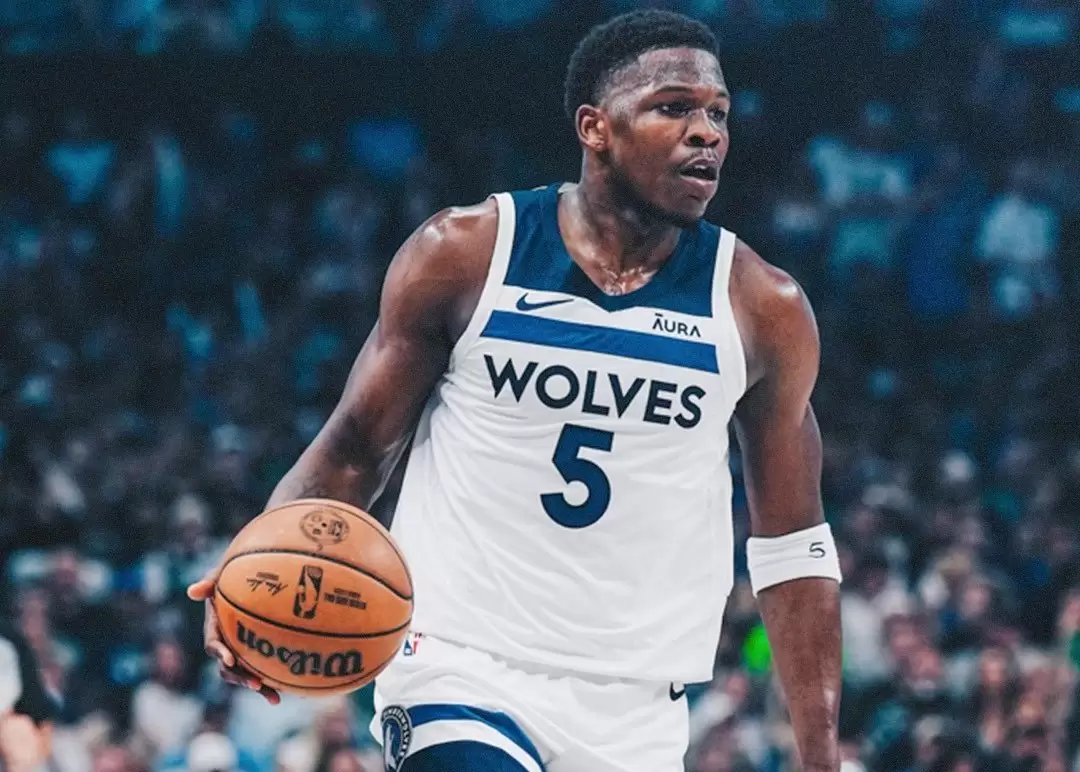
Minnesota Timberwolves head coach Chris Finch believes the team put too much on Anthony Edwards’ shoulders last season, and he says that realization directly influenced the franchise’s decision to acquire LaMelo Ball.
Appearing on the Road Trippin’ podcast, Finch explained that asking Edwards to function as the primary ball-handler limited one of the NBA’s most explosive scorers and made Minnesota’s offense easier to defend during the playoffs.
“In the playoffs it was just double team after double team,” Finch said. “We got to get him back to his natural position off the ball. We didn’t create enough catch-and-shoot threes for him.”
Finch pointed to Ball’s impact on teammates as evidence that the Timberwolves’ new backcourt pairing could unlock Edwards offensively.
“When you look at the numbers with LaMelo on the floor with his teammates and the efficiency and the production, I mean Kon Knueppel shot 7% higher from the three-point line with LaMelo on the floor than he did without. I mean that’s a massive stat for a great shooter and that’s a big bump for a great shooter,” he said.
The comments provide the clearest explanation yet for Minnesota’s aggressive offseason reshaping. The Timberwolves acquired Ball to take over primary playmaking duties, allowing Edwards to spend more possessions attacking defenses as an off-ball scorer rather than initiating every possession.
Edwards still delivered another outstanding individual campaign in 2025-26 despite the heavier workload. The All-Star shooting guard averaged 28.8 points, 5.0 rebounds and 3.7 assists while shooting 48.9% from the field and 39.9% from three across 61 regular-season games. However, Minnesota finished 49-33, sixth in the Western Conference, before being eliminated by the San Antonio Spurs in six games during the conference semifinals.
According to Finch, the postseason exposed the limitations of relying so heavily on Edwards as the primary creator. Opposing defenses consistently trapped him, forcing the ball out of his hands and limiting clean scoring opportunities.
The organization responded by restructuring its roster around a Ball-Edwards backcourt. Minnesota also moved on from Julius Randle as part of its offseason overhaul, signaling a commitment to building an offense with greater spacing, ball movement and secondary playmaking.
Finch also addressed another topic from the Spurs series that drew attention: Edwards walking toward San Antonio’s bench before the final buzzer of the elimination game.
The sequence sparked criticism from some observers, who believed Edwards was leaving the court early. Finch said that interpretation was inaccurate.
“I think it’s probably one of the more misunderstood things that actually has happened,” Finch said. “I saw him walk down there and then when he came back, I said, ‘You’re not going to the locker room, are you?’ Because that would have been a bad look.”
According to Finch, Edwards immediately reassured him.
“He goes, ‘Hell no, coach. I’m staying out here for my guys.’ He wanted to just when the buzzer sounded he wanted to go because he’s disappointed and what he went through to get back and playin’ that series was admirable. I mean we all was in awe of what he was able to do.”

