Top Sprint Coaches Reveal Secrets to Success (Part I)
How do you make a great sprinter?
The answers do not always match. In Brisbane, Australia, where Cam McEvoy trains, the sound of weights clanking is heard more often than the splash of the pool. In Charlottesville, Virginia, home of world-record holder Gretchen Walsh, gasps for air echo throughout the pool deck after taxing underwater sets. The methods are different, yet the results remain the same: great performance.
The variety in training strategies is something that makes the sport intriguing around the world.
“Every athlete responds differently to different kinds of work and exposure,” said John Long Jr., assistant coach at Indiana University. “We have to come up with different ways to approach things.”
But how exactly does a coach determine the best training method for his/her sprinter? Is there any formula for molding the world’s fastest swimmers? We spoke with some of the top coaches at all three levels of swimming (club, college, and professional) to find out how the world’s best work toward excellence.
Is Less Volume Better?
The question of volume has been asked for decades, especially in sprint swimming. But the performance of McEvoy has caused even further questioning of traditional training methods, given his success. The Australian Olympian swims just two to four times a week, while prioritizing strength training in the gym.
For coach Coley Stickels, the former Alabama head coach and current coach at Texas Ford Aquatics, McEvoy’s methods are a continuation of a trend we’ve seen across many sports.
“Some of the protocols they’re using are tried and true,” he said. Stickels, who has worked with top sprinters Matt King and Abbey Weitzel over the years, pointed to the tabata protocol as an example of this phenomenon.
“There’s been different ways to refine these models (like tabata),” he said. “I think they looked back at what some of the older protocols said, and are now trying it with success.”
Long Jr. has direct experience working on this “refinement” while training sprinter Van Mathias. Mathias has taken U.S swimming by storm with a breakout year in 2026, coming out of retirement to employ a McEvoy-esque sprint training program, with the help of Long Jr. The Indiana coach believes the amount of work should once again depend on the athlete.
“We’re looking at very different physical profiles between Van and college swimmers, with their different ages and physical points,” he said.
Stickels agreed, explaining that different life pressures for older swimmers will play a role in their choice of lower volume programs. He referenced Mathias working full-time, and McEvoy having a family, as prompting the swimmers to choose a program with less volume.
“I think they went and researched, ‘How can you get the best bang for your buck with the time you have,’” he said. “But the counter is that, it won’t work for everybody.”
To Long Jr., though, the question of how much volume a swimmer should take on is worth experimenting with.
“There are things to learn from what Van is doing, worth implementing toward other athletes,” he said. “Maybe not at as low of a volume, but trying to figure out why (it’s working).”
The Roles of Aerobic/Anaerobic Swimming
While debate grows over the most beneficial amount of swimming, there was a consensus on the best type of swimming for sprinters. The coaches all emphasized that there should be a focus on purposeful, fast yardage.
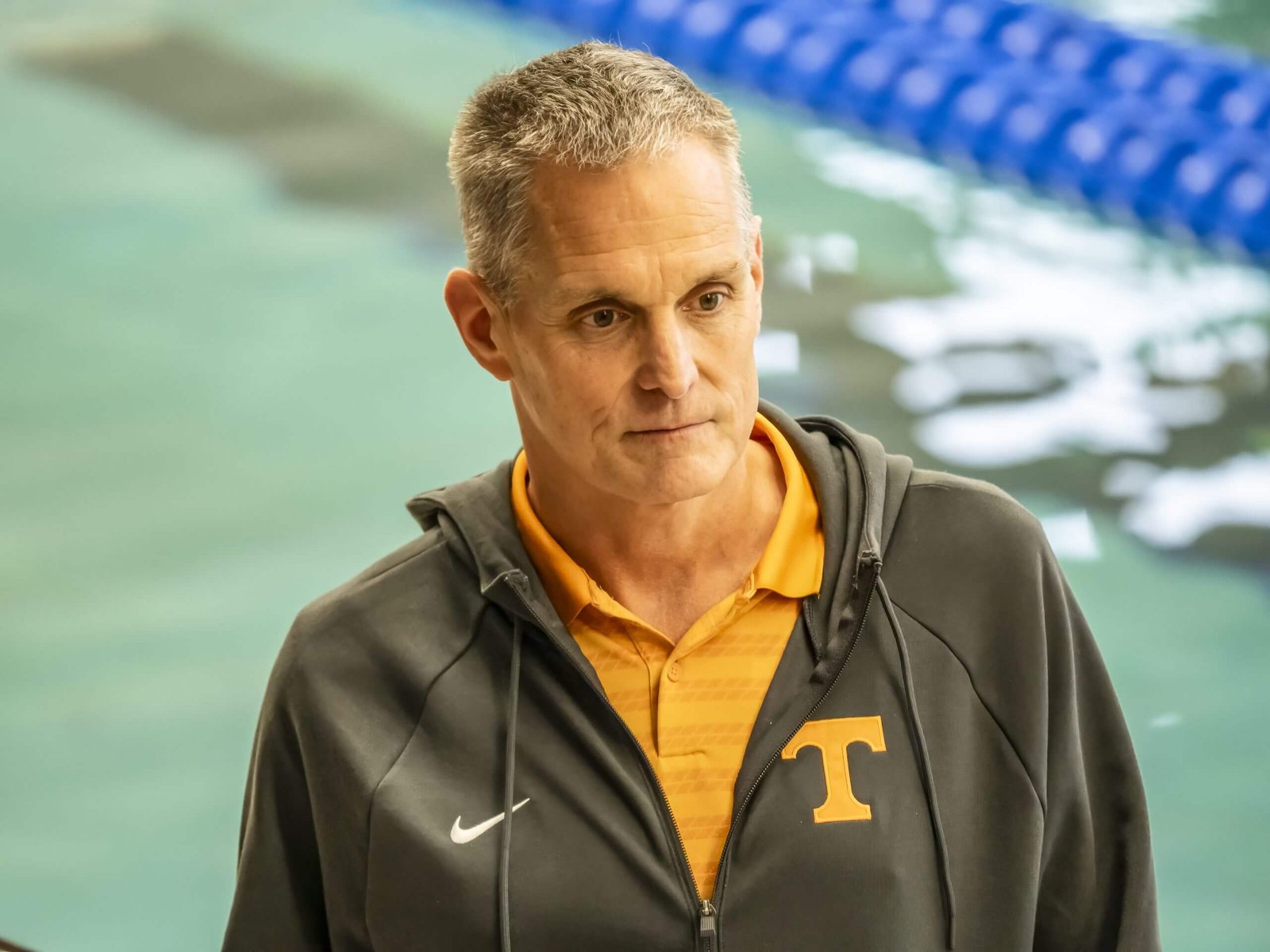
“There’s been an increase in emphasis on anaerobic, race-pace swimming with intention,” University of Tennessee head coach Matt Kredich said.
Kredich explained that in recent years, coaches have recognized the tiring effect anaerobic training can have, even if it’s less yardage on paper. Kredich referenced this scenario as the reason for his program’s structure. Tennessee is constantly looking to ensure the aerobic sets (higher yardage, lower intensity) they are swimming are purposeful.
“We’ve tried to protect anaerobic training with our sprinters by ensuring our aerobic training operates in our fat-burning zones,” he said. “We don’t want to be depleting our muscle glycogen with high-intensity aerobic training.”
Even when Tennessee trains aerobically, the coach cited a focus on implementing fast training alongside it, to maximize the effect.
“We’ll intersperse short, fast sprints, so that we’re not getting stuck in one movement pattern,” Kredich said. “We want to keep the nervous system active, and ready to respond to different stimuli, without depleting fuel for anaerobic training.”
Long Jr. similarly stressed that not overdoing aerobic swimming is important. Nonetheless, he indicated that aerobic yardage can be helpful. This philosophy especially applied to his collegiate athletes in keeping them well-rounded.
“I like to mix in a lot of stroke swimming into the sprinter’s aerobic work,” Long Jr. said. “It allows them to work on a different plane and improve awareness in the water.”
Awareness in the water is what Stickels believed to be the biggest benefit of aerobic swimming for sprinters. He reflected on talks with Indiana Head Coach Ray Looze about an underrated factor: time in the water.
“When we taper, it might only be 2000 yards, but it might take two-and-a-half hours, just because it’s about the amount of time we’re in the water,” Stickels said. “It takes a while for people to get a good hold on the water from a kinesthetic perspective, and that’s why we need contact time.”
Like with the volume an athlete swims, however, Stickels emphasized that there is no “one-size fits all” approach.
“It really is individualized for everyone,” he said. “We have to figure out who the outliers are, and where they fit within a program.”
Part II on this topic will follow in the next week.

