The Atlanta Dream enter their Fourth of July game against the Golden State Valkyries with four-straight losses (1 p.m. ET, CBS).
The Valkyries are already responsible for two of those Ls, having beaten the Dream twice during their back-to-back set in San Francisco.
Advertisement
However, Atlanta’s severe shooting woes, rather than the resistance imposed by any opponent, is most responsible for the Dream’s four-game skid.
Uneven on the offensive end for much of the season, the Dream had appeared to finally have found their offensive flow during the four-game winning streak that preceded this four-game slide. In four wins over the Toronto Tempo and Indiana Fever, the Dream scored at least 94 points in all four games, topping out with a franchise-record 113-point showing in the second win over the Fever at State Farm Arena.
Unsurprisingly, all the shots were falling for Atlanta in those games, including, and especially, their 3-ball.
Advertisement
The 3-pointer is an essential element of head coach Karl Smesko’s desire to create a well-spaced floor in the offensive halfcourt. Last season, Smesko encouraged the Dream to shoot 28.4 3s per game, the second-most in the league. They hit those triples at a very mediocre 33.7 percent, but their volume still resulted in more than nine made 3s—or more than 27 points—per game.
In 2026, Atlanta’s 3-point output has dipped to 26.6 attempts and 8.6 makes per game, with a team-wide percentage of 32.2. Zack Ward, who was in attendance for the Dream’s latest loss to the Washington Mystics, offered his up-close analysis of Atlanta’s 3-point struggles.
But during their four-game blitz against the Tempo and Fever, the Dream hit at least nine 3s in every game, highlighted by dousing the Tempo with 14 triples when the teams met in Toronto. Against the Fever, they first hit 38.9 percent of their 3s as a team before then nailing 46.2 percent from downtown, totaling 19 3s across that two-game set.
As indicated by their season-long percentages, Atlanta since has trended the other direction.
Advertisement
Over their last four games, the Dream are under 25 percent from 3, with an average of six 3-point makes per game on over 24 attempts. Their repeated off nights from behind the arc drug their overall field goal percentage down to 38.2 percent over those four losses.
For many fans, the solution should be obvious: Quit shooting 3s! Drive the ball, take a midranger, throw the ball into the post or get to the foul line. Please!
But, what makes driving to the basket, finding space to fire off a midranger, an advantageous post-up opportunity or getting fouled by a late-rotating defender easier? The space created by the threat of the 3-point shot.
So, don’t expect Smesko to veer from the offensive process he believes in and one that, based on last season, works.
The juxtaposition of the Dream’s four-game winning and losing streaks provides a stark illustration of the variance inherent in an offense founded on 3-point shooting.
Advertisement
Smesko, like many coaches and analysts, believes, more often than not, that variance will swing in the Dream’s favor, or even if the shots are off, that the need to guard 3-point shooters can stretch out the opposing defense and still benefit the Dream offense.
During a four-game losing streak stained by stretches of ugly offense, however, it can be hard to endorse Smesko’s philosophical stance.
Yet, if the 3-point fireworks are flying in College Park on July the Fourth, with Rhyne Howard going on a signature heater, Allisha Gray draining transition triples, Naz Hillmon making the defense pay with deep swishes, Te-Hina Paopao pouring in some pull-up treys and even Angel Reese getting in on the 3-point action, Smesko’s approach will probably inspire some applause from the Atlanta faithful. (We’ll not imagine the alternative…)
What are your thoughts? Do you trust Smesko’s commitment to his offensive system? Or, do you believe the Dream need a more malleable offensive identity? Is their an offensive approach that would better suit Atlanta’s personnel?
Advertisement
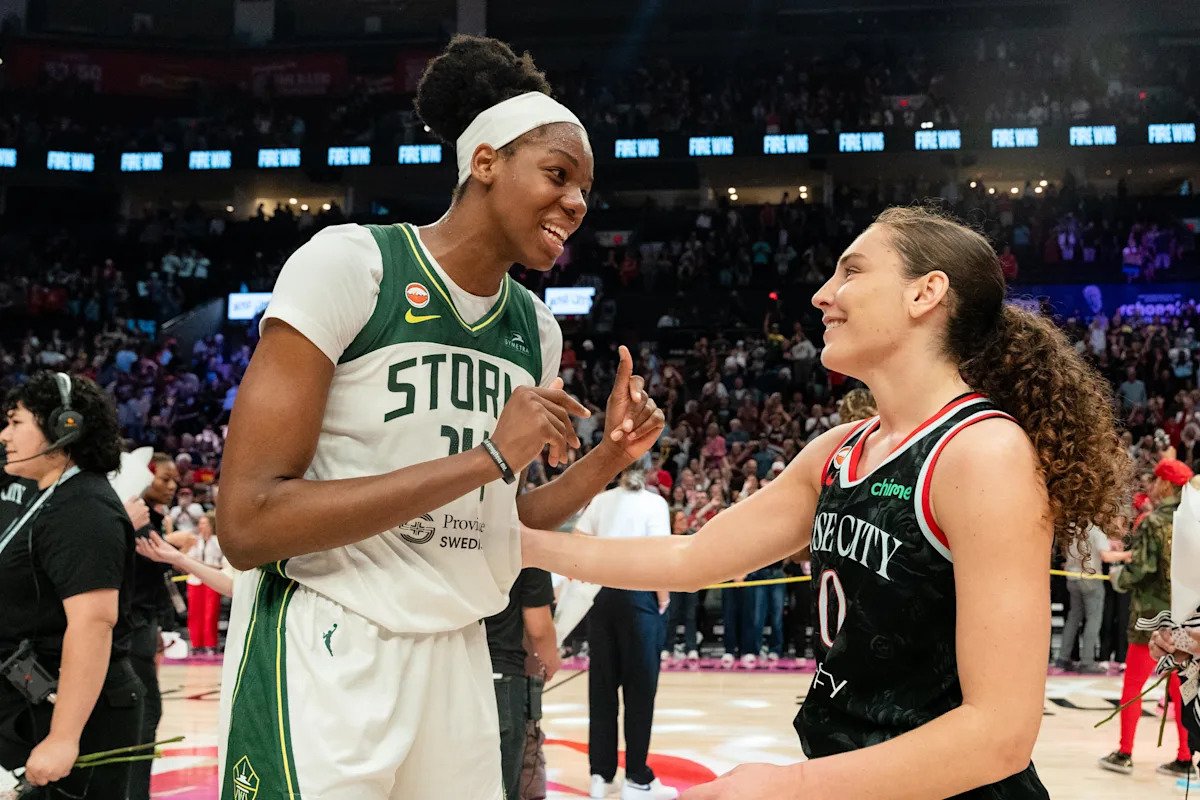
Get ready for a July 4th Fire-Storm in Seattle
While Dream fans will be hoping for some offensive fireworks in Atlanta, there’s going to be a firestorm in the Pacific Northwest. Literally.
The Portland Fire are visiting the Seattle Storm, giving us the second Fire-Storm matchup of the season (9 p.m. ET, WNBA League Pass).
The Fire prevailed the first time around. Now, they’ll arrive for this July the Fourth showdown hopefully recovered from their four-overtime affair against the Washington Mystics last Sunday.
As Zack, who also was in attendance for the record-breaking three hour and 35 minutes marathon, wrote, the Fire impressed with their fight, despite the loss.
Consistency, rather than inability, eventually doomed the Fire in DC.
Advertisement
It’s an understandable issue for an all-new expansion team, as well as for one intentionally empowering young players, which describes their opponent. After a pair of uplifting wins, the Storm fell flat in their visit to Phoenix on Thursday, scoring just 67 points.
That unpredictability could make for an exciting competitive conflagration.
The Fire, from the four-overtime rock fight to a pair of game-winners from Sarah Ashlee Barker, have already provided plenty of thrills for the revitalized Portland fanbase. For Seattle, any of Dominique Malonga, Flau’jae Johnson or Awa Fam are capable of exploding for a epic night.
Let us know who you think will be responsible for some rollicking, results-swinging play.
Advertisement
On the Fourth of July, I’m predicting a French invasion. On one side, Carla Leite will be boogying her way to the basket, with the queen of paint touches piercing the Portland defense, and on the other, Dom will dominate for Seattle against an undersized opposing froncourt.

