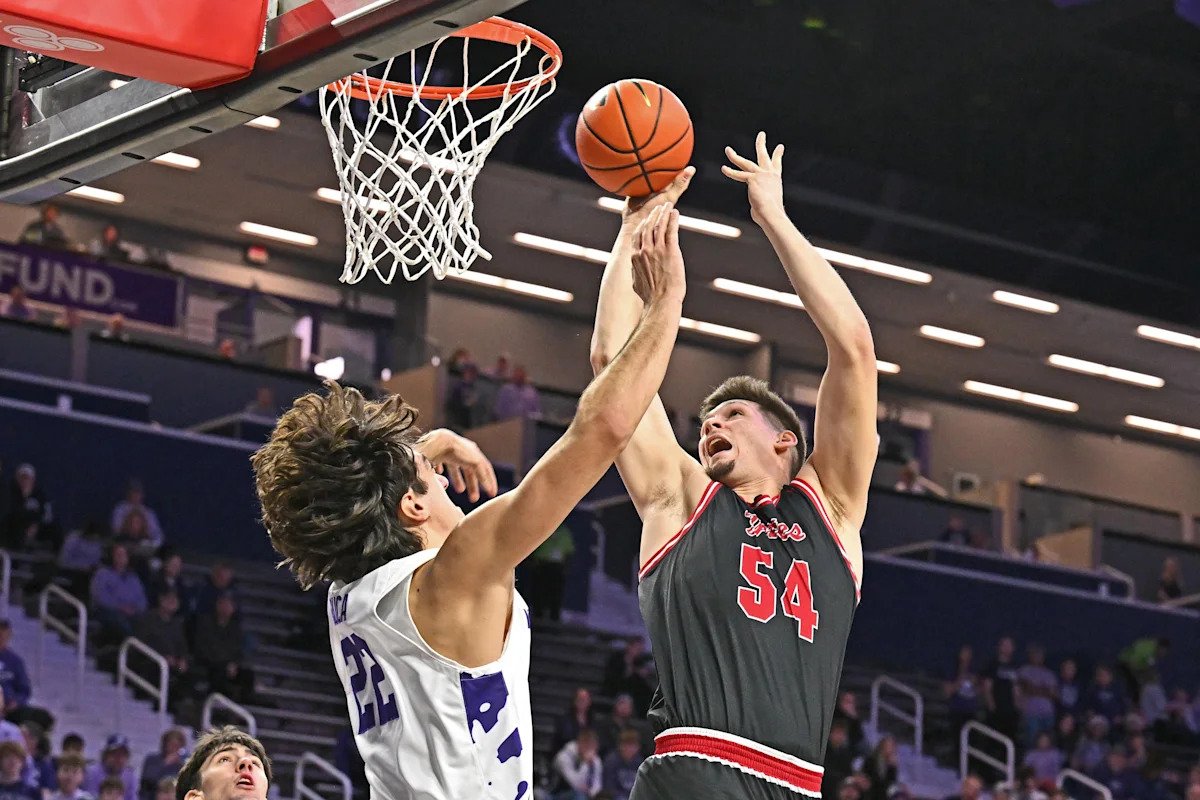
If a Federal Judge is going to allow players to play all five years, then you might as well use it.
Michael Malone’s first squad for UNC was shaping up to be one that had the potential to be fun to watch, but also was very short on size with experience. The roster had three players listed at center, but only one — Cade Bennerman — is from the United States, and while he is in his second year of playing college ball, he redshirted his first year meaning he hasn’t actually played a meaningful minute on the court. The other two players — Sayon Keita and Alexandros Samodurov — come from across the ocean and thus will have to acclimate to the speed and style of the college game.
Advertisement
Carolina did have Jarin Stevenson with some height who could play some at the five as needed, but anyone who’s watched him knows his role fits in better as the free-flowing four, and not necessarily as the player to plant down low, grab rebounds, and be the focal point of the defense down low.
Thus, there was an opening for one more center, and while Carolina kept having issues getting experience, the judge’s ruling dropped another one on their doorstep: Cameron Fens.
So, how big is this decision for the Tar Heels?
Fens is your prototypical center. He played all 32 games for South Dakota last year, just one of two players to be on the floor for every game. He also saw a lot of time on the court, averaging 25.2 minutes per game. That’s basically the same amount that Stevenson played last season for the squad and would have put him on par with the other regulars that saw the floor for Carolina. Averaging fourteen points and nearly nine rebounds a game, his stats line up with about everything you could ask for a regular college center.
Advertisement
This is something to benefit both the current version of the Tar Heels and the future. Now the three centers that will enter practice will have someone they can emulate their fundamentals around. That plus the teachings of Sean May — a huge holdover from the previous staff — and Malone, who will always be able to lean on his past success with Nikola Jokić to get players to listen to him, exponentially increase the ability of the Tar Heels to play inside.
There’s another benefit to adding to the depth—and that’s come through in the videos the team has released on social media.
There is a huge emphasis, it would appear, with playing with pace by the new coaching staff, and every player that can be on the court will be a huge help to this strategy. It also will help to have a center that is as durable as Fens is.
Advertisement
The biggest concern, of course, is that it’s quite a step up from South Dakota to the ACC. A peek at his numbers from last season shows just three games against high major teams: Missouri, Creighton, and Kansas State. In two of those three games, he only scored in the single digits, but in the final game against Kansas State he notched 17 in the 30-point loss to the Wildcats. It also doesn’t bode well for his ceiling that it’s taken until a court-ordered fifth year for him to rise out of the Summit League to this level of basketball.
Overall, the decision by Fens to join the Tar Heels should be a positive, even if the primary impact he has — his fundamental skills as a big man — may not be as obvious when we see him play games. It still takes away a huge question mark that the Tar Heels had going into the year, and does raise their ceiling and the possibilities as to what the squad can do.
Ultimately, the decision will likely pay off more in the future than the present, as it allows some stress to be taken off the younger players as they acclimate to life in Chapel Hill. If one of them supplants Fens later in the year, it’ll be because they’ll have learned how to play better in practice from Fens instead of the game.

