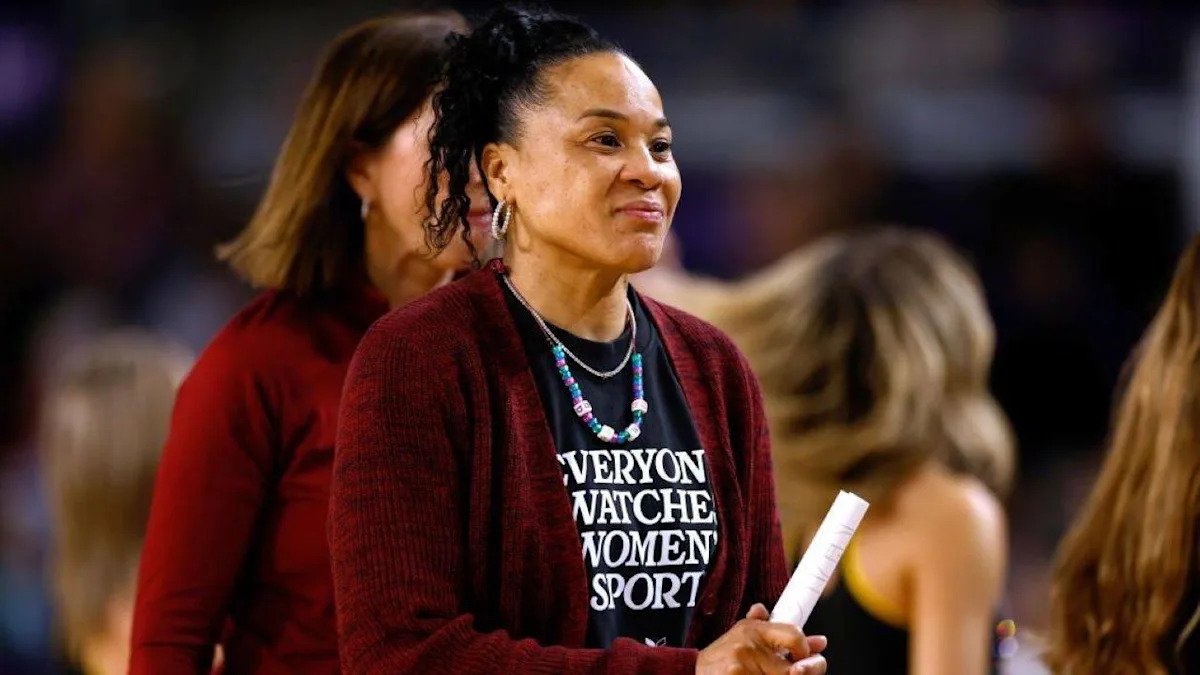
It started, as many sports debates do, with a simple message: “I’ve been thinking about this for the last few years, but I really think Carolina is slowly becoming a women’s school… and I’m here for it.”
At first glance, that statement feels provocative and debatable, especially in the SEC, where football is king and Saturdays in the fall are treated somewhere between sacred tradition and civic responsibility. But after sitting with the idea for a while, maybe the question isn’t really whether South Carolina is becoming a “women’s school.” Maybe the real question is this: “Are women’s sports quietly reshaping the identity of South Carolina athletics?”
Advertisement
And whether Gamecock fans realize it or not, there is a compelling case to be made here. Because when you strip away any bias and ask the question underneath it honestly, the answer is more complicated, more interesting, and frankly more worth having than most fans want to admit.
The Receipts
Let’s start with facts…
Over the past decade, Dawn Staley has turned the women’s basketball program into one of the most decorated in the country, capturing NCAA Championships in 2017, 2022, and 2024. Between the 2013-14 and 2025-26 seasons, her teams dominated the SEC, winning 10 regular-season titles and nine tournament championships, essentially ruling the conference for more than ten years. The Gamecocks also finished as NCAA Tournament runners-up in both 2025 and 2026, solidifying their reputation as consistent national championship contenders. In addition, the Gamecocks boast annual recruiting classes that rival or beat anyone in the country. It’s safe to say that the women’s basketball program at South Carolina has continued to set the standard for what a modern college basketball operation looks like – women’s or men’s.
Advertisement
Under Ashley Chastain Woodard, Carolina softball has become a national contender, making NCAA Tournament runs and bringing in top-tier recruiting classes that have coaches nationwide taking notice of what’s being built in Columbia.
Women’s tennis, equestrian, and track & field programs have brought home national titles and earned prestigious accolades, adding both hardware to the trophy case and honors to their legacy in Columbia. These aren’t cute women’s sports that are padding a résumé. They are real, competitive programs with serious investment and impressive returns.
Now consider all of that in the context of how South Carolina is viewed nationally. If you stopped an average college sports fan outside the state, say in Columbus, Tempe, or Baton Rouge, and mentioned “South Carolina athletics,” what would be the first thing they’d say?
Ten years ago, it was probably Marcus Lattimore, Steve Spurrier, or Jadeveon Clowney. It was football, full stop. Maybe even a mention of the 2010 baseball team. But today, a significant and growing number of people would probably say Dawn Staley, women’s basketball, national championships, A’ja Wilson.
Advertisement
It’s undeniable that a measurable, meaningful shift in national brand identity has occurred, and it happened faster than almost anyone predicted.
Why Football Still Wins the Emotional Vote and Always Will
None of that, however, has changed how most South Carolina fans feel about their athletic program on a day-to-day basis. And understanding why is important before anyone gets on a high horse about it.
Football in the SEC isn’t just a sport. We all say the same thing in the South: football is religion. It is a cultural institution that is deeply woven into the fabric of Southern life in ways that are genuinely difficult to overstate. For hundreds of thousands of Gamecock fans, fall Saturdays at Williams-Brice Stadium are some of the most cherished rituals of the year. The tailgates, the traditions, the shared suffering of close losses, and the shared euphoria of rivalry wins are experiences that bind generations together in a way that no other sport in this culture replicates. We bleed garnet and black, and that’s no exaggeration.
Advertisement
Gamecock football still leads the way financially for South Carolina athletics, fueled by SEC media money, ticket sales, and deep donor support. That income helps keep the entire department running, including non-revenue sports that don’t generate the money that football does. But it’s also no longer accurate to think of top women’s programs, especially women’s basketball, as just riding the coattails of the football program. Some women’s sports, especially basketball, have become standout brands of their own within the athletic department.
To be fair, South Carolina football has had its moments of greatness. Spurrier’s back-to-back 11-win seasons, SEC East title in 2010, and the program’s first win over No. 1 Alabama. In 2011, Coach Spurrier guided South Carolina to its best season ever, finishing with an 11–2 record, going 6–2 in SEC play, and topping No. 20 Nebraska in the Capital One Bowl. The Gamecocks wrapped up that season with Final Top 10 rankings in both the AP Poll (No. 9) and Coaches’ Poll (No. 8). Those seasons are still talked about and still mean everything to the fanbase.
The football program has had good years, but is South Carolina “elite” by the standards of Alabama, Georgia, and Ohio State? Not yet. And not consistently. The Gamecocks have hovered in that painful middle ground of good enough to excite fans but not quite good enough to sustain the national conversation for long.
So, there’s the tension. Yes, the biggest revenue sport is still football, but the most sustained, nationally recognized excellence is increasingly coming from elsewhere.
Advertisement
The Uncomfortable Question
So, here’s the question that cuts to the heart of the conversation, one that deserves an honest answer: Would most South Carolina fans trade three women’s basketball national championships for one football national title?
Be honest. When I posed this exact question to someone recently, the answer was a clear and immediate “yes.” I think a large part of the fan base would probably agree, and there’s really no shame in it. They are not saying the women’s championships don’t matter. Instead, they are expressing that what South Carolina football means to them is categorically different. It’s not a simple cut-and-dry equation of athletic talent. It’s about identity, culture, and the energy of SEC football on Saturdays in the Fall.
But here’s where the question gets a little deeper and more interesting: why do we value one championship differently than another?
Advertisement
That question is not a trap. It’s a genuine cultural question that’s worth sitting with. Dawn Staley has built one of the most dominant programs in the history of women’s college basketball, winning with elite coaching, elite recruiting, elite development, and a genuine team culture that shows up on the court under pressure. By any measure of athletic excellence, what Dawn has built is truly historic.
So, the fact that many fans would still trade all of that for a football title doesn’t diminish the achievement. But it does reveal something about how the athletic identity of athletic programs is constructed in this part of the country and who gets to sit at the center of it.
So What Is South Carolina Athletics, Exactly?
The “women’s school” framing can be lazy and dismissive, and it doesn’t fit. South Carolina isn’t becoming a women’s school. The football program absolutely matters, the Gamecock fan base is massive, and the economic engine hasn’t changed at all. But there’s a more honest version of the question worth asking: What is South Carolina’s athletic identity in 2026, and who is defining it? The answer is no longer as simple as football.
Advertisement
If the Carolina softball program continues its trajectory next season, and there’s every reason to believe it will, South Carolina will have more than one women’s program capable of winning national championships in the same era. Add in the dynasty Staley has built and the depth of investment across women’s sports, and you start to see the outline of something rare in modern college athletics.
At a time when many athletic departments lean heavily on a single revenue sport, and others are cutting non-revenue sports to fund football, the University of South Carolina stands out. Gamecock athletics is successful across multiple programs. That depth matters, and brand diversification matters. If anything, South Carolina may be building something stronger than the traditional model. South Carolina is a program whose biggest national identity is tied to excellence, full stop, and where that excellence happens to be concentrated, right now, in women’s sports.
South Carolina fans have been waiting a long time to be nationally relevant. If anything, South Carolina may be building something stronger than the traditional model. The question now is whether the whole fan base is willing to own all of it, not just the parts that fit the old story.
Contact/Follow @College_Wire on X and @College_Wires on Threads. Like our page on Facebook to follow ongoing coverage of college sports news, notes, and opinions.
This article originally appeared on College Sports Wire: South Carolina: How women’s sports are redefining identity

