For years, I viewed the Longhorn Network the same way most college football fans did.
It was the symbol of everything that went wrong with the old Big 12.
The common belief has always been that Texas wanted special treatment, created its own television network and ultimately fractured the conference in the process.
Advertisement
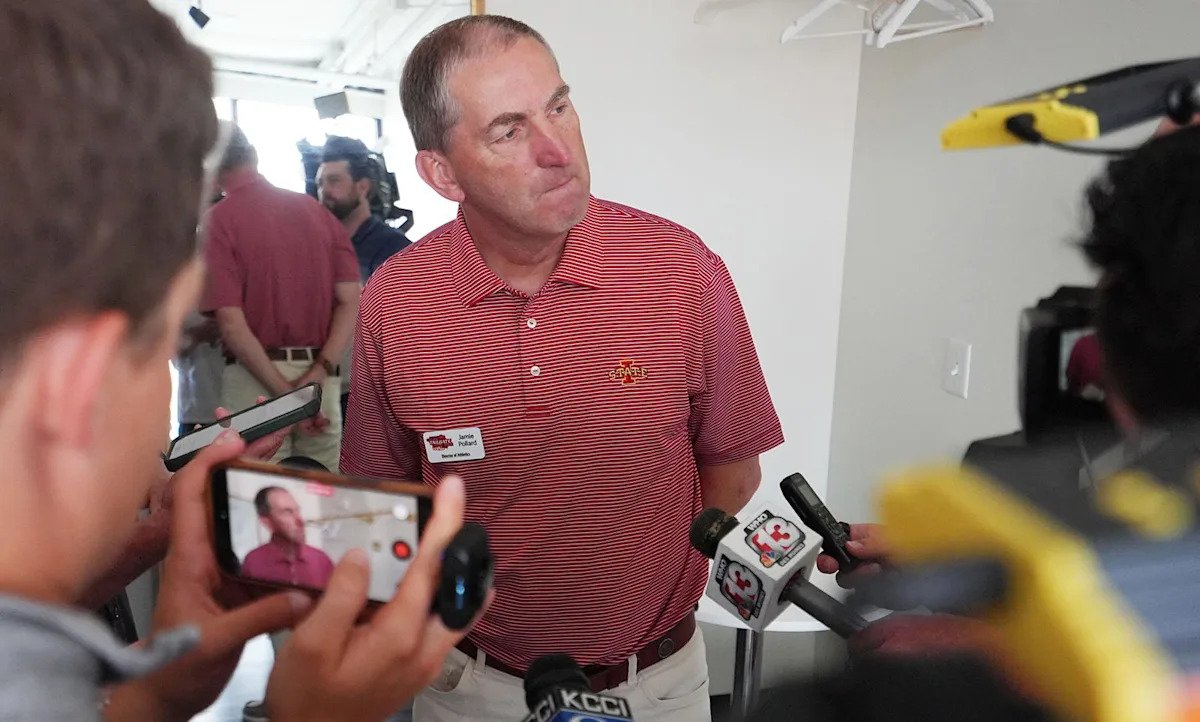
Then I heard Iowa State athletic director Jamie Pollard tell the story behind the scenes on 365 Sports.
Honestly, it completely changed the way I look at one of the most controversial media deals in college athletics.
It didn’t erase the criticism surrounding the Longhorn Network.
It made me realize the story is far more complicated than most of us ever knew.
The Story Everyone Thinks They Know
For years, the Longhorn Network has been blamed as one of the biggest reasons the old Big 12 eventually fell apart.
Texas got its own ESPN network.
Other schools grew frustrated.
Conference relationships deteriorated.
Advertisement
That’s the version of history many fans remember.
According to Pollard, that’s only part of the story.
The Longhorn Network May Have Saved the Big 12
One of the biggest revelations from Pollard’s interview was what almost happened.
Texas, Oklahoma and Oklahoma State were reportedly preparing to leave for the Pac-12.
Had that happened, the Big 12 as we know it may not have survived.
Instead, then-Texas athletic director DeLoss Dodds negotiated the Longhorn Network with ESPN.
In return, Pollard explained that Dodds agreed the conference would move to equal revenue sharing because Texas was already receiving a massive financial commitment through the Longhorn Network.
Advertisement
That changed everything.
Suddenly, schools like Iowa State, Baylor and Oklahoma State were receiving television revenue they had never had before.
Instead of the gap between the conference’s richest and poorest programs continuing to grow, the rest of the league finally had the financial resources to invest in facilities, coaching staffs and overall athletic department growth.
The Programs That Benefited the Most
Pollard made an argument I had never really considered.
Without equal revenue sharing, Iowa State probably doesn’t become the football program it is today.
The facilities don’t improve.
Advertisement
The investments aren’t made.
The program likely never reaches the level it eventually did under Matt Campbell.
The same can be said for Oklahoma State.
While Boone Pickens had already transformed the Cowboys’ athletic department through his incredible generosity, increased conference revenue helped Oklahoma State continue investing in facilities, coaching salaries and recruiting resources that kept the program nationally competitive.
Baylor experienced a similar rise.
The schools that once struggled to financially compete suddenly had the resources to close the gap.
The Irony Nobody Talks About
Before the Longhorn Network ever existed, Texas actually proposed creating a Big 12 Network and was told no.
Advertisement
Only after that idea was rejected did ESPN move forward with creating a network dedicated solely to Texas.
Looking back, it’s fascinating to think about.
What if the Big 12 had embraced its own conference network before the SEC, ACC and others fully leaned into conference-specific media platforms?
Instead, the conference eventually found itself relying heavily on ESPN+, where today many Big 12 games and events sit behind a streaming paywall anyway.
In a strange way, the Big 12 rejected the very concept it eventually embraced—just under a different name and distribution model.
The Greatest Twist of All
Perhaps the biggest irony is what happened to Texas itself.
Advertisement
While schools like Iowa State, Baylor and Oklahoma State used increased revenue to improve facilities and elevate their programs, Texas never won another football national championship during the Longhorn Network era.
Meanwhile, the programs that benefited from equal revenue sharing became legitimate conference contenders.
Baylor won Big 12 championships.
Oklahoma State consistently competed near the top of the league and captured a conference title.
Iowa State transformed from a perennial afterthought into one of the conference’s most respected football programs.
The money Texas helped distribute ultimately made life more difficult for Texas on the field.
Advertisement
You couldn’t write a more ironic ending.
Final Thoughts
For years, I believed the Longhorn Network was one of the biggest reasons the old Big 12 unraveled.
After hearing Jamie Pollard explain the other side of the story, I don’t think it’s nearly that simple anymore.
Did the Longhorn Network create tension?
Absolutely.
However, it also may have prevented an earlier collapse of the conference, created equal revenue sharing that helped programs like Iowa State, Baylor and Oklahoma State reach new heights, and emerged only after the Big 12 passed on the opportunity to create its own network.
Advertisement
History often remembers the loudest narrative.
This one deserves a second look.
Sometimes the biggest villain in the story also ends up being one of its most important heroes.

